ARMANDO RASCÓN
media artist archive
.jpg)
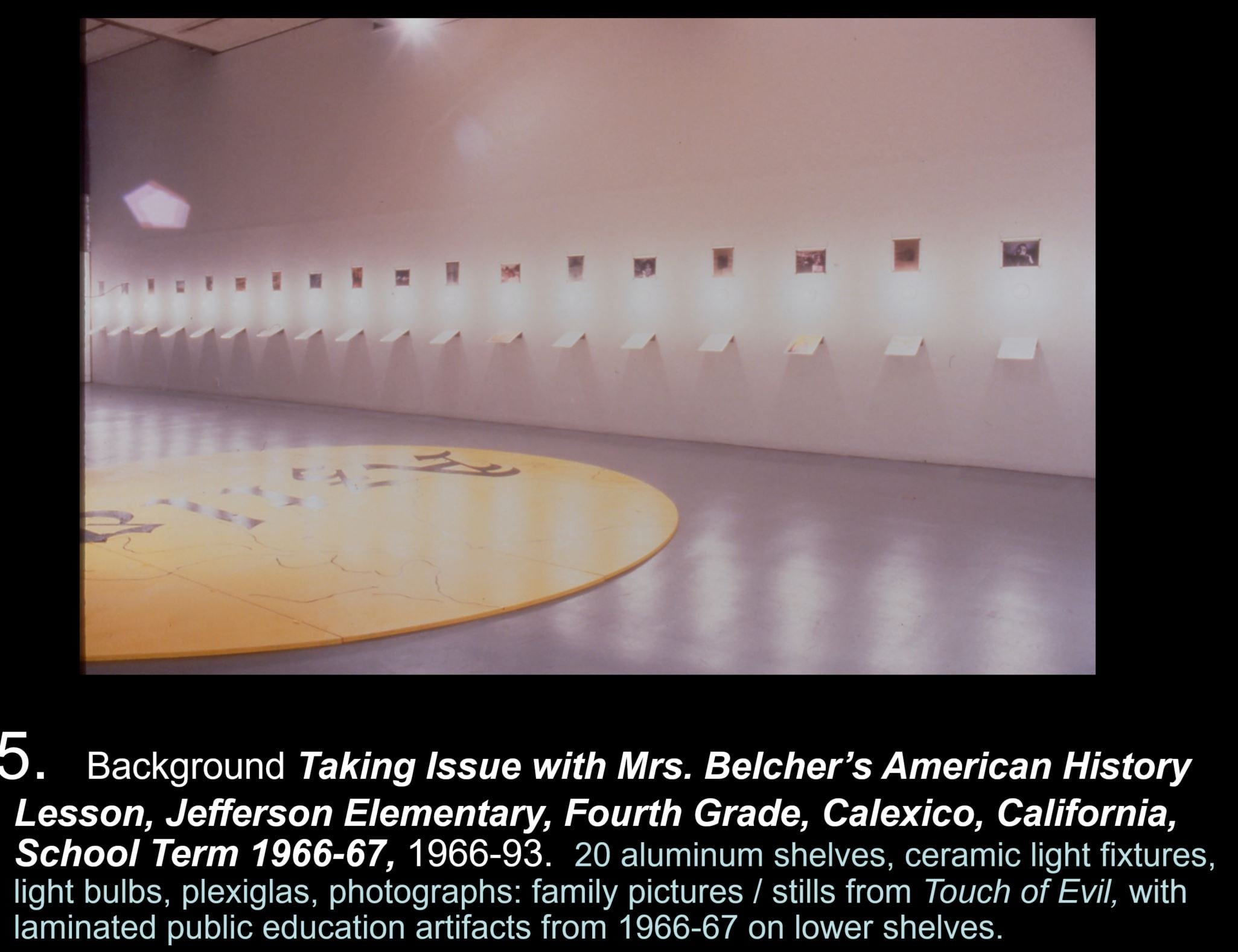
Born and raised on the US/Mexico border town of Calexico, California, Rascon's childhood was informed by the language and symbolism of the nascent Chicano civil rights and cultural movements of the early 1970s. Rascon's early works employed contemporary methods of research and analysis to examine the institutional construction of cultural repositories, archives, and information systems. As a young artist, Rascón established himself a pioneer in Chicanx conceptual art.
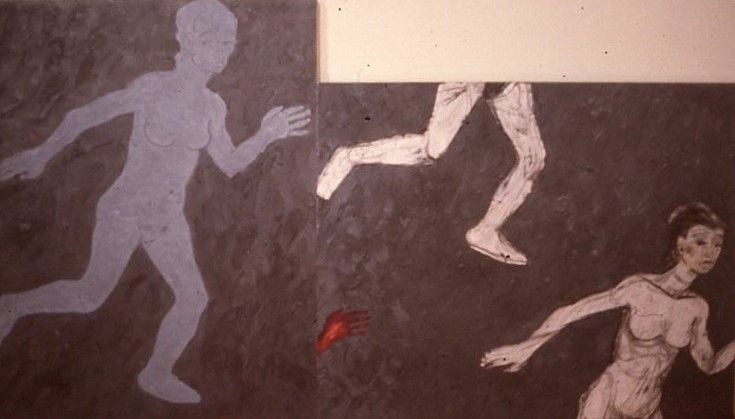
Departing Southern California for San Francisco in 1981 Rascón's first body of work addressed AIDS activism. Early warning signs predominated his Folsom Street studio neighborhood (in the leather district), as the city's Gay community erupted in a health threat of apocalyptic proportions --with the entire global community ultimately affected.
For over three decades Rascón has merged video, computer animation, sound, interactive web-based art, language, curatorial methodology, borderlands decolonial discourse, queer and Xicanx identity into expansive media installation projects.
Departing Southern California for San Francisco in 1981 Rascón's first body of work addressed AIDS activism. Early warning signs predominated his Folsom Street studio neighborhood (in the leather district), as the city's Gay community erupted in a health threat of apocalyptic proportions --with the entire global community ultimately affected.
For over three decades Rascón has merged video, computer animation, sound, interactive web-based art, language, curatorial methodology, borderlands decolonial discourse, queer and Xicanx identity into expansive media installation projects.

VIDEO selected works
Borderland Raga (video), TRT 12:35 min
by Armando Rascón
Photographic document of the international US/Mexico border --physical and cognitive-- between Mexicali and Calexico.
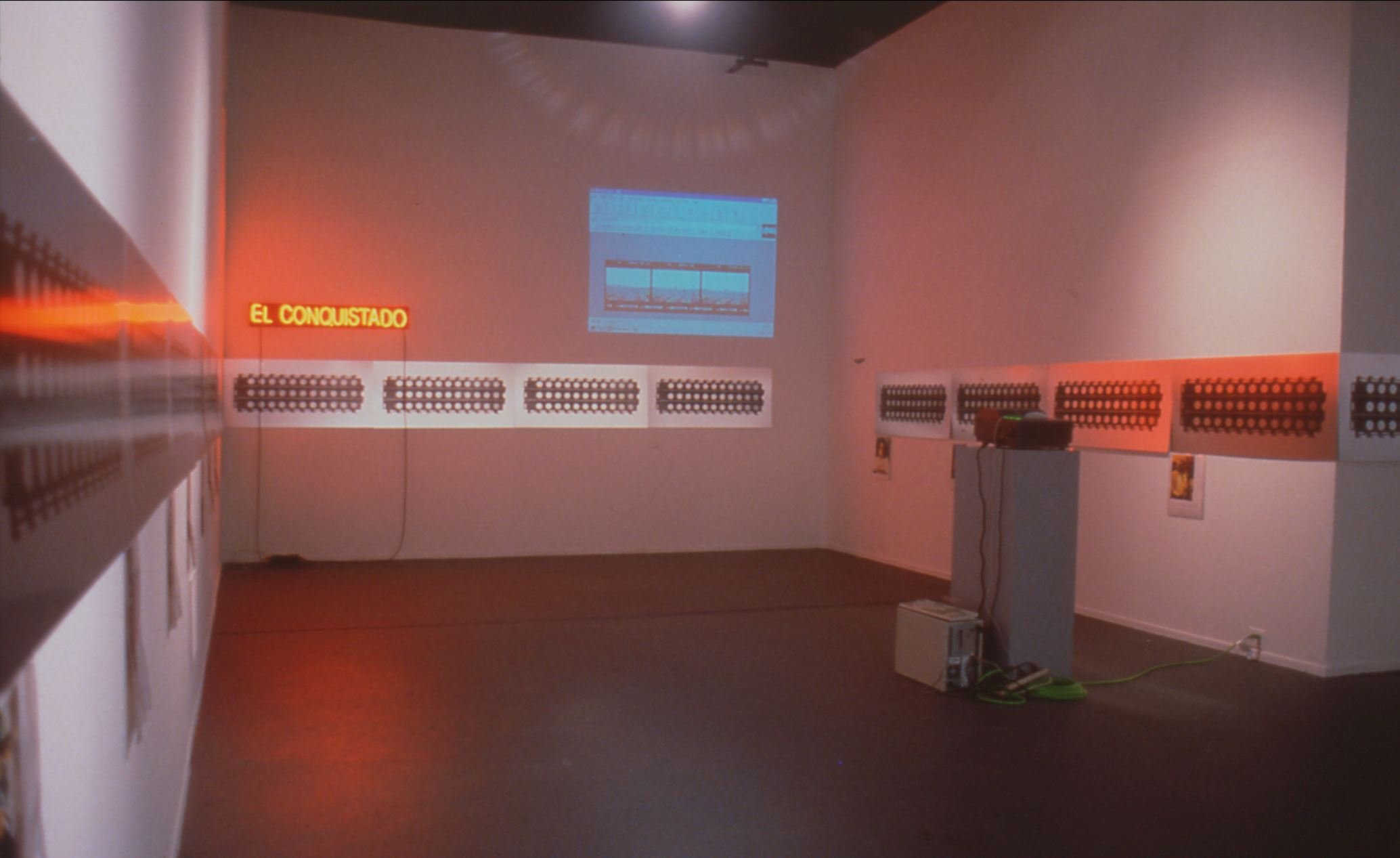
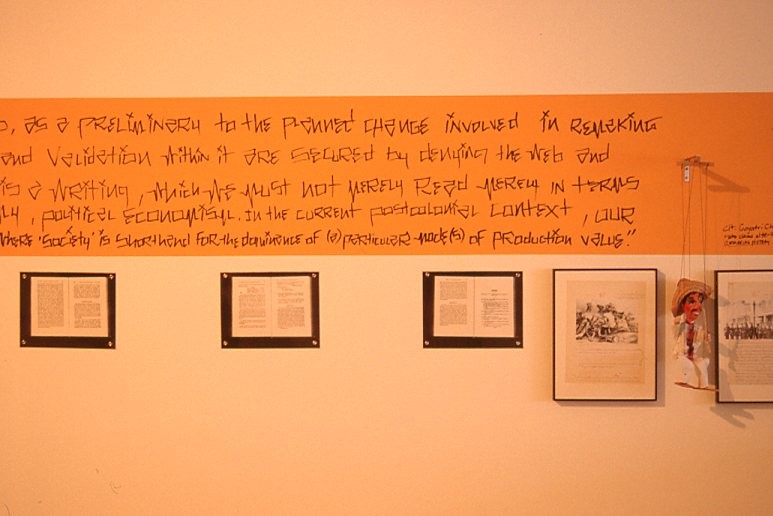
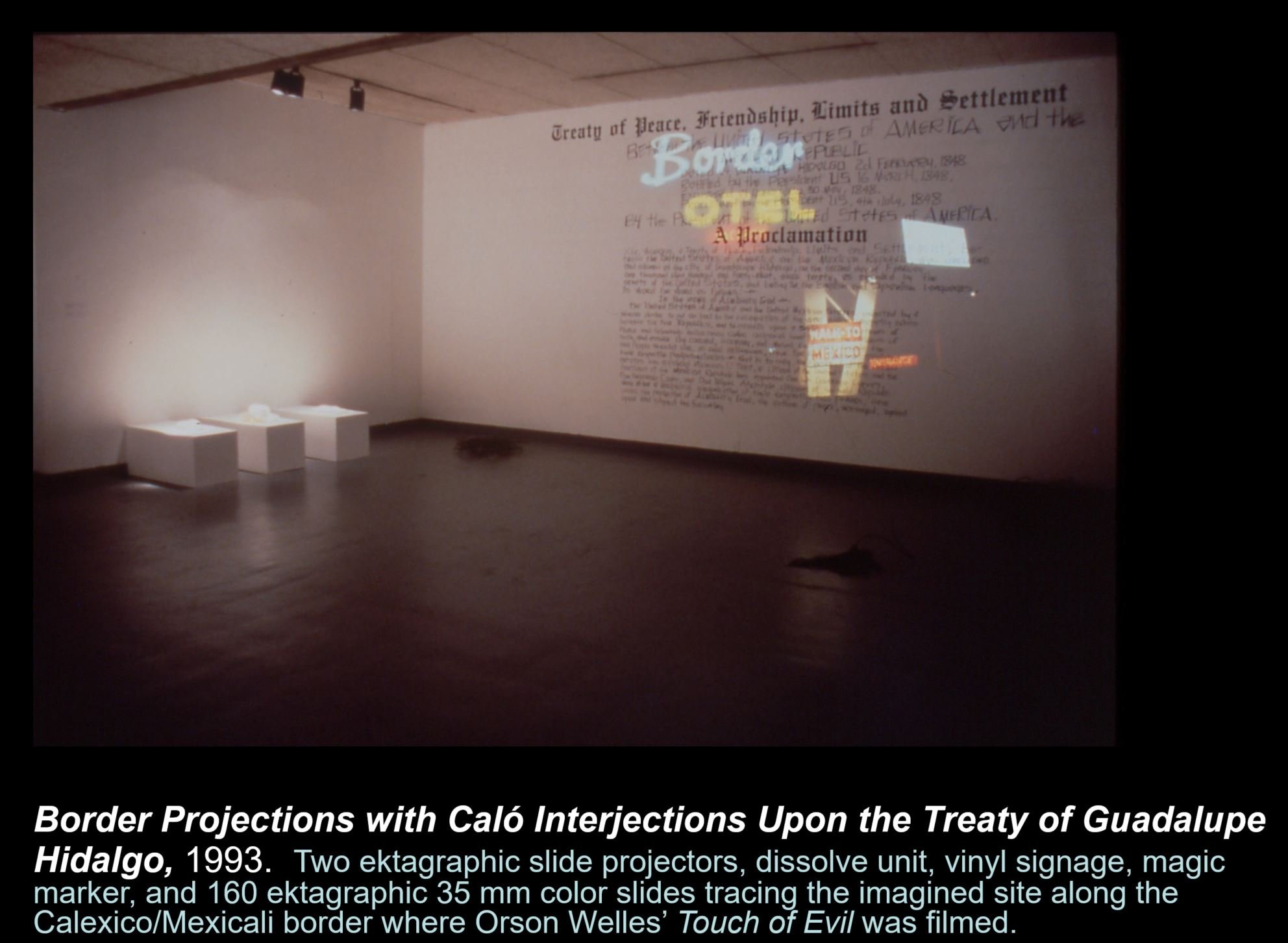
This work has been presented in various ways and on several different platforms since it was first conceived and through its exhibition history. Primarily staged to be experienced as a cross-media multi-image portrait of the border zone between two vastly different polities --and highly different countries-- the resultant portrait is an image formed by one-hundred sixty color slides, captured at different times of day and night. In time the work became a two-channel projection, often accompanied by language purloined from the Treaty of Guadalupe Hidalgo (the transfer of 55% of Mexico's Northernmost territories seized by the US was sealed by this deal.) Rascón hand painted the Treaty freestyle with a bravado graffiti gesture and superimposed the moving images of this work calling it Border Projections with Caló Interjections Upon the Treaty of Guadalupe Hidalgo, a cornerstone of the solo installation Occupied Aztlán at the San Francisco Art Institute in 1994.
The sound accompaniment on this video is a guitar treatment generated in the Folsom Street studio by the artist in 1984. Sound played a role in Rascón's earlier experimental works and is often incorporated into later video work, such as is the case here.
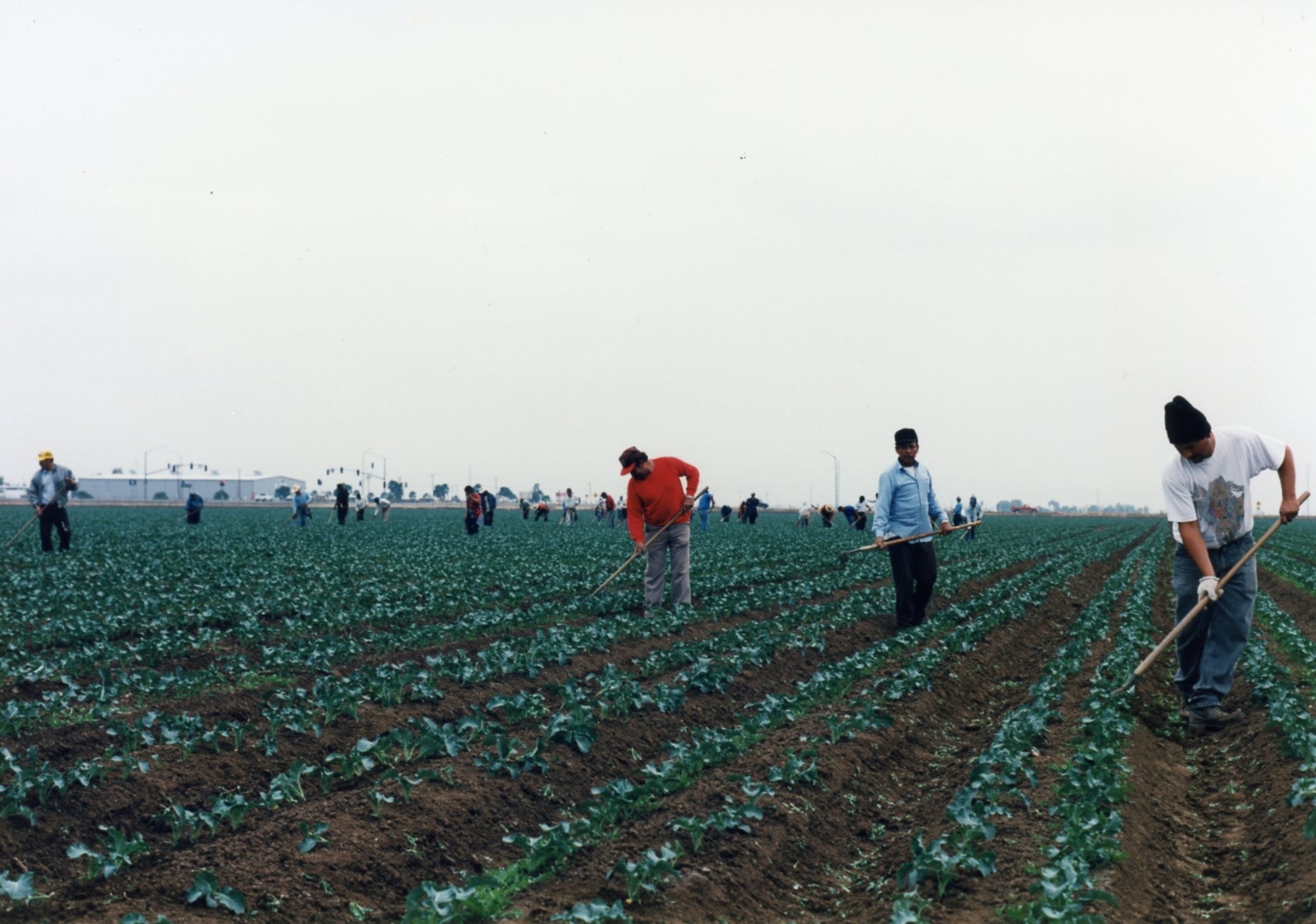
The spirit of ephemeral art is often difficult to capture, and the scale of this piece is almost lost in translation. The 160 images were captured on or before 1993 along the twin border zones of Mexicali and Calexico. Most of the physical iron and fencing has been replaced twice since then. For the money (ROI) the American Fencing Company that bid and won the contract did manage to install a fence that withstood the test of time: it stood at the border site from 1949 through 1997 as it appears throughout this video.
The language of the rolling text is only half of the Treaty of Guadalupe Hidalgo, as it appears to have ever only served one of the two signatories of the equation.
Borderland Raga (video) by Armando Rascón © Copyright 1984-1993, All Rights Reserved.
Borderland Raga (video) by Armando Rascón © Copyright 1984-1993, All Rights Reserved.
To Be Alive for One Minute in 1977! TRT: 16: 47 mins, Kodak Super8mm film (transcoded to digital by the artist in 2026). This early film piece is an early work by media artist Armando Rascón, originally shot on a Bolex, using super8mm Kodak film, the artist transcoded the work into digital fifty years later in 2026. The film was edited in 1977, and the digital version remains 100% faithful to the original. The guitar instrumental soundtrack was also recorded by Rascón in 1976-77. The cassette originals were also transcoded to digital, however no digital cleaning or re-mastering was performed to preserve the unpolished quality of the original recording. The artist has emerged as a seminal figure in Xicanx conceptual and media art --therefore this piece is an early view into the foundational politics that informed much of his work in later years.
To Be Alive for One Minute in 1977! TRT: 16: 47 mins ©1977-2026 by Armando Rascón, All Rights Reserved.
Naco Nocturnes (sound track edit) 2006, RT: 5:27, Element from installation Armando Rascón: Naco Nocturnes at the de Young Museum, San Francisco, California. 2006-2007.
Ghosts of Boys circa 1919
Video by Armando Rascón.
TRT: 1 hour 08 min
It was the last video completed at his Calexico studio in 2008. The work is minimal in nature and captures the late afternoon shadow play for one hour and eight minutes, a sequence that repeated itself daily in the clockless kitchen window. The audio composition is a mashup of sampled sound combined with Moog synthesizer textures composed by Rascón. The work was featured at the adventurous Chinatown Los Angeles exhibition space Art For Humans in a project entitled "Chinesca>ricorso<Chinatown " organized by Rascón and Mexicali collective BEZANDO in 2008.
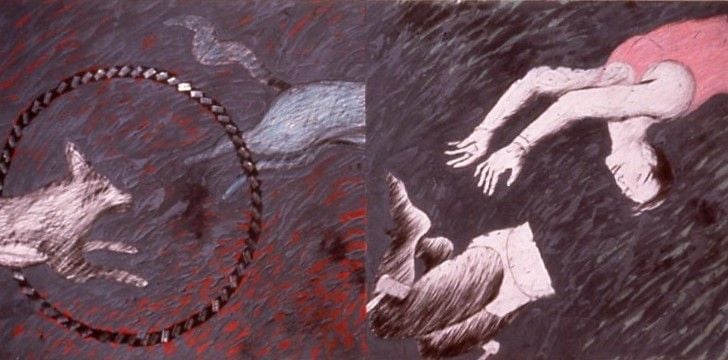
Niño Perdido (Sur) 2003, 2-channel DVD projection.TRT: 5:45 minutes.
Two-channel, Left panel.
Armando Rascón: Border Xicanographies, Galería de la Raza, San Francisco, California. 2003.
Niño Perdido (Norte) 2003, 2-channel DVD projection.
TRT: 5:45 minutes. Two-channel, Right panel.Armando Rascón: Border Xicanographies, Galería de la Raza, San Francisco, California. 2003.
Armando Rascón: Two Ballcourts w/ a Mediated Third, RT: 8:24 minutes, 2002. Video projection element from project Armando Rascón: Border Xicanography, commissioned to appear alongside The Sport of Life and Death: The Mesoamerican Ballgame. The Newark Museum, New Jersey, 2002. Video comprising outtakes from the 1992 World Cup quarter-final match between the USA and Mexico, the Juan Soldado Chapel in Tijuana, and youth scaling the border fence at site Mexicali/Calexico.

Lourdes Portillo interview with Armando Rascón,
2000
TRT: 23:44 minutes
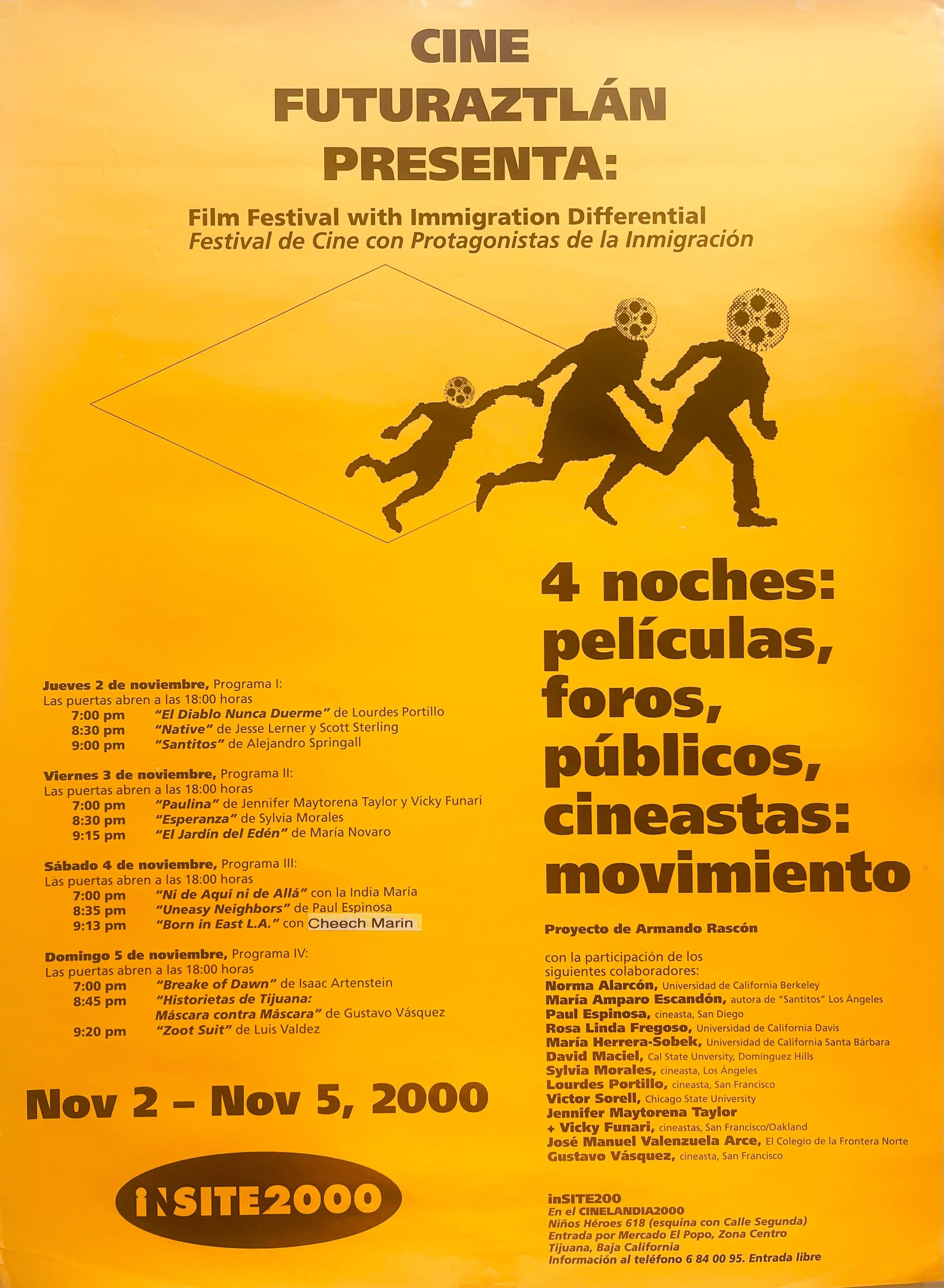
Lourdes Portillo sat for a video interview with Armando Rascón in October 2000 in preparation for his Tijuana film festival of which Portillo's' film El Diablo Nunca Duerme would be opening the festival on the night of Día de Muertos | All Soul's Eve, November 2, 2000.
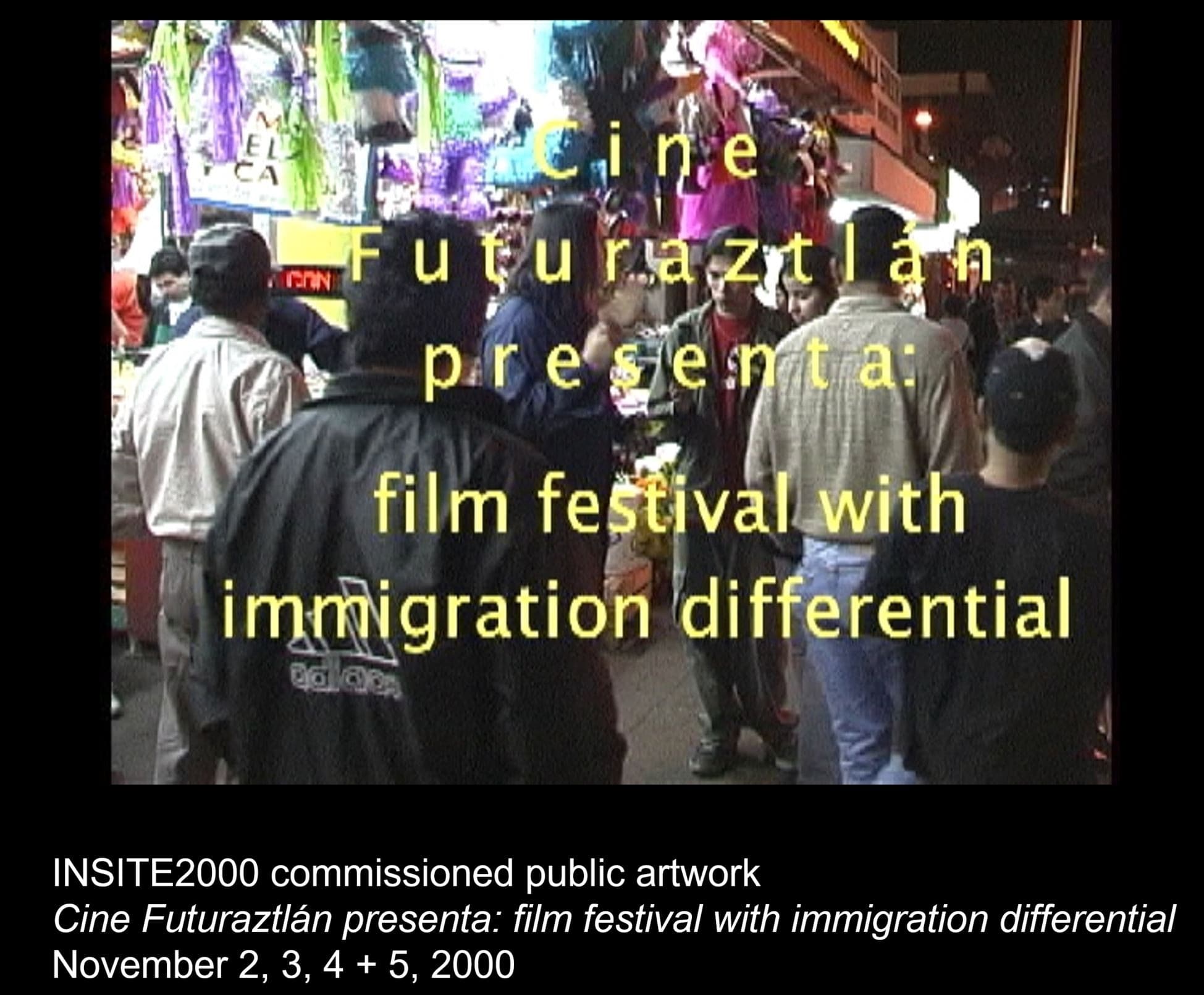
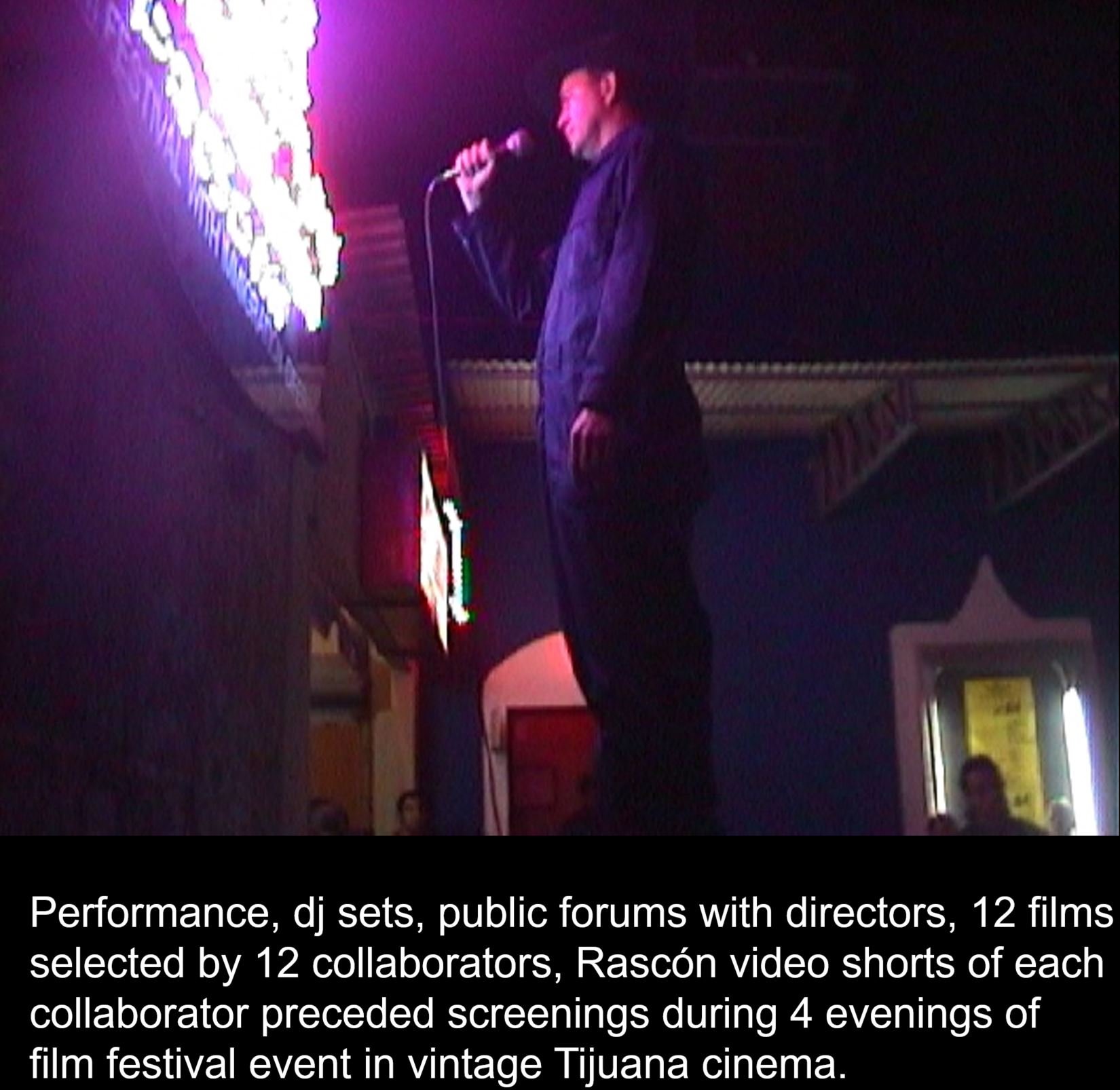
Rascón later created a three-minute short that preceded the start of Portillo's film, as with all of the other eleven films being screened at the festival. The film festival Cine Futuraztlán Presenta: Film Festival with Immigration Differential was conceived by Rascón as a multi-procedurally complex public art installation commissioned work in the public sphere --part of the year's abundant cycle of multiple site-specific installations throughout the San Diego/Tijuana borderland region organized by the renowned international arts presenter inSITE (Art in Public Spaces).
Armando Rascón: Cine Futuraztlán Presenta: Film Festival with Immigration Differentialwas presented at the Cinelandia 2000 movie house, located in the central plaza of El Mercado Popo in downtown Tijuana. Art in the Public Sphere - in SITE 2000Video run time: 23:44 minutesCopyright © 2000-2026 by Armando Rascón. All Rights Reserved.
Rascón later created a three-minute short that preceded the start of Portillo's film, as with all of the other eleven films being screened at the festival. The film festival Cine Futuraztlán Presenta: Film Festival with Immigration Differential was conceived by Rascón as a multi-procedurally complex public art installation commissioned work in the public sphere --part of the year's abundant cycle of multiple site-specific installations throughout the San Diego/Tijuana borderland region organized by the renowned international arts presenter inSITE (Art in Public Spaces).
Armando Rascón: Cine Futuraztlán Presenta: Film Festival with Immigration Differentialwas presented at the Cinelandia 2000 movie house, located in the central plaza of El Mercado Popo in downtown Tijuana. Art in the Public Sphere - in SITE 2000Video run time: 23:44 minutesCopyright © 2000-2026 by Armando Rascón. All Rights Reserved.
Border Crossing Action, 1991
TRT: 01:24 minutes.
Video by Armando Rascón.
Roundtrip walk -- Calexico, California en-route Mexicali, Baja California and back to the USA on October 12, 1991, the eve of the Quincentenary.
Created for Projections in the Public: Conquests do not belong only to the past exhibition curated by Karen Atkinson at INTAR, New York.
Border Metamorphosis,
TRT: 19 minutes
Video by Armando Rascón ©2000-2026
Border Metamorphosis: The Binational Mural Project a community-involved public art project by Armando Rascon (and over two-thousand volunteers) created between 1998 and 2002. Sponsored by the Calexico Arts Commission, the mural was the result of community leaders coming together to resist the imposition of a two-mile metal wall that was instated by Operation Gatekeeper, thereby visually separating the adjacent border cities of Calexico, California, USA and Mexicali, Baja California, Mexico.
SKATELORE EXPO Video by Armando Rascón TRT: 36:50 minutes. Guest Curator Armando Rascón organized the skating survey exhibition Skatelore Expo: California Skate(board)ing Index to Concepts, Form, Lifefor the Santa Barbara Contemporary Arts Forum (the show ran from April 4 thru May 16, 1998.)The video is Rascón's basic one-take capture, with no editing involved. It begins with his arrival at the pro-skater demo and skate street course on De La Guerra Street, just below the Contemporary Arts Forum, then continues upstairs to the Betty Klausner Gallery of the CAF with a quick tour of the many works on display by the more than 30 participating artists. Link to Contemporary Arts Forum brochure is here.
Recently transcoded from a recovered VHS tape by Rascón. In his effort to record the visual culture of skateboarding --dating back to the Fifties-- the exhibition surveyed the skate culture in California, beginning with an original deck of the caricature Rat Fink painted by Ed Roth, as well as early works by the circle associated with ZEPHYR and members of the legendary Dog Town Skate team of Venice, California. The exhibition included works by Santa Cruz landscape architect Ken Wormhoudt, an early skatepark visionary, advocate and designer. Original murals were painted direct on the walls by artists Barry McGee and Margaret Killgallen. Video programs were scheduled to include the legendary skate videos of Spike Jonz and Stereo's Chris Pastras.
Skatelore Expo: California Skate(board)ing Index to Concepts, Form, Life video by exhibition curator Armando Rascón © copyright 1998-2026, All Rights Reserved.
KarmaBo(a)rder Skateworks
1998
TRT: 12 Minutes 45 seconds.Video by Armando Rascón
Rascón's residency at the Blue Star Art Space, contemporary art for San Antonio from November 22 through December 4, 1998, included a day-long workshop with members of the Jefferson High School Skate Team.
The workshop culminated with the making and inclusion of this video as part of one of eight installation works in Rascón's solo exhibition Latina Postcolonial Photobureau and 7 Related Media Installations, a mid-career survey of the artist's works in media installation.
Credit: video copyright ©1998-2026 by Armando Rascón, All Rights Reserved.
Credit: video copyright ©1998-2026 by Armando Rascón, All Rights Reserved.
Santa Fe,
1997
TRT: 31:59 minutes
Video first exhibited as part of the exhibition Armando Rascón: Postcolonial Califas a dual-site project comprising both the Museum of Contemporary Art, San Diego and the Centro Cultural de la Raza, in Balboa Park, San Diego in 1997.
Video first exhibited as part of the exhibition Armando Rascón: Postcolonial Califas a dual-site project comprising both the Museum of Contemporary Art, San Diego and the Centro Cultural de la Raza, in Balboa Park, San Diego in 1997.
Occupied Aztlán 1994
TRT: 26 min 15 seconds.
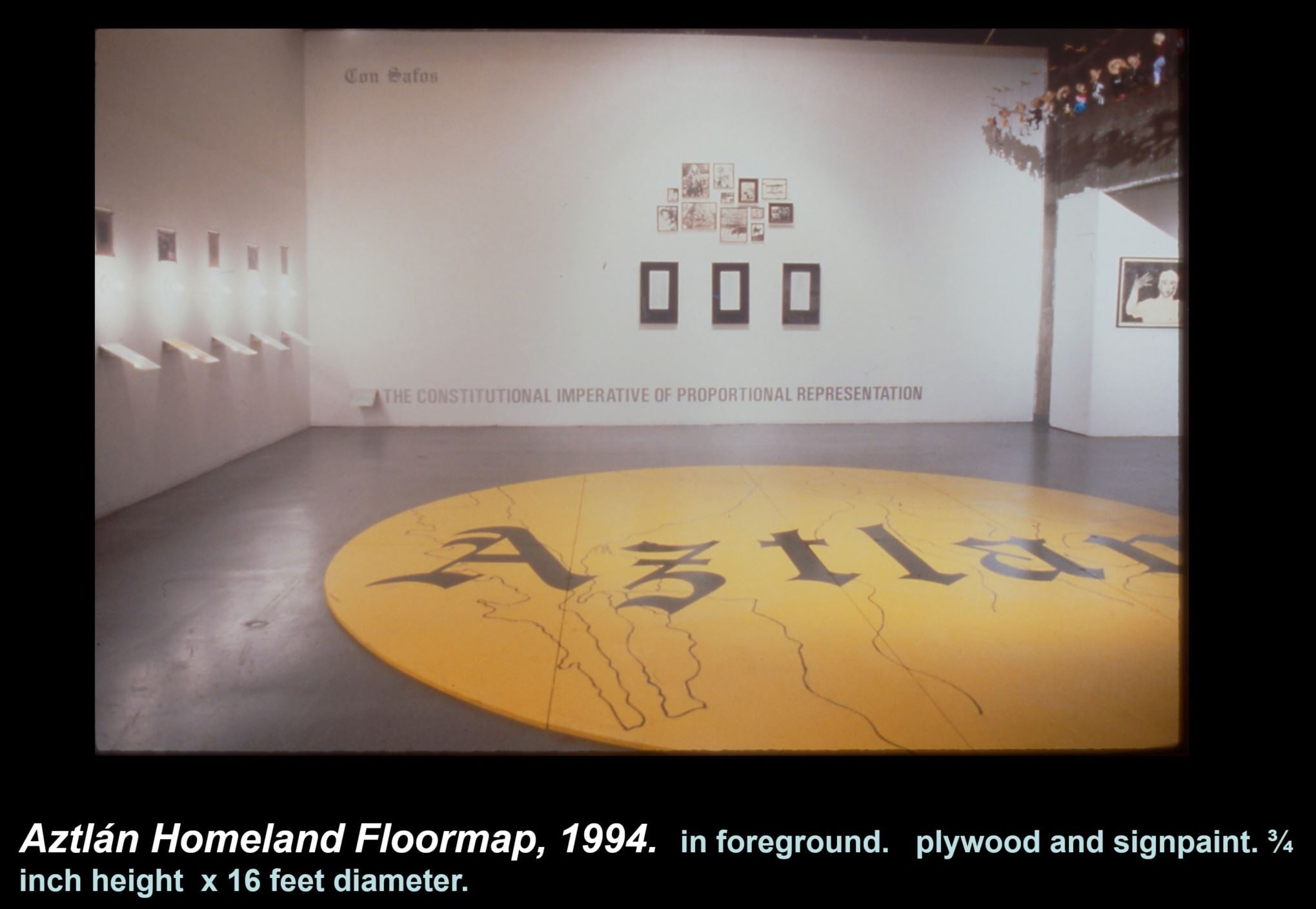
Occupied Aztlán was a breakaway media project created by artist Armando Rascón for his Adaline Kent Award exhibition at the San Francisco Art Institute in 1994. Video ©1994-2026 by Armando Rascón and Rick Tejada-Flores.
Shot by renowned film-maker Rick Tejada-Flores, the video merges elements from the installation with a visit by students from the RAP (Real Alternatives Program) High School in San Francisco's Mission District.
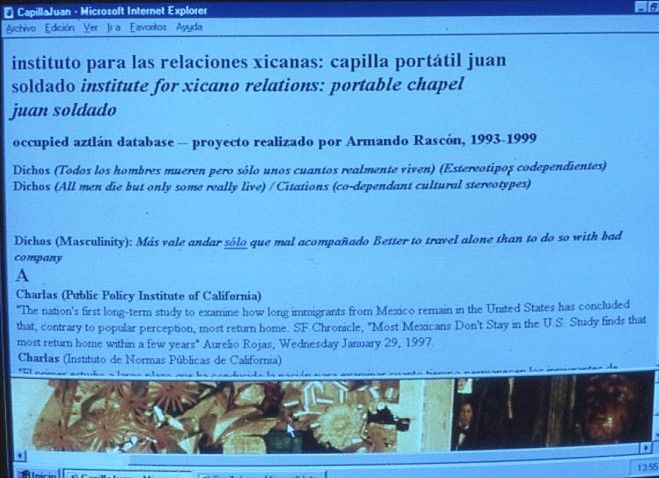
Rascón accepted a year-long stint as art instructor at RAP and this was a meeting of the minds between the artist and the students. Rascón set up a computer kiosk he titled Occupied Aztlán Database. Visitors at the site were granted 30-minute access to Rascón's online conference The Politics of Empowerment: Institute for Xicano Relations connected simultaneously on the WELL (an early online community in Northern California) and at the gallery site.
Shot by renowned film-maker Rick Tejada-Flores, the video merges elements from the installation with a visit by students from the RAP (Real Alternatives Program) High School in San Francisco's Mission District.
Rascón accepted a year-long stint as art instructor at RAP and this was a meeting of the minds between the artist and the students. Rascón set up a computer kiosk he titled Occupied Aztlán Database. Visitors at the site were granted 30-minute access to Rascón's online conference The Politics of Empowerment: Institute for Xicano Relations connected simultaneously on the WELL (an early online community in Northern California) and at the gallery site.
Stations of the X (video), 1989-1993TRT: 25 min 08 secondsby Armando Rascón
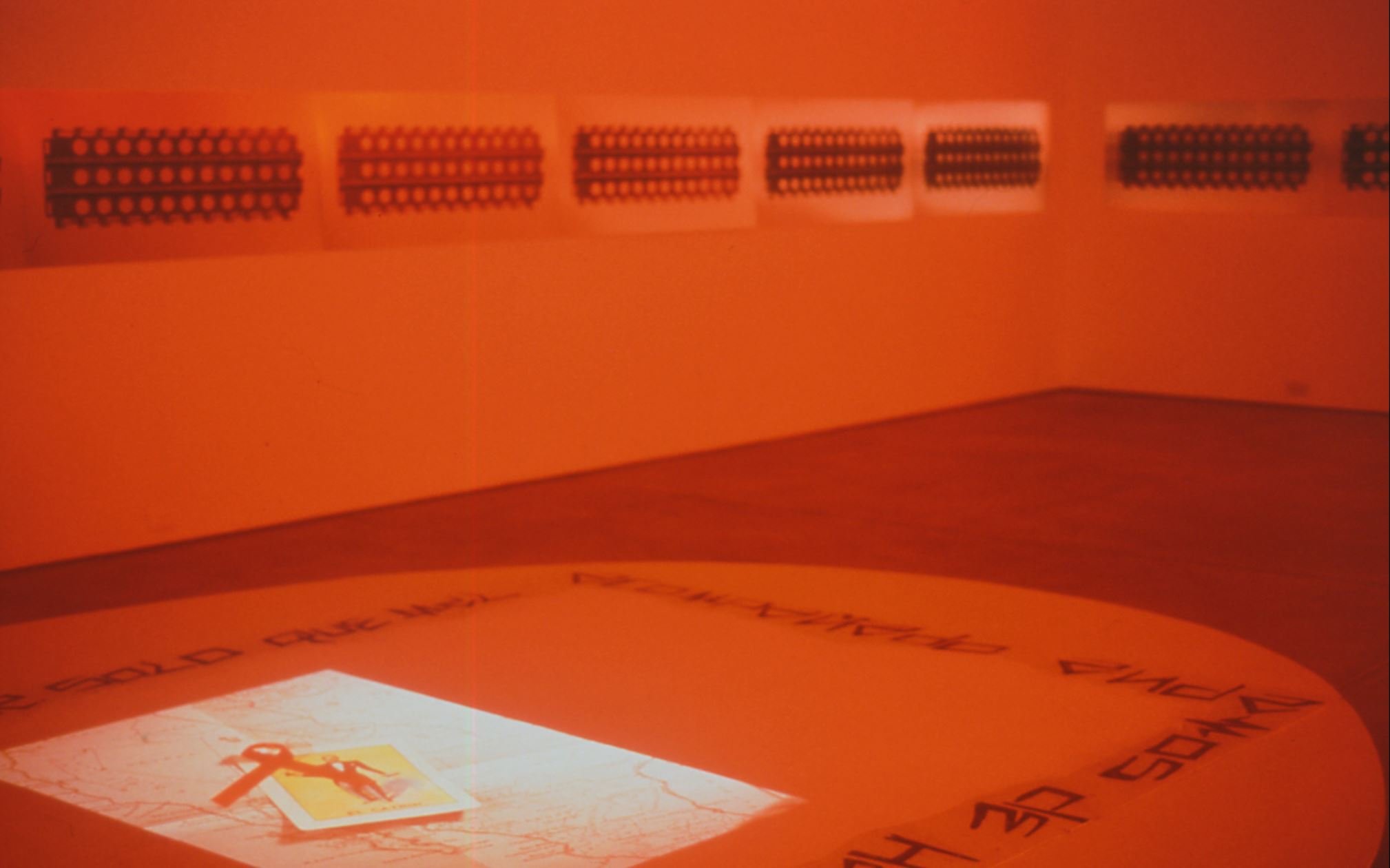
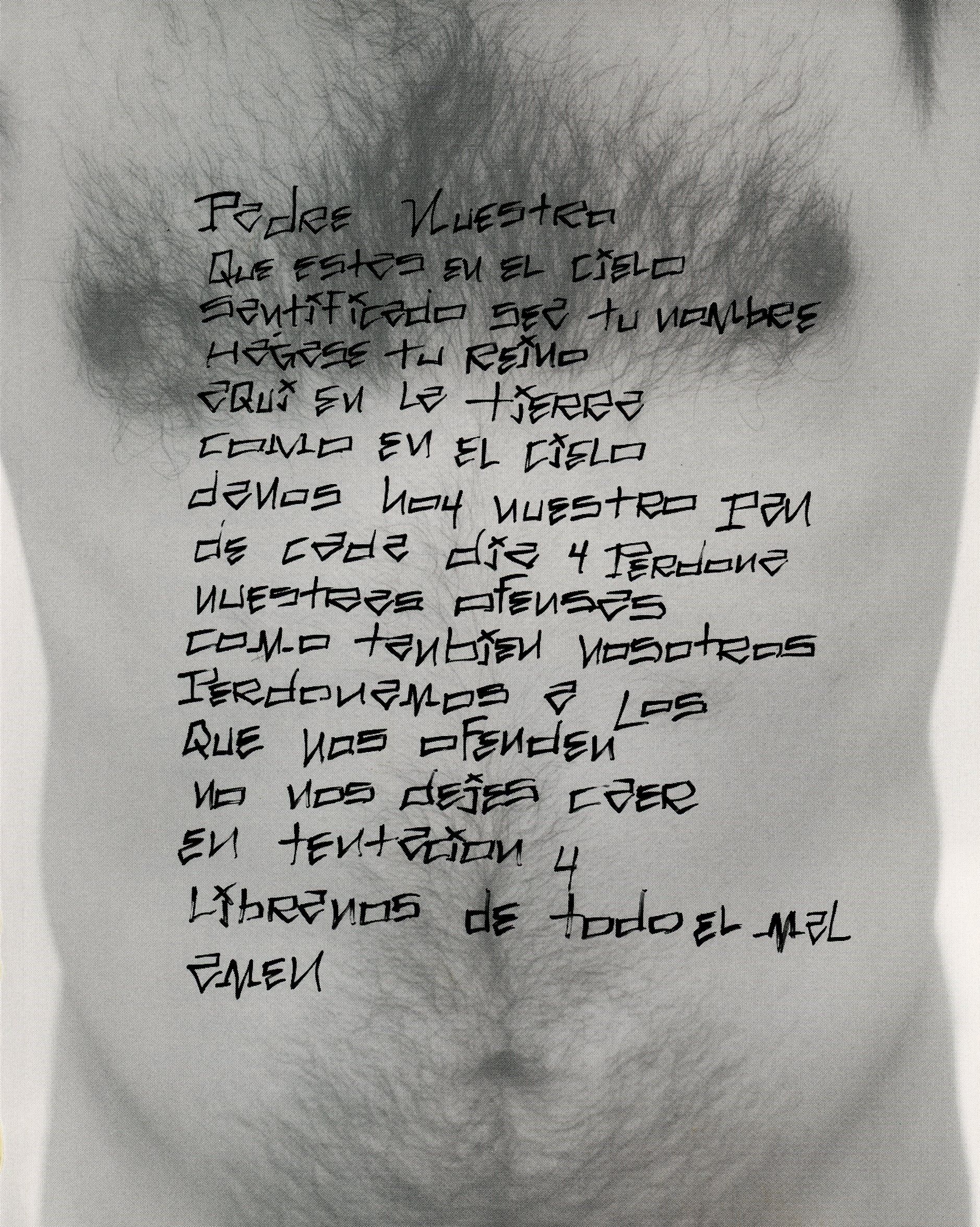
This video-installation incorporated two other elements to complete the work: eleven silver gelatin prints with inked prayers and language in the barrio graffiti style practiced by the artist and friends in his youth. The third element is a floor map incorporating serial Olmec masks for eleven feet towards the video monitor (also on the floor).
The installation evolved over the course of several years, beginning with the inked photographs in 1989. The video was shot in 1993. The dissonant video artifacts purposely quote avant-garde structural film works the artist made with 8mm in the late Seventies.
The piece was seen as part of the exhibition Expansion Arts: Artists of Our Times at the the Alternative Museum, New York, in 1997. In 1998 the work was included in Rascón's mid-career survey Latina Postcolonial Photobureau and 7 other media installations at the Blus Star Art Space in San Antonio. The Blue Star Art Space project was organized by renowned art curator Carla Stellweg.
Copyright by Armando Rascón ©1989-2026, All Rights Reserved.
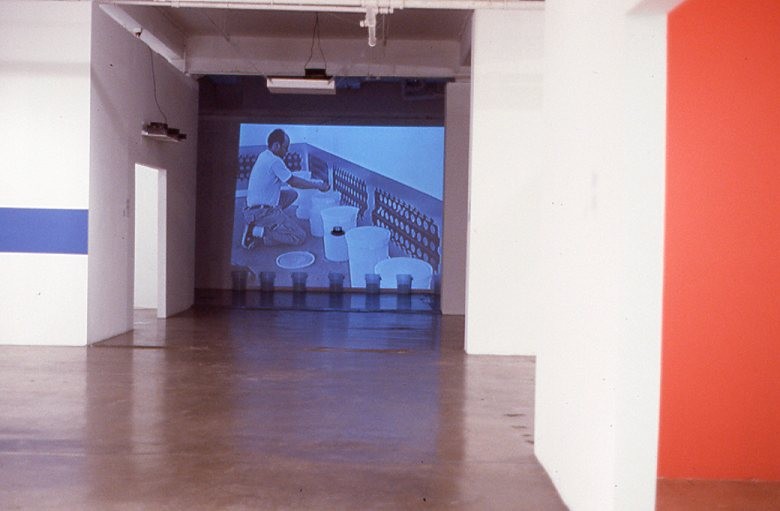
Video-installation view is below:
This video-installation incorporated two other elements to complete the work: eleven silver gelatin prints with inked prayers and language in the barrio graffiti style practiced by the artist and friends in his youth. The third element is a floor map incorporating serial Olmec masks for eleven feet towards the video monitor (also on the floor).
The installation evolved over the course of several years, beginning with the inked photographs in 1989. The video was shot in 1993. The dissonant video artifacts purposely quote avant-garde structural film works the artist made with 8mm in the late Seventies.
The piece was seen as part of the exhibition Expansion Arts: Artists of Our Times at the the Alternative Museum, New York, in 1997. In 1998 the work was included in Rascón's mid-career survey Latina Postcolonial Photobureau and 7 other media installations at the Blus Star Art Space in San Antonio. The Blue Star Art Space project was organized by renowned art curator Carla Stellweg.
Copyright by Armando Rascón ©1989-2026, All Rights Reserved.
Video-installation view is below:

BOOKS
SOUND selected works
Postcolonial Califas Public Service Announcement, 1997 TRT: 10:42 mis
Audio capture on Soundcloud: from Postcolonial Califas PSA Interactive Voice Response voter registration campaign element that was at the core of the experimental spirit of the exhibition. The bilingual voiceover was written and read by the artist in his San Francisco studio in 1997. This sample is a 5:00 minute capture from a longer intricately woven detailed version.
.jpg)
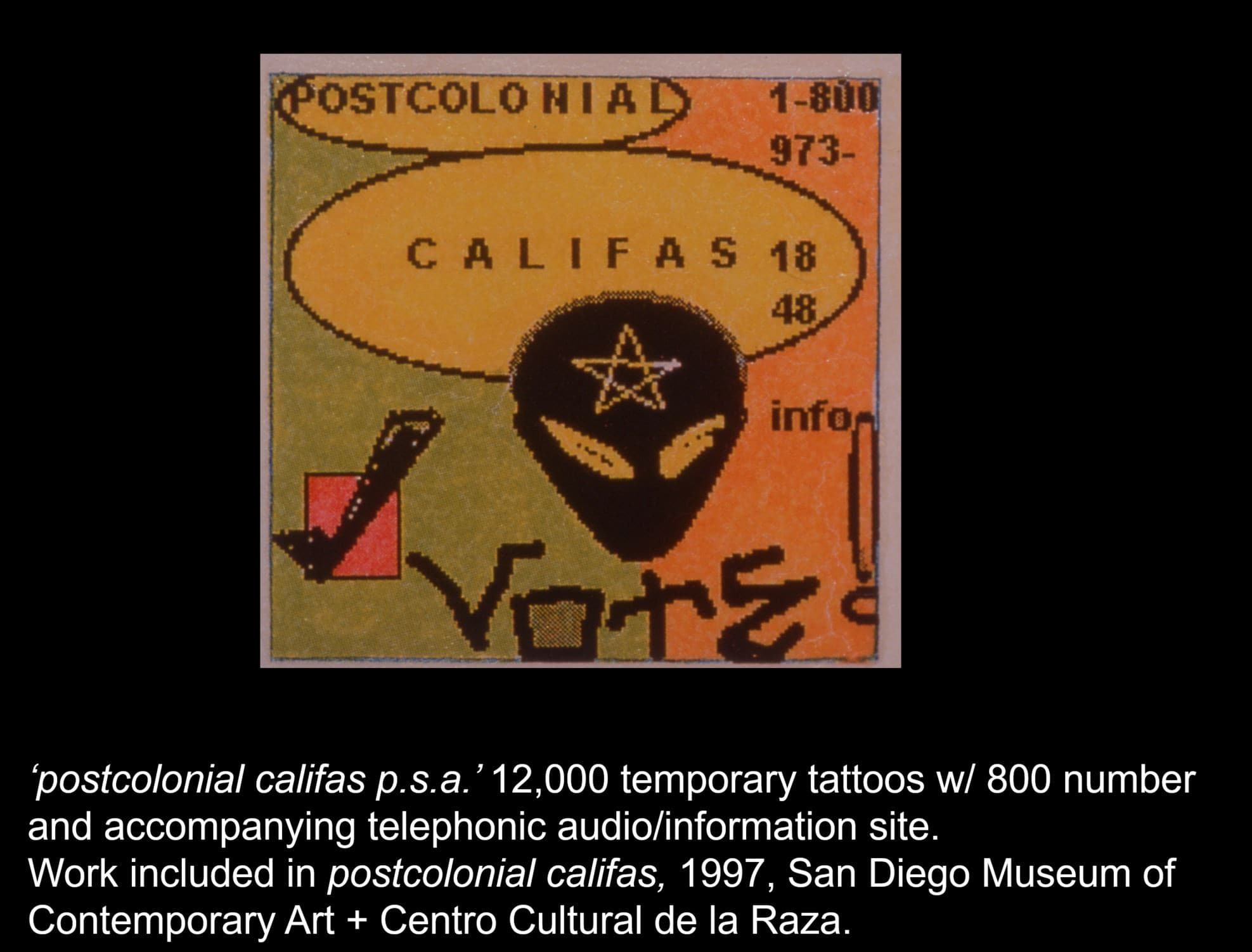
Postcolonial Califas Public Service Announcement, 1997.
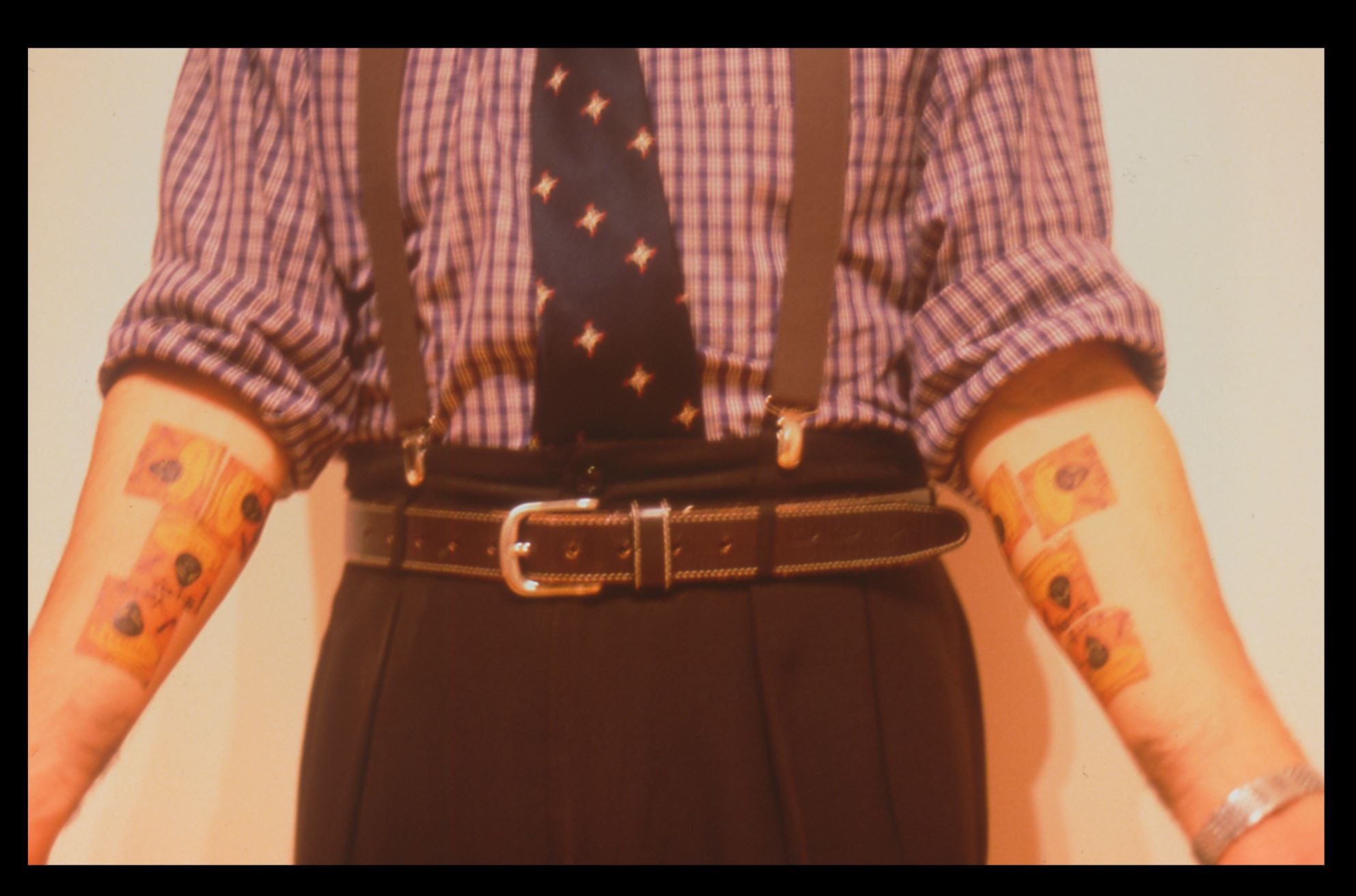
The distribution of 12,000 rub-on temporary tattoos served as a call to action and bilingual information campaign to impulse youth towards voter registration. The 800-973-1848 telephone number guided callers through a sophisticated bilingual Interactive Voice Response system with timely information regarding the imperative for the youth vote in light of passage of Proposition 187 earlier in the year and the impact that this was already having on undocumented populations in the state of California.
The Interactive Voice Response (IVR) technology that Rascón used to deliver fourteen prerecorded telephone prompts provided callers an extended navigation menu to separate audio information choices with distinct themed paths in defining postcolonialism at close to the Millenium : (1) voter registration option; (2) a brief historical overview of the meaning of the term Aztlán; (3) the political history of the Mexico-American War that ended in 1848, with the loss of about one-third of the northern part of Mexico (ceded to the USA); (4) an overview of the recently passed Proposition 187; and, (5) a brief overview of the Olmec, the mother culture of the Americas. (6-14) information audio tours based on the overall objectives of Armando Rascón: Postcolonial Calias. Above is a redacted audio sample of the Postcolonial Califas P.S.A. made for deployment during the era of analog telephony over copper wire. The temporary tattoos were distributed on the exhibition announcements as well as at both El Centro Cultural de la Raza and Museum of Contemporary Art, San Diego locations free of charge. Early testing was achieved by friends Sergio de la Torre and Coco Fusco. Rascón treated the testers to a Sunday afternoon drag show and cocktails at La Noche bar on 16th Street in the Mission District, San Francisco.
The distribution of 12,000 rub-on temporary tattoos served as a call to action and bilingual information campaign to impulse youth towards voter registration. The 800-973-1848 telephone number guided callers through a sophisticated bilingual Interactive Voice Response system with timely information regarding the imperative for the youth vote in light of passage of Proposition 187 earlier in the year and the impact that this was already having on undocumented populations in the state of California.
The Interactive Voice Response (IVR) technology that Rascón used to deliver fourteen prerecorded telephone prompts provided callers an extended navigation menu to separate audio information choices with distinct themed paths in defining postcolonialism at close to the Millenium : (1) voter registration option; (2) a brief historical overview of the meaning of the term Aztlán; (3) the political history of the Mexico-American War that ended in 1848, with the loss of about one-third of the northern part of Mexico (ceded to the USA); (4) an overview of the recently passed Proposition 187; and, (5) a brief overview of the Olmec, the mother culture of the Americas. (6-14) information audio tours based on the overall objectives of Armando Rascón: Postcolonial Calias. Above is a redacted audio sample of the Postcolonial Califas P.S.A. made for deployment during the era of analog telephony over copper wire. The temporary tattoos were distributed on the exhibition announcements as well as at both El Centro Cultural de la Raza and Museum of Contemporary Art, San Diego locations free of charge. Early testing was achieved by friends Sergio de la Torre and Coco Fusco. Rascón treated the testers to a Sunday afternoon drag show and cocktails at La Noche bar on 16th Street in the Mission District, San Francisco.
Naco Nocturnes (sound track edit)
2006, RT: 5:27, Element from installation Armando Rascón: Naco Nocturnes at the de Young Museum, San Francisco, California. 2006-2007.
Two versions of this video were produced by the artist:
>>A video with the above soundtrack
>>A standalone video with NO sound to be viewed as an installation element in relation to the ambient audio installation of Naco Nocturne (soundscape), a 70-minute standalone element on endless loop audible throughout the entire project space.
Postcolonial Califas Diction(ary)
1995, TRT: 08:11 mins
This video is an eight-minute audio-capture of a multi-hour sound installation by artist Armando Rascón. The installation is titled Postcolonial Califas Diction(ary) and was part of Rascón's mid-career survey at the Blue Star Art Space -Contemporary Art for San Antonio in 1998. The installation was staged in a black room, with two narrow focus spots fixated on two vintage ceramic tiles at opposite sides of a room flooded with a 4-channel track featuring a Xicanx family reunion that went unedited for hours. Audiences were able to sit on a single long bench for long stretches of time and fill their imaginations with resonant thoughts while the group in the audio continued their endless overlapping conversations reminiscent of group chatter during festive times. The images on the ceramic tiles heralded back to the more racist times in the Fifties when it was considered normal to inject 'lazy-ethnic' imagery into circulation during the era of Speedy Gonzalez and the Frido Bandido. What becomes clear in the audio is the normalcy of the merging patterns of speech in the vernacular marriage of English and Spanish in a never-ending swirl of sound that is prevalent in the borderlands.
©1995 by Armando Rascón, All Rights Reserved.
©1995 by Armando Rascón, All Rights Reserved.
Gloria Anzaldua's Borderlands/La Frontera Opening pages, reading of opening and video by Armando Rascón for public programs associated with the Museum of Contemporary Art San Diego's exhibition To Tame a Wild Tongue curated by Alana Hernandez in 2020.
This segment is part of a compilation of artists reading the entire book for public broadcast by the MCASD.
Armando Rascón: Naco Nocturnes (audio soundscape),
RT: 70 minutes, 2006.
Armando Rascón: Xicanx Victory Applause Sample Piece, 1991, invited guest artist Armando Rascon teaches Yolanda M. Lopez's class the Chicano Victory Applause during his lecture at The Little Theater, San Francisco State University, October 1, 1991.
Armando Rascón: radio capture 9 November 1994
Audio clip from Spanish radio broadcast morning of 9 November, 1994, on first day after passage of Proposition 187 in the state of California. This is a live radio capture on Spanish radio on the morning of 9 November, 1994 following pasage of Prop187 in the state of California --as callers attempt to determine whether to take kids to school, or to with hold hospital visits due to the weight of the new law on the undocumented classes in the state of California.AUDIO link to Soundcloud stream is to left
Audio clip from Spanish radio broadcast morning of 9 November, 1994, on first day after passage of Proposition 187 in the state of California. This is a live radio capture on Spanish radio on the morning of 9 November, 1994 following pasage of Prop187 in the state of California --as callers attempt to determine whether to take kids to school, or to with hold hospital visits due to the weight of the new law on the undocumented classes in the state of California.AUDIO link to Soundcloud stream is to left
Armando Rascón: radio capture 9 November 1994 (pt. 2), 1994Audio clip from "Entre Mujeres", Spanish radio broadcast on morning of 9 November, 1994, on first day after passage of Proposition 187 in the state of California.
WEB ART PROJECTSselected works 1993-2026
.jpg)
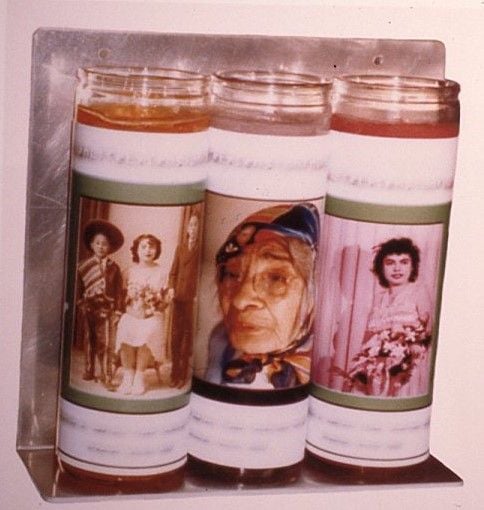
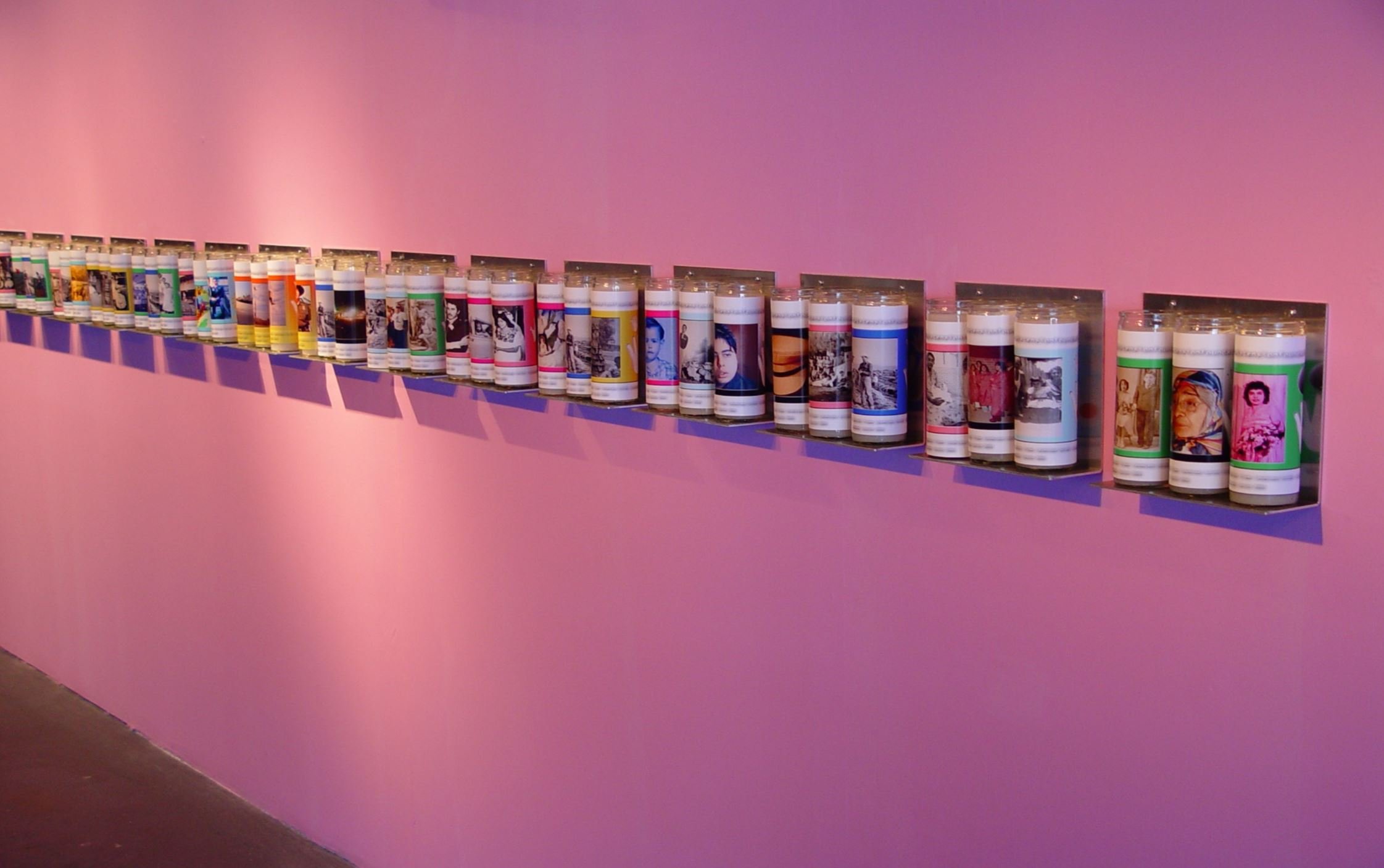
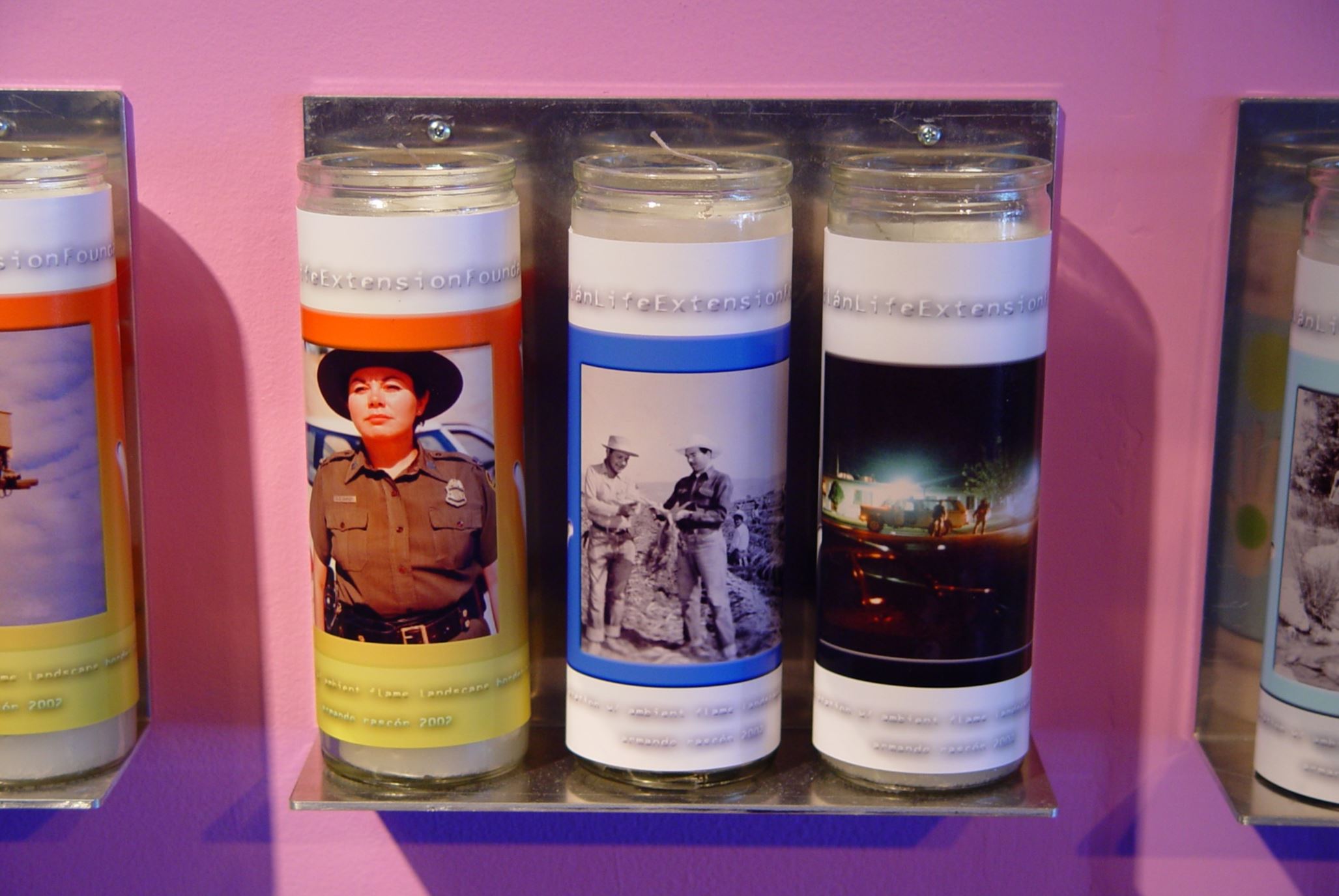
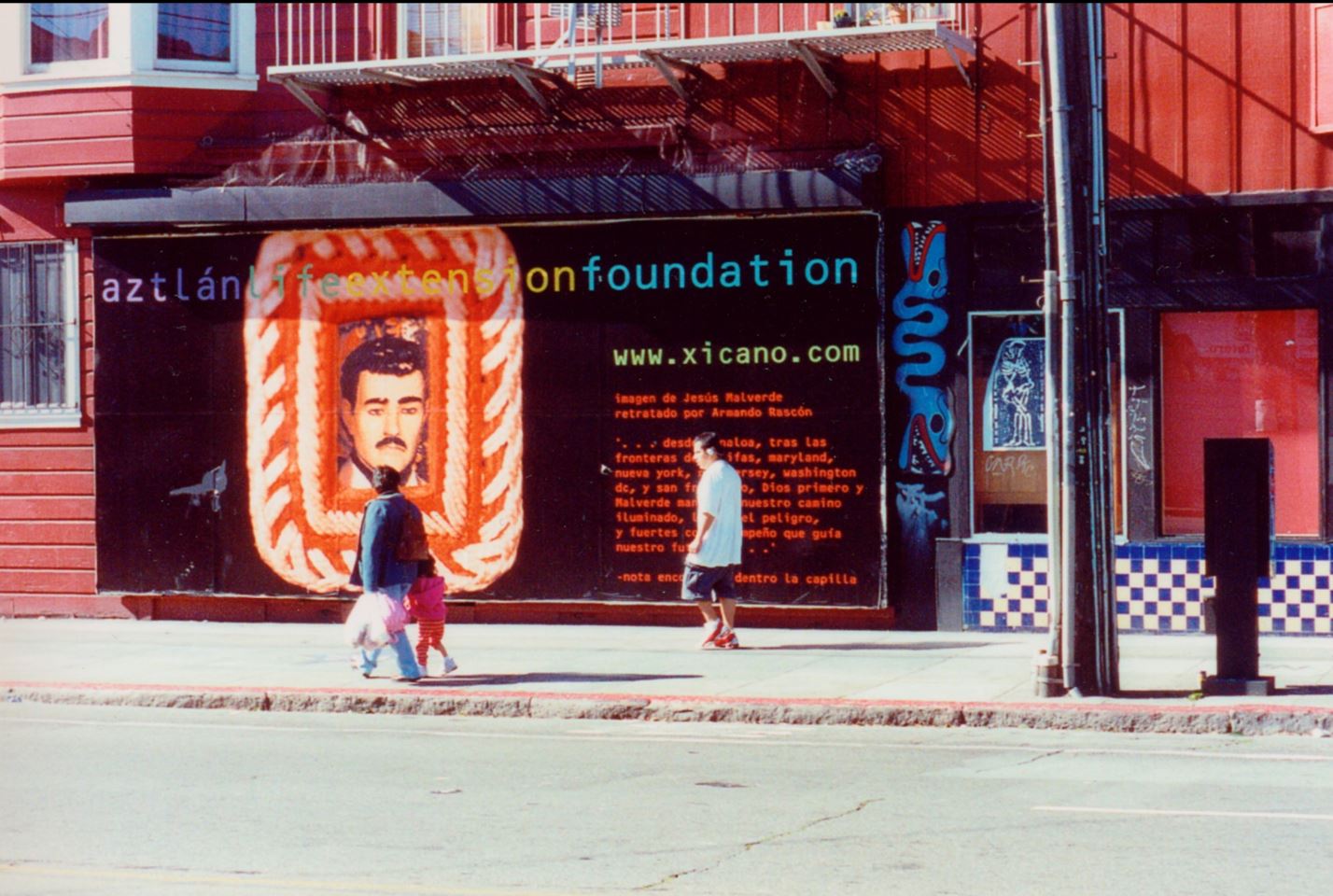
AztlánLifeExtensionFoundation, 2002.
Digital mural, Galería de la Raza, San Francisco, California.Bryant Street view, Fall 2002.

AztlánLifeExtensionFoundation, 2002,
HTML web-art, with digital mural on exterior wall of Galería de la Raza, Mission District, San Francisco, California. Foundation information was broadcast on xicano.com, Rascón's domain for electronic content distribution and presentation
The work was commissioned by Galería de la Raza in 2002 as part of the exhibition Viology: violence of culture, cultures of violence curated by Carolina Ponce de León, Galeria de la Raza, San Francisco, CA (in conjunction with the ongoing Digital Mural series). Rascón’s piece sought to conflate the gallery-going art cognoscenti with the local Mission District residential population during the outset of displacement of Latinx residents by the tech-bro invasion in the tech boom years between 1999 thru 2002.
After the digital mural element had been taken down, Rascón added two earlier web art works to the AztlánLifeExtensionFoundation site on XICANO.COM: Postcolonial Califas (1997) and Portable Chapel Juan Soldado. (1998). Rascón's domain XICANO.COM went live in 1996 and was changed to XICANX.NET in 2015 to signal solidarity with Latinx, feminist, queer and non-binary online communities of cultural warriors and stalwarts. HTML web art projects are being published on xicanx.net, in an ongoing effort to transcode early analog video to digital and overall conservation of original legacy content.
Institute for Xicano Relations: Portable Chapel Juan Soldado 1998
Interactive computer station, ink jet printer, bilingual information database hosted on xicano.com. Commissioned by Sala de Exposiciones Canal de Isabel II, Madrid, Spain, for exhibition “Aztlan Hoy.” Canal de Isabel II is the satellite photography and new media exhibition space for the Museo de Reina Sofía. Curated by Berta Sichel, Reina Sofía media arts curator.
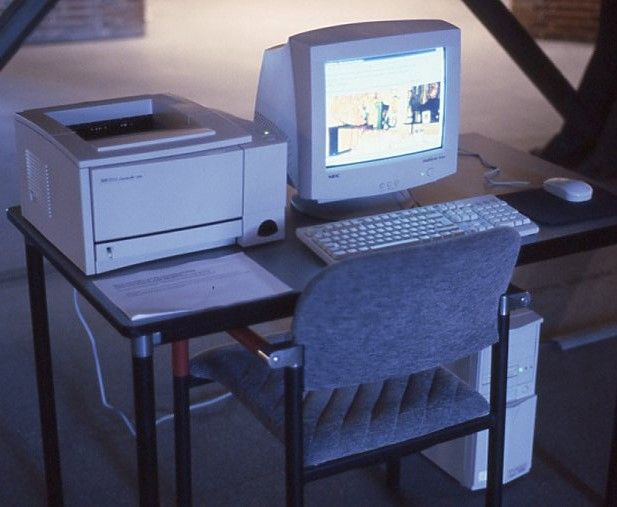

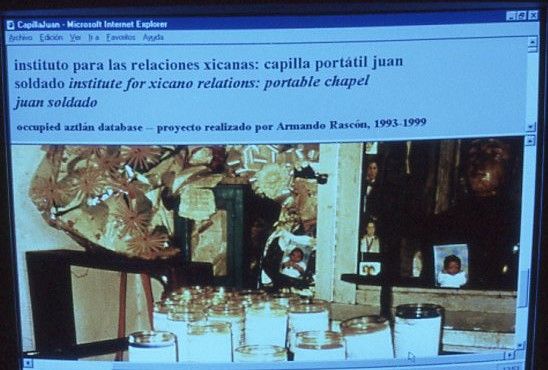

Institute for Xicano Relations: Portable Chapel Juan Soldado (1993-1998) 1998, HTML, by Armando Rascón.
This 1998 html artwork evolved from an earlier html piece by Rascón presented at the San Francisco Art Institute in 1994: Occupied Aztlán Database.
Institute for Xicano Relations: Portable Chapel Juan Soldado bilingual information citations from the site are posted on the following panel below.
Press the NAVIGATION CIRCLES AT TOP to advance or to return to prior citation selection.
Note: images are being imminently recovered to this panel as part of the artist's ongoing legacy recovery effort.
Border Metamorphosis
html project summary by Armando Rascón, 2000
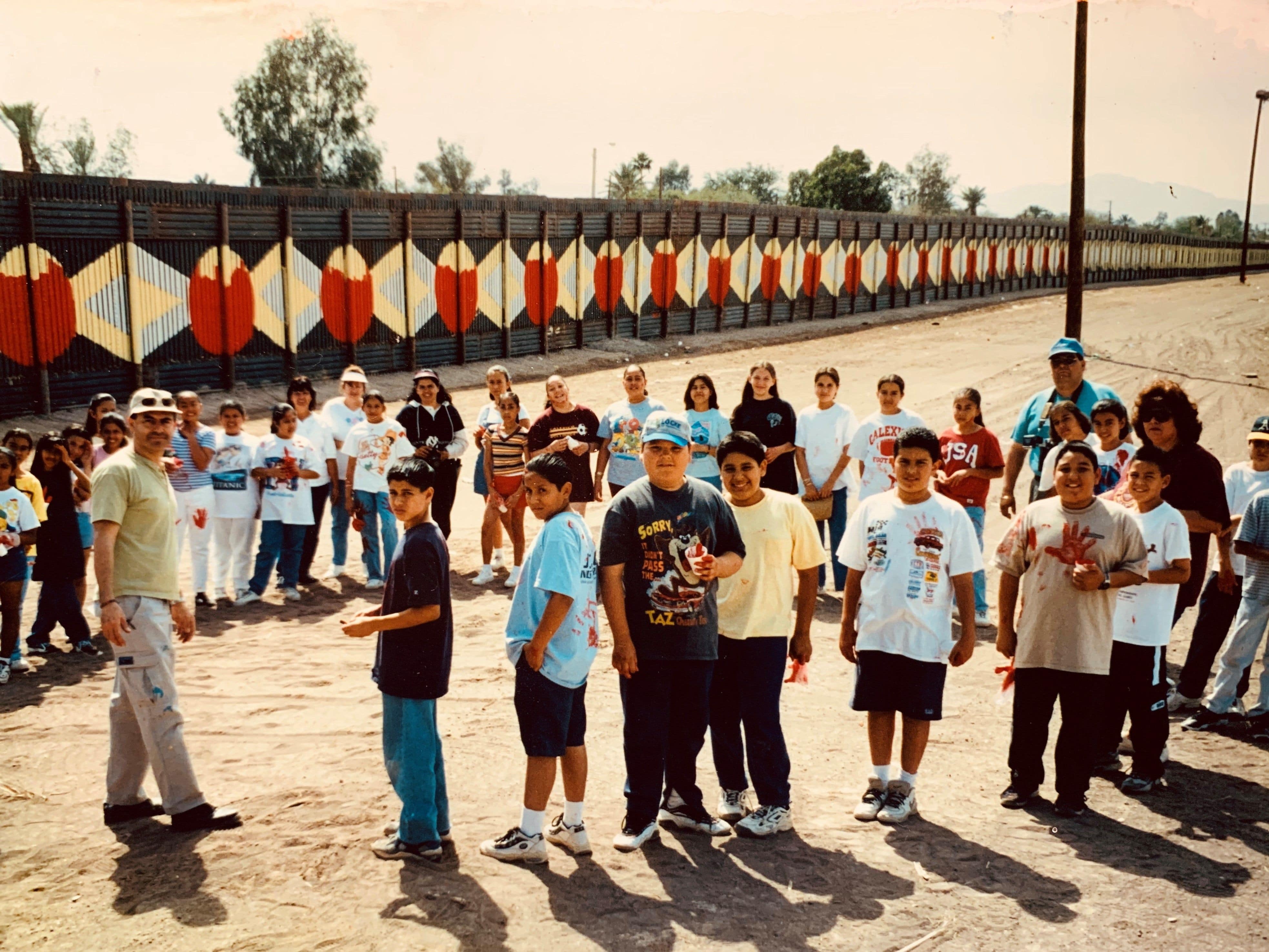
Border Metamorphosis, 2000
HTML video and photo-documentation overview by project artist Rascón, for this community-involved public art project. (1998-2002.) Rascón built the site on Adobe GoLive!, the artist's first use of retail web-builder software. Ten years later, the site went black (circa 2010.)
Rascón recovered the html files in 2025 and now the web project summary may be viewed here:
https://www.binationalmuralproject.com
HOME:
Gay Elder's Alternative Housing Project, 1998
Web Art Commission, Queer Cultural Center, San Francisco, www.queerculturalcenter.org. Rascón built HOME an HTML web architectural model for a proposed LGBTQ Senior Housing Project. The Queer Cultural Project site removed the web-art works from their portal circa 2015.
The work received a full commission by the QCC as part of that year's granting cycle.

The drawings below represent the web proposal submitted by Rascón in 1998.Proposal concept: a cross-disciplinary investigation into the prospects of creating a full-functioning full-service retirement environment by and for LGBTQ elders. The architectural concept design included a comprehensive analysis of existing normative senior housing and 'retirement homes' acrosss the United States.


.jpg)


XICANO.COM
Institute for Xicano Relations: Postcolonial Califas, 1997
Institute for Xicano Relations: Postcolonial Califas (1997) the html digital work pictured on the installation shots below were part of Armando Rascón: Postcolonial Califas, a dual-institution solo exhibition comprising both the Museum of Contemporary Art, San Diego and Centro Cultural de la Raza, San Diego. The project was curated by Louis Grachos (MCASD) and Patricio Chavez (Centro Cultural de la Raza).
XICANO.COM was broadcast both on the web and also as a web art projection upon the Centro Cultural de la Raza's wall. In lieu of an exhibition catalog, Rascón proposed Institute for Xicano Relations: Postcolonial Califas a multi-venue simulcast of the Postcolonial Califas messaging and web call-to-action to anonymous viewers on the world wide web. Rascón registered the domain and established xicano.com in 1996 as an on-going evolving space for Xicanx research within which to maintain valid vetted statistical data for use with his media-based information projects. These works required extensive research --from immigration law, to history, and relevant data-- culled from a number of sources including the New York Times, the Los Angeles Times, the Washington Post, other journals and Rascón's personal library. In 2015 Rascón transitioned the site from xicano.com to xicanx.net, replacing the prior domain to a non-binary domain name. A number of interactive html projects that were published on XICANO.COM are being recovered by the artist and will be reinstated to XICANX.NET as legacy archival works. Installation views below: Centro Cultural de la Raza, San Diego.
XICANO.COM was broadcast both on the web and also as a web art projection upon the Centro Cultural de la Raza's wall. In lieu of an exhibition catalog, Rascón proposed Institute for Xicano Relations: Postcolonial Califas a multi-venue simulcast of the Postcolonial Califas messaging and web call-to-action to anonymous viewers on the world wide web. Rascón registered the domain and established xicano.com in 1996 as an on-going evolving space for Xicanx research within which to maintain valid vetted statistical data for use with his media-based information projects. These works required extensive research --from immigration law, to history, and relevant data-- culled from a number of sources including the New York Times, the Los Angeles Times, the Washington Post, other journals and Rascón's personal library. In 2015 Rascón transitioned the site from xicano.com to xicanx.net, replacing the prior domain to a non-binary domain name. A number of interactive html projects that were published on XICANO.COM are being recovered by the artist and will be reinstated to XICANX.NET as legacy archival works. Installation views below: Centro Cultural de la Raza, San Diego.
.jpg)

.jpg)
Occupied Aztlán Database: aka Califas Paralegal Station. 1993-94
Simultaneous live online conference hosted by www.well.sf.ca.us and interactive computer kiosk at the Walter/McBean Gallery, San Francisco Art Institute. The online virtual feature was the active user-interface element Califas Paralegal Station, one of several installations comprising Armando Rascón: Occupied Aztlan, the 1994 Adalyn Kent Award exhibition.

Occupied Aztlán Database 1993-94.Rascón generated the conference The Politics of Empowerment: Institute for Xicano Relations, a live dialog hosted simultaneously on the WELL (an early Bay Area online community) and at the Walter/McBean Gallery (San Francisco Art Institute) as a user-interactive element of Califas Paralegal Station, one of several installation elements comprising Armando Rascon: Occupied Aztlán, the 1994 Adaline Kent Award exhibition. The immediate public-pointing program on the computer screen was Occupied Aztlán Database, the active interface connecting the audience to the entire installation project.
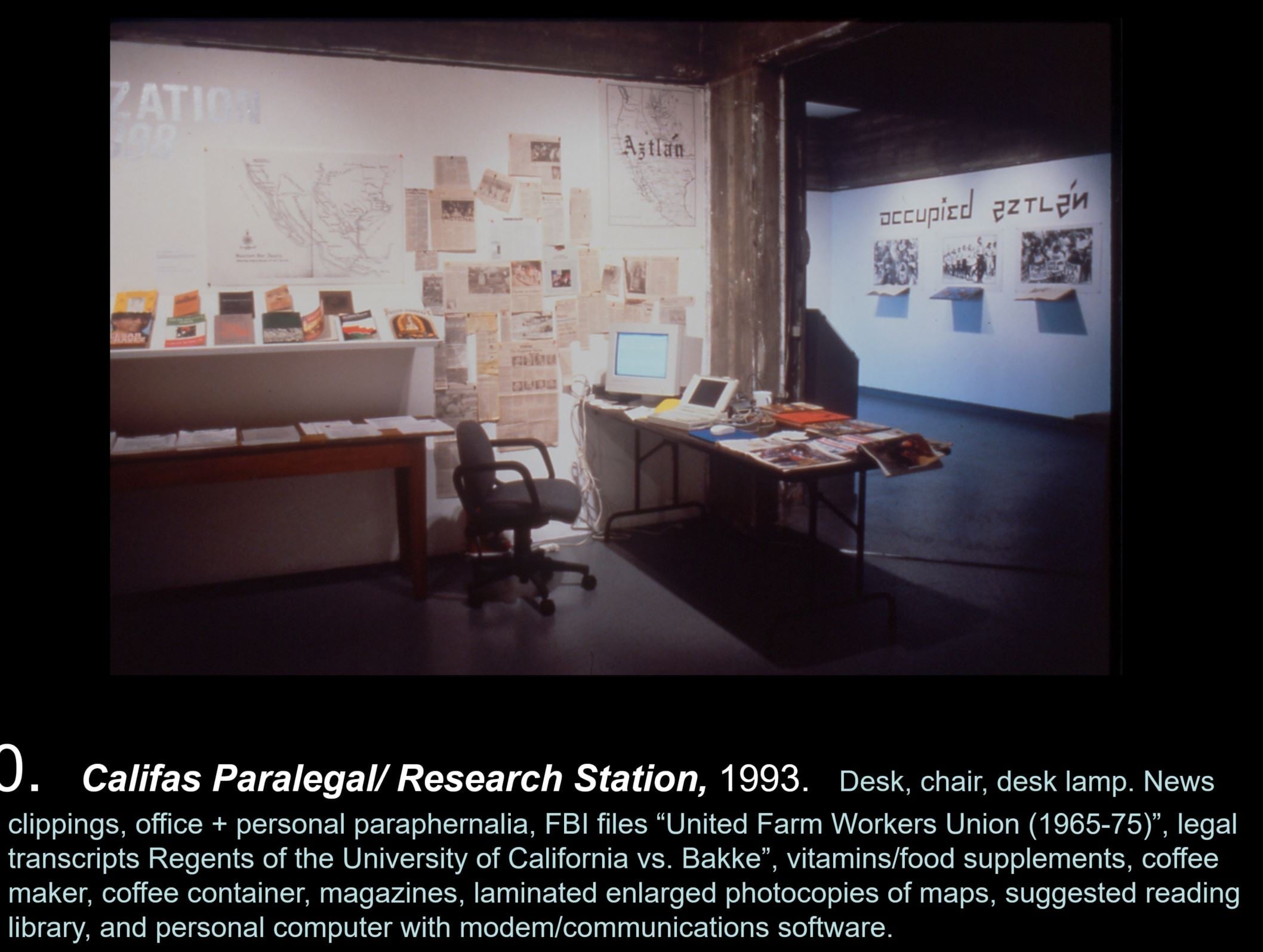
The Occupied Aztlán Database was launched at the onset of the opening reception at the Walter/McBean Gallery, with Rascón at the keyboard of the Califas Paralegal Station for a one-hour performance in his role as Xicano activist. The Station was fitted with a physical library of books on Mexican-American and Chicano/o history, xeroxed copies of FBI files on the United Farmworkers Union (1965-1975), in a setting created to evince the inner sanctum of a radical activist's core office. The station included maps, newspaper clippings, a coffee machine, a windows laptop, monitor, modem and internet connection. Rascón’s performance began with data entry of the opening page of the Occupied Aztlán Database. Additionally guests were invited to log in and explore the online conference The Politics of Empowerment: Institute for Xicano Relations. Among the first participants to login was Rascón’s project collaborator, Maya, one of the online hosts from the WELL.
Opening weekend registration printouts of the Occupied Aztlán Database are published as a PDF here: Occupied_Aztlán_Database_opening_reception_tally_March_1994.pdf The actual dialog that obtained between participants (including Rascón) connected to the online conference on the Occupied Aztlán Database during run of the exhibition from March through April 1994 no longer exists --as is the case with most electronic non-static ephemeral work of that era. However, the Politics of Empowerment: Institute for Xicano Relations was captured in printouts, video or in photographic stills. The below shots are photographs taken by the artist, using a 35mm Nikon with Ektachrome 100ASA color slide film. These capture the spirit of web 1.0 online engagement prior to the evolution of the graphic user interface browser era. Dated April 21, 1994, these are installation detail photographs of the Politics of Empowerment: Institute for Xicano Relations as displayed on the site monitor. These also serve as examples of the of the type of dialog that was being generated from gallery participants as well as non-gallery guests off-site beyond the confines of the Rascón's exhibition out there on the web in the same timeframe.
The Occupied Aztlán Database was launched at the onset of the opening reception at the Walter/McBean Gallery, with Rascón at the keyboard of the Califas Paralegal Station for a one-hour performance in his role as Xicano activist. The Station was fitted with a physical library of books on Mexican-American and Chicano/o history, xeroxed copies of FBI files on the United Farmworkers Union (1965-1975), in a setting created to evince the inner sanctum of a radical activist's core office. The station included maps, newspaper clippings, a coffee machine, a windows laptop, monitor, modem and internet connection. Rascón’s performance began with data entry of the opening page of the Occupied Aztlán Database. Additionally guests were invited to log in and explore the online conference The Politics of Empowerment: Institute for Xicano Relations. Among the first participants to login was Rascón’s project collaborator, Maya, one of the online hosts from the WELL.
Opening weekend registration printouts of the Occupied Aztlán Database are published as a PDF here: Occupied_Aztlán_Database_opening_reception_tally_March_1994.pdf The actual dialog that obtained between participants (including Rascón) connected to the online conference on the Occupied Aztlán Database during run of the exhibition from March through April 1994 no longer exists --as is the case with most electronic non-static ephemeral work of that era. However, the Politics of Empowerment: Institute for Xicano Relations was captured in printouts, video or in photographic stills. The below shots are photographs taken by the artist, using a 35mm Nikon with Ektachrome 100ASA color slide film. These capture the spirit of web 1.0 online engagement prior to the evolution of the graphic user interface browser era. Dated April 21, 1994, these are installation detail photographs of the Politics of Empowerment: Institute for Xicano Relations as displayed on the site monitor. These also serve as examples of the of the type of dialog that was being generated from gallery participants as well as non-gallery guests off-site beyond the confines of the Rascón's exhibition out there on the web in the same timeframe.

Click on images to enlarge.

.jpg)
.jpg)
.jpg)
PUBLICATIONS + Critical Reviews
Printed matter access via BLUE LINKS below
ARMANDO RASCÓN: BIBLIOGRAPHY (selections since 1990)2006
Cornell, Daniell. “Naco Nocturnes: Armando Rascón” Connections Project Essay, de Young, Fine Arts Museums of San Francisco exhibition publication. July 8, 2006 thru January 7, 2007.
Link to Daniell Cornell essay / publicationGomez Aguinaga, Carolina. “Clausura del taller de pintura e instalación” Tribuna de la Bahia. page 4, No. 5873, 24 February. Puerto Vallarta.Gomez Aguinada, Carolina. “Inicio el taller de pintura e instalaci6n”Tribuna de la Bahia, page 3, No.5861, 12 February. Puerto Vallarta.Reyes, Angel. “Armando Rascon, en busca de liberar la creatividad” Vallarta Opina, pg. 7, No. 9830, Ano 28, 6 Febrero. Puerto Vallarta.2005
Ramirez, Delia. “Rescata con su lente iconos olvidados” Tribuna de la Bahia, page 4, No. 5516, 23 February, Puerto Vallarta.
Ramirez article is here2003
Jacobs, Joseph. “Armando Rascon: Border Xicanography” curatorial essay in exhibition catalog "Armando Rascon: Border Xicanography" published by the Newark Museum, New Jersey. Exhibition held at The Newark Museum in 2002-2003.
Westbrook, Lindsey. “Armando Rascon at Galeria de la Raza” Artweek, Vol. 34, Issue 7, pages 18 + 19.
Link to ARTWEEK articleLim, Ji Ilyum. “Chicano Artist Illustrates Migrants’Journey North in Galeria Exhibit” El Tecolote, pages 1& 9, Volume 33, No. 13, July.Swanhuyser, Hiya. “Crossing Over” SF Weekly, page 38, June 11-17.2002
Bonetti, David. “Ugly fence becomes work of art: Artist makes mural of Mexican border” San Francisco Chronicle, Datebook pgs 1 + 6, Tuesday January 6.
Link to Bonetti article2001
Bonetti, David. “Pick of the Week” San Francisco Chronicle, February.Cotter, Holland. “Loyal to Two Cultures, From Chicano Roots To a NewAmbiguity” The New York Times, June 8, pg. B25.1999
“Destruyendo estereotipos” El Periodico del Arte. Madrid, Spain, no. 28, December.Benitez, Claudia. “El mas joven arte chicano desembarca en Madrid” La Razon, Madrid, Spain, 21 November.
Goddard, Dan R. “Cultural reflections: Armando Rascon’s photos honor Latina leaders” San Antonio Express-News. January 3, pages 7-H & 13-H, Arts etc. Texas.Link to Goddard exhibition review1998
Dumbadze, Alexander. “Armando Rascon: Blue Star Art Space” ARTLIES 22, page 58, Spring.
Link to Bumbadze article in ARTLIESEwing, John. “Beyond Borders: Armando Rascon tackles the postcolonial frontera” San Antonio Current, January 14. Page 13 & 36.
Link to Ewing article in San Antonio CURRENTMontenegro, Richard. “Binational mural project receives financial boost” The Imperial Valley Press, January 8.
Ollman, Leah. “A Multi-Sided Look at Lone Woman” Los Angeles Times, Friday October 2. Roth, Charlene. “Original Accounts of the Lone Woman of San Nicolas Island at Side Street Projects” ARTWEEK, November.Montenegro, Richard. “Border Artist: Blending American, Mexican cultures” The Imperial Valley Press, April 30.
“Binational Mural Project Off To Good Start” Calexico Chronicle, Editorial, Thursday May 7, Vol.93, No. 197.Levin, Kim. “Voice Choices” The Village Voice, New York, January 13, pg.2.Sorell, Victor Alejandro. “Telling Images Bracket the Broke-en-Promise(d) Land’: The Culture of Immigration and the Immigration of Culture across Borders” Culture Across Borders, The University of Arizona Press, Tucson, pp.112 thru 117.1997
Pincus, Robert L. “Links in the Fence: Chicano Artist’s Work Bridges the Borders Between Cultures” The San Diego Union-Tribune. Monday, April 7, Currents & Arts section, pp E-l and E-6.
Link to Pincus exhibition review in the San Diego Union Vasquez, Monica. “Postcolonial Califas: Armando Rascon at MOCA and El Centre Cultural de la Raza” La Prensa, San Diego, April 4.Fernane, Wendy. “Opening History: Latino artist explores state’s immigration issue” North County Times, Friday April 4.
Article by Fernane is hereBerger, Laurel + Howardena Pindell. ”Who Do Some of Today’s Big-Name Artists Think Will Be the Stars of the Future?” Artnews, New York, March.Sichel, Berta. ”Translinear: Redefining Text with Technology” Flashart International, pages 70-71, March-April.
Link to Berta Sichel artcile in FlashartZamudio-Taylor, Victor. Arco Publications, Arco International Art Fair, Madrid, Spain. Zamudio-Taylor, Victor. “Contemporary Artistic Impulses from Chicano & Latino Dislocations: Notes on the work of Armando Rascon, Jesse Amado and Inigo Manglano-Ovalle,” AtlAntica International, Canary Islands. Winter.
Link to Zamudio-Taylor article PDF
1996
Sichel, Berta. “Arte Latinoamericano y tecnología: Entre aquí y allá” Lapiz, Madrid, Spain.
Link to Berta Sichel article in LAPIZZamudio-Taylor, Victor. “Where Is The Bleeding Heart?” Chicano Art, Latin American Art in the Twentieth Century, Phaidon, London. Pgs. 324-26. Edward Sullivan, Editor.1994
Klausner, Betty. “Armando Rascon at Walter/McBean, ” Art In America. Vol. 82, No. II, November, Page 138.
Link to Art in America articleKelley, Jeff. “Armando Rascon: San Francisco Art Institute” Artforum, Vol. XXXII, No. 10, Summer. Page 98.
Link to ARTFORUM article“Occupied Aztlan: Yolanda Lopez talks to Elizabeth Martinez about Armando Rascon’s turning point multimedia exhibit.” CrossRoads, No. 44, September 1994, pages 10,11,&12.
Link to Yolanda M. Lopez + Elizabeth Martinez article in CROSSROADSRoche, Harry. “Armando Rascon: Clear on the Concept.” SF Bay Guardian, September 14, pg.46. Jenkins, Steve. “Uneasy Rider: Armando Rascon at SFAI”Artweek, May 5, Vol.25, No.9/,Pages 26 & 27.Bonetti, David. “Three installations put a face on cultural identity” San Francisco Examiner, Wednesday April 20, Pg.B-5.Tanner, Marcia. “North of the Border” San Francisco Chronicle. Datebook’s Hot Picks, March 27, pg. 5.Roche, Harry. “Critic’s Choice: Armando Rascon” Bay Area Guardian. April 20, pg. 84.Lopez, Angel. “Chicaneidad es Hablar de Identidad” Noticias de Arte. March, April, New York. Alarcon, Norma. “T(r)opographies for a Critical Imaginary: the Work of Armando Rascon” Adaline Kent Award exhibition catalog, San Francisco Art Institute.Zamudio-Taylor, Victor. “Reading Between the Lines” catalog essay. Armando Rascon: Xicano Anesthetic, INTAR Gallery, New York. January.
Link to INTAR Catalog1993
Wolf, Herta. “Notes on Mistaken Identities” ThirdText. No. 24, pg. 107.Walter Tiotz, Von. Schwarz, “ich weiss, schwarz,” Der Spieqel, Kultur, Freitag, 30 April.
Wolf, Herta. “Identitad Versus Identitaten?” Camera Austria, No. 145, pg. 68.Becker, Jochen. “Mistaken Identities”, Kunstforom, Volume 123, Germany, July, pages 320 -322. Martin, Victoria. “Talking Back: Mistaken Identities at DC Santa Barbara and Counterweight at CAF” Artweek, Volume 24, Number 3, page 22, February 4.Solomon-Godeau, Abigail. Principal essay Mistaken Identities exhibition catalog, published by University Art Museum, U.C. Santa Barbara + University of Washington Press.
Link to Solomon-Godeau essay1992
Darling, Michael W. “Art Probes Identity” The Independant Santa Barbara, CA, Page 27, November 19.Matthews, Lydia. “Armando Rascon at Southern Exposure Gallery, ” VISIONS Art Quarterly, Pages 27, 28 & 29. Spring.1991
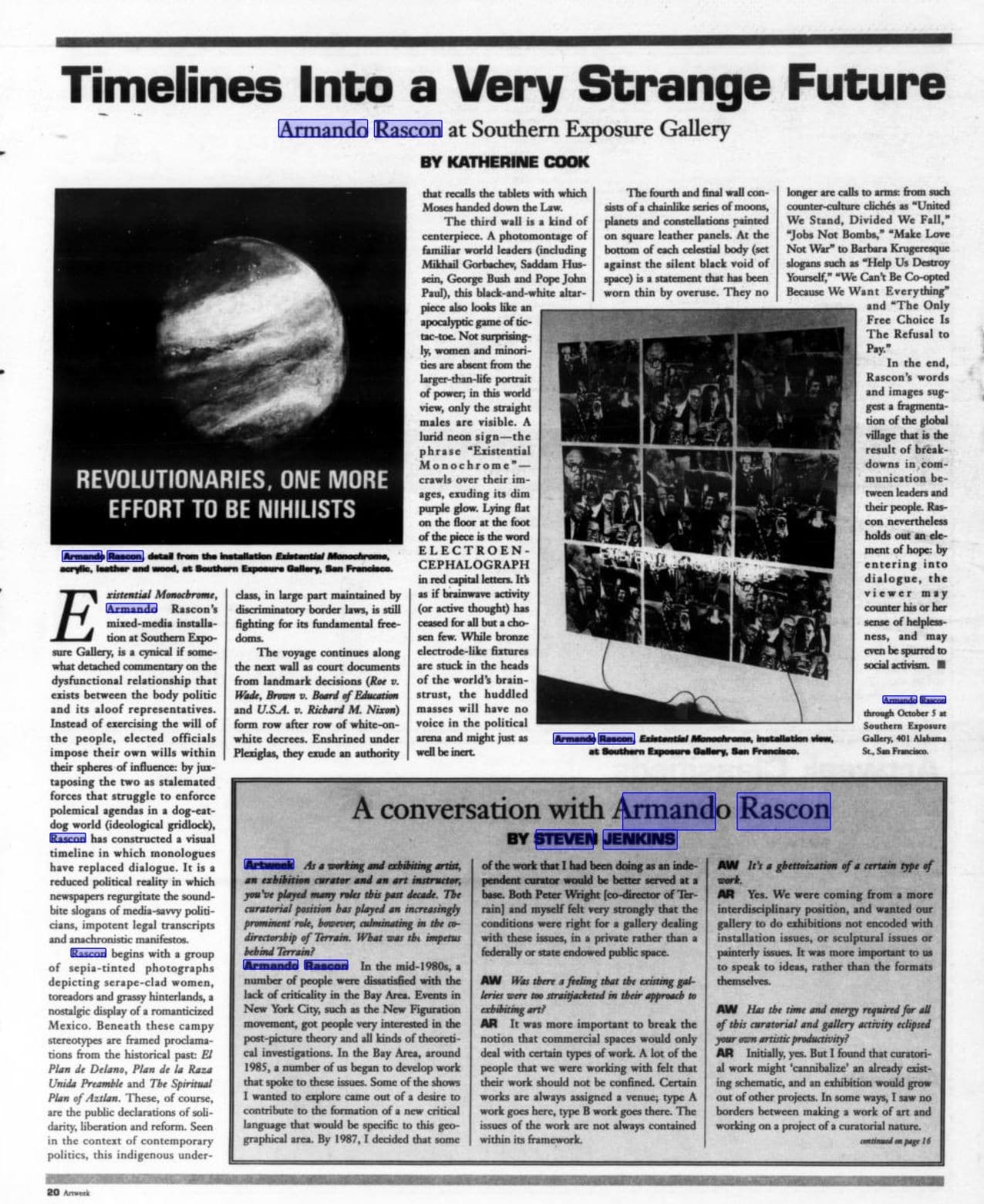
Friedman, Robert. “Caught in the Capitalist NEXUS” San Francisco Sentinel. September 12. Bonetti, David. “At alternative spaces, the business of art is politics” San Francisco Examiner, Pages B-3 & B-4, Thursday, September 26.Jenkins/ Steven. “Conversation with Armando Rascon, ” ARTWEEK, Volume 32, Number 31. Pages 20 & 16.
Link to article by Steven JenkinsCook, Katherine. “Timelines Into a Very Strange Future: Armando Rascon at Southern Exposure” ARTWEEK, Volume 22, September.
Link to critical review by Katherine CookS & L: Transactions in the Post-industrial Era. San Francisco Art Institute. L. Brun, M.Lehmann, R. Lemcke, catalog Editors.Wright, David H. “Sore in Spirit: AMDG at Grace Cathedral” ARTWEEK, San Jose, CA, May 16. Kelley, Jeff. “Ad Majorem Dei Gloriam at Grace Cathedral” VISIONS Art Quarterly, Los Angeles, Spring. Pages 24 - 28.Smith, Irvin. “The Human Mark,” ARTWEEK, San Jose, CA, April 11.1990
Mary Murphy & Inigo Manglano-Ovalle, catalog essay, “Two Projects: The Black Museum and The Multicultural Reading Room,” Randolph Street Gallery, Chicago.Mesa-Bains, Amalia. “Chicano Bodily Aesthetics” exhibition catalog, “Body/Culture: Chicano Figuration”. Sonoma State University.Sorell, Victor Alejandro. “Words and Images in the Margin: Chicano Art and the Canon,’ catalog Body/Culture: ibid..Brookman, Donna. “Community Connections” ARTWEEK, December 13.Bowen, Cathleen. “Art and Politics” VOX Magazine. Volume I, No. 2, Winter 1990.
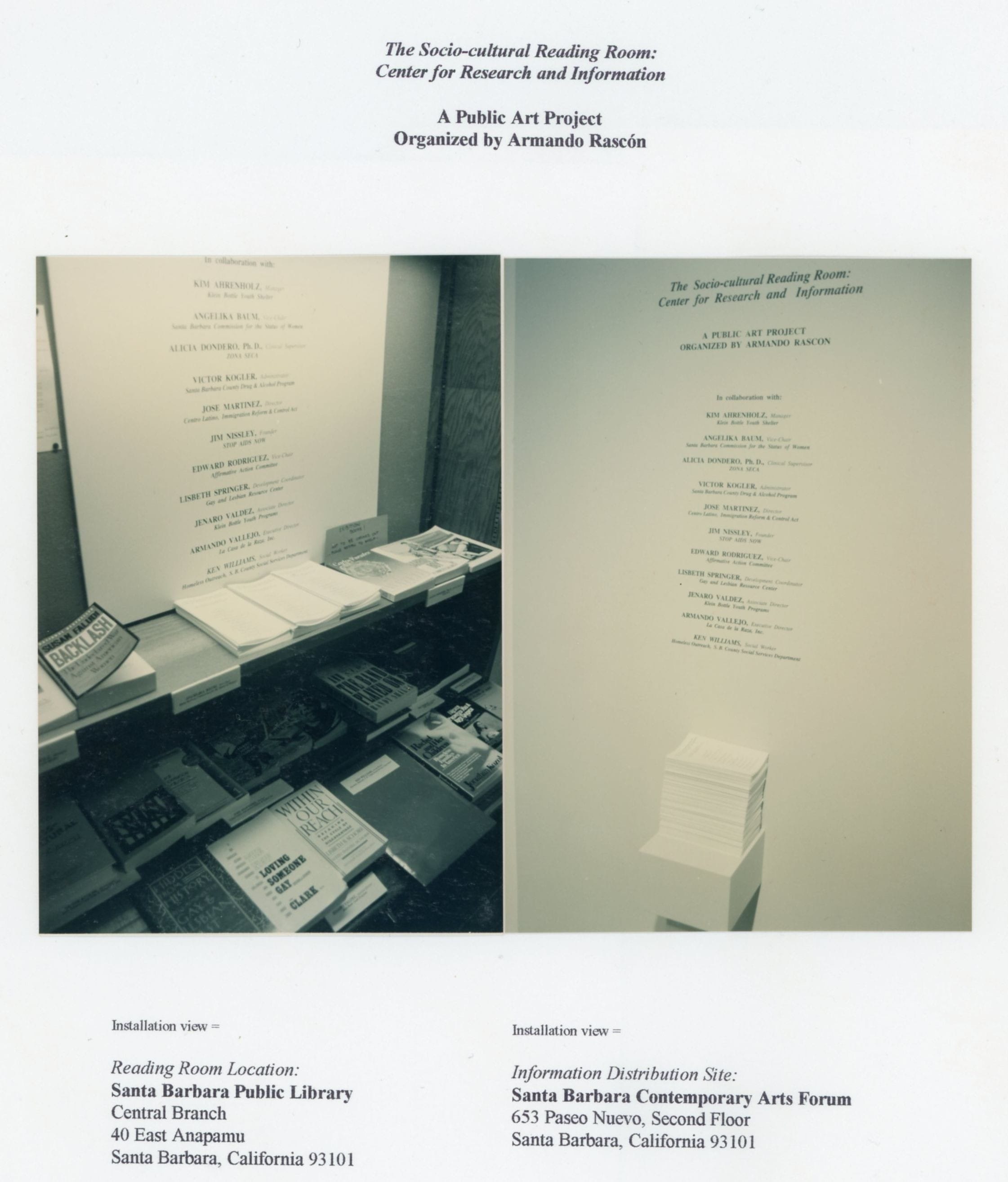
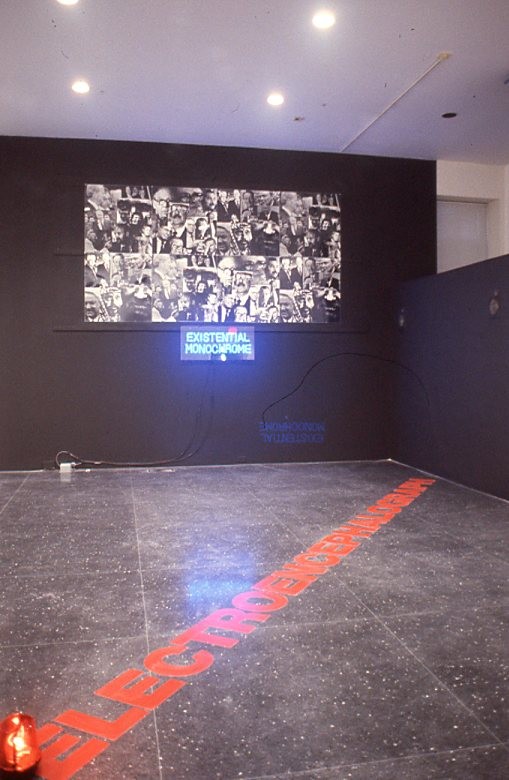
PUBLICATIONS2006 “Armando Rascon: Naco Nocturne at De Young” artdaily.com, lead article Friday July 14. “Naco Nocturnes” apartmenttherapy.com, in “Look!” Column, 12 September.2002 Cover art for El Andar, portrait of writer Sandra Cisneros by Armando Rascon, Fall Issue, September. 2000 INSITE 2000, commissioned Public Art Project by Armando Rascon "Cine Furaztlan Presenta: Film Festival with Immigration Differential" catalog. Link to INSITE 2000 catalog1999 “Border Metamorphosis: Armando Rascon” AU LA, (Architecture and Urbanization in Las Americas) Vol I, No. I, Inaugural issue, Spring.1998 “Original Accounts of the Lone Woman of San Nicolas Island” exhibition catalog, Side Street Projects, Santa Monica.1995 “Talking with: Armando Rascon,” WEST, Volume I, No. 3, 94, 95, pages 42-49, May.“Lagrimas y Sonrisas” curatorial essay by Armando Rascon, (Re)Generation Project exhibition catalog, Galeria de la Raza, San Francisco, CA.“Xicano Progeny,’ curatorial essay by Guest Curator Armando Rascon, exhibiton catalog: “Xicano Progeny: Investigative Agents, Executive Council and Other Representatives from the Sovereign State of Aztlan” published by the Mexican Museum, San Francisco; third of four traveling exhibitions in a series entitled “Redefining the Aesthetic: Toward a New Vision of American Culture.” Link to Rascon's essay "Xicano Progeny"1994 “In Consideration of Certain Artifacts Contained in the Exhibition (Elements that Make Reference to the Institution of Public Education)” statement by Armando Rascon in “Occupied Aztlan” Adaline Kent Award catalog, San Francisco Art Institute. Armando Rascon curatorial essay "Xicano Ricorso: A Thirty Year Retrospect from Aztlan" Museum of Modern Art, New York. Organized with Barbara London and Sally Berger, Department of Film and Video. Link to Press Release1992 “The Socio-cultural Reading Room: Center for Research & Information, ” published in conjunction with project of same title by Armando Rascon. Santa Barbara Contemporary Arts Forum and Santa Barbara Public Library.“Existential Monochrome,” exhibition brochure, images and text by Armando Rascon, produced by Randolph Street Gallery in connection with installation of same title in the Project Space. Chicago Weekly, publication of “Untitled (The Only Free Choice is the Refusal to Pay)/” painting by Armando Rascon, included in Existential Monochrome, installation at Randolph Street Gallery. September 13.Frame/work, “Re-discovery” Guest editors Roberto Bedoya and Karen Atkinson. Volume 5, Issue 1. Images from “Re-interpreting Miss Rucker’s American History Lesson, Fifth Grade, Jefferson Elementary, Calexico, California, School Term 1966-67” by Armando Rascon.Art Papers, Editor: Maureen Sherlock. ‘Bifocal Borders’ Article and compendium list from “The Multicultural Reading Room: Center for Research and Information” by Armando Rascon, Pgs 14, 15 & 16. New Observations, ‘New World Women 1992’ Guest Editor: Karen Atkinson. Image/Text work: “Pendant Bell with Eagle Warrior” by Armando Rascon, page 15. Number 88. Winter 1992.S.O.S. Int’l, edited by Robin Kahn. Winter. Untitled (Quincentenniel Recipe)/ a xerox multiple by Armando Rascon.Five Fingers Review, “Art and Spirituality” edited by Jon Winet and Lovell Thoreau. Winter.
PUBLICATIONS2006 “Armando Rascon: Naco Nocturne at De Young” artdaily.com, lead article Friday July 14. “Naco Nocturnes” apartmenttherapy.com, in “Look!” Column, 12 September.2002 Cover art for El Andar, portrait of writer Sandra Cisneros by Armando Rascon, Fall Issue, September. 2000 INSITE 2000, commissioned Public Art Project by Armando Rascon "Cine Furaztlan Presenta: Film Festival with Immigration Differential" catalog. Link to INSITE 2000 catalog1999 “Border Metamorphosis: Armando Rascon” AU LA, (Architecture and Urbanization in Las Americas) Vol I, No. I, Inaugural issue, Spring.1998 “Original Accounts of the Lone Woman of San Nicolas Island” exhibition catalog, Side Street Projects, Santa Monica.1995 “Talking with: Armando Rascon,” WEST, Volume I, No. 3, 94, 95, pages 42-49, May.“Lagrimas y Sonrisas” curatorial essay by Armando Rascon, (Re)Generation Project exhibition catalog, Galeria de la Raza, San Francisco, CA.“Xicano Progeny,’ curatorial essay by Guest Curator Armando Rascon, exhibiton catalog: “Xicano Progeny: Investigative Agents, Executive Council and Other Representatives from the Sovereign State of Aztlan” published by the Mexican Museum, San Francisco; third of four traveling exhibitions in a series entitled “Redefining the Aesthetic: Toward a New Vision of American Culture.” Link to Rascon's essay "Xicano Progeny"1994 “In Consideration of Certain Artifacts Contained in the Exhibition (Elements that Make Reference to the Institution of Public Education)” statement by Armando Rascon in “Occupied Aztlan” Adaline Kent Award catalog, San Francisco Art Institute. Armando Rascon curatorial essay "Xicano Ricorso: A Thirty Year Retrospect from Aztlan" Museum of Modern Art, New York. Organized with Barbara London and Sally Berger, Department of Film and Video. Link to Press Release1992 “The Socio-cultural Reading Room: Center for Research & Information, ” published in conjunction with project of same title by Armando Rascon. Santa Barbara Contemporary Arts Forum and Santa Barbara Public Library.“Existential Monochrome,” exhibition brochure, images and text by Armando Rascon, produced by Randolph Street Gallery in connection with installation of same title in the Project Space. Chicago Weekly, publication of “Untitled (The Only Free Choice is the Refusal to Pay)/” painting by Armando Rascon, included in Existential Monochrome, installation at Randolph Street Gallery. September 13.Frame/work, “Re-discovery” Guest editors Roberto Bedoya and Karen Atkinson. Volume 5, Issue 1. Images from “Re-interpreting Miss Rucker’s American History Lesson, Fifth Grade, Jefferson Elementary, Calexico, California, School Term 1966-67” by Armando Rascon.Art Papers, Editor: Maureen Sherlock. ‘Bifocal Borders’ Article and compendium list from “The Multicultural Reading Room: Center for Research and Information” by Armando Rascon, Pgs 14, 15 & 16. New Observations, ‘New World Women 1992’ Guest Editor: Karen Atkinson. Image/Text work: “Pendant Bell with Eagle Warrior” by Armando Rascon, page 15. Number 88. Winter 1992.S.O.S. Int’l, edited by Robin Kahn. Winter. Untitled (Quincentenniel Recipe)/ a xerox multiple by Armando Rascon.Five Fingers Review, “Art and Spirituality” edited by Jon Winet and Lovell Thoreau. Winter.


.jpg)
.jpg)
.jpg)
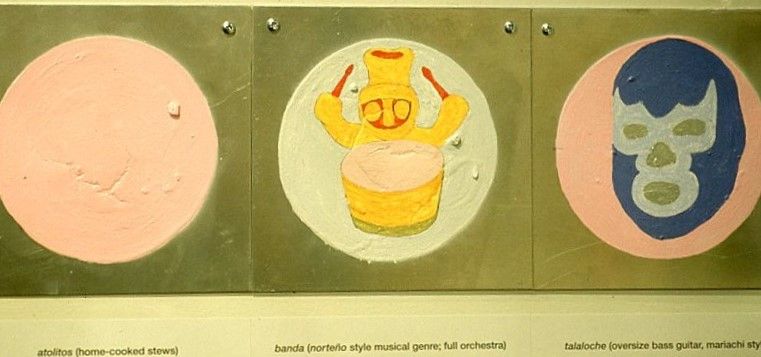
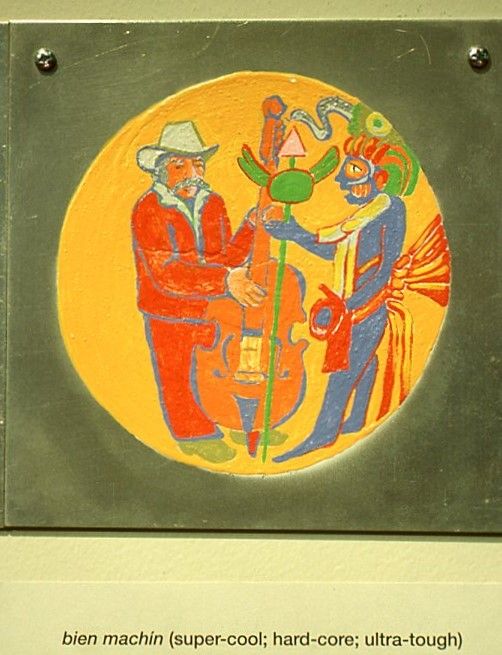
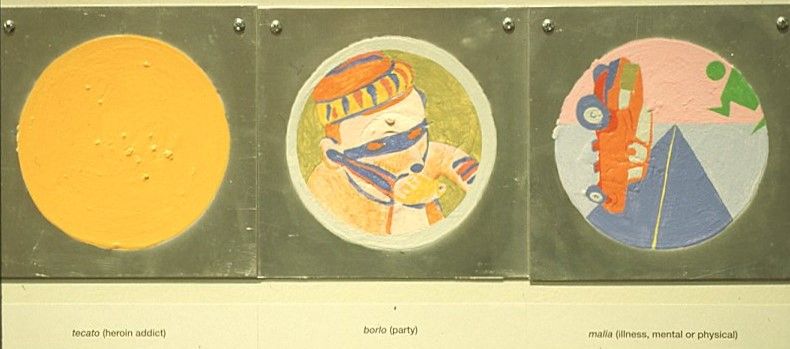
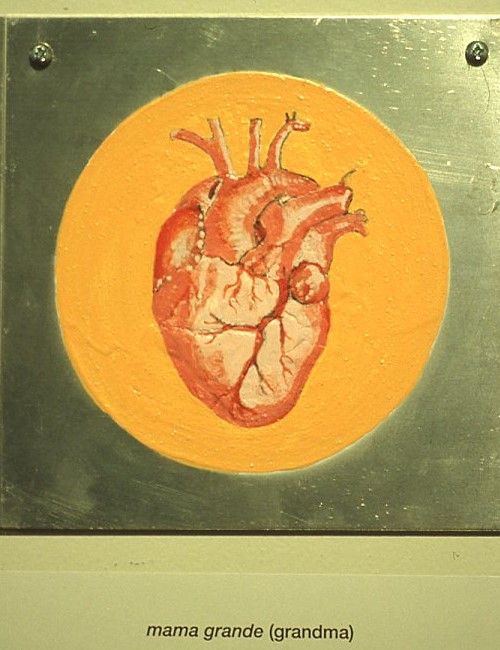
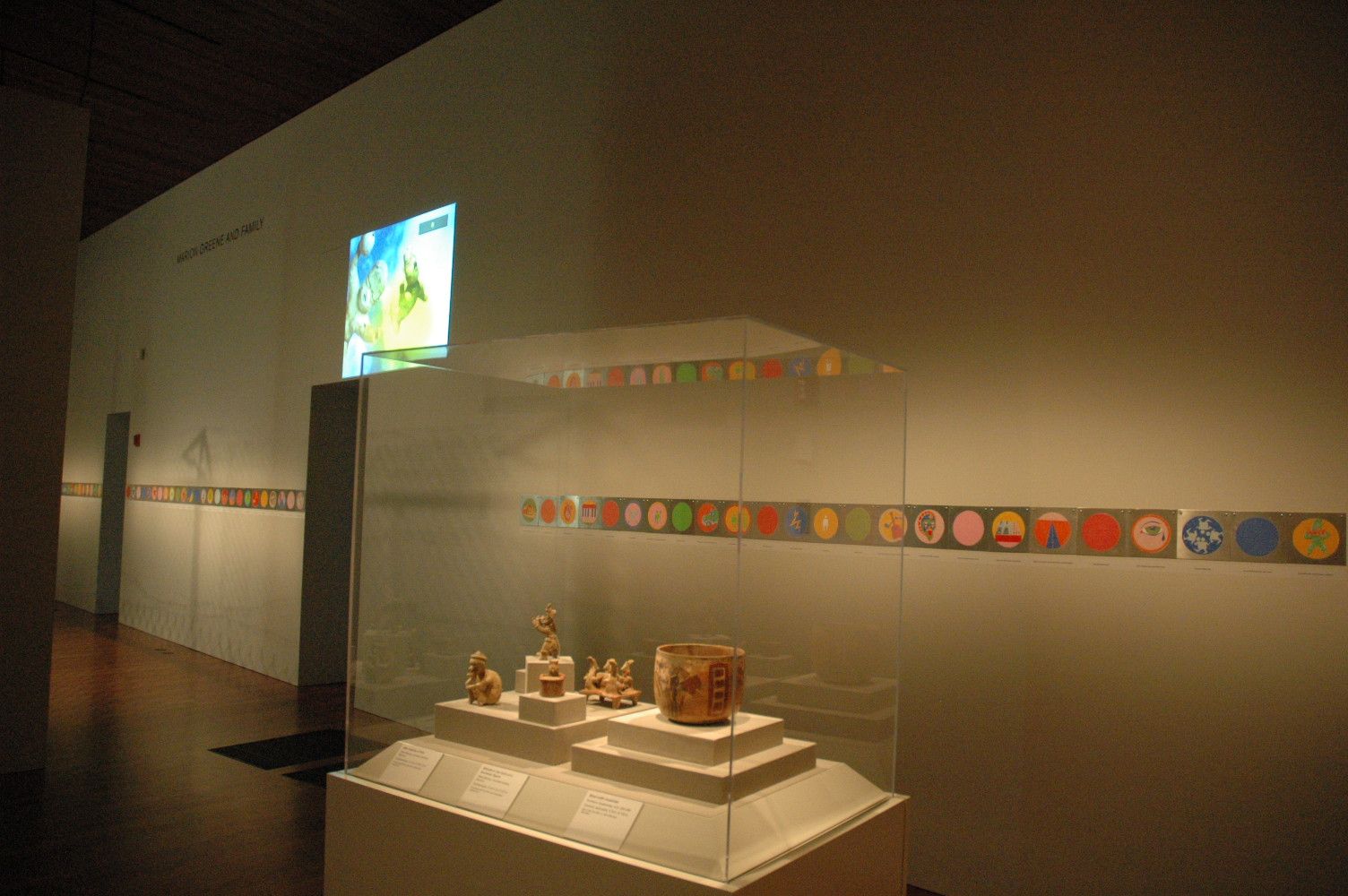
Naco Modern: the Tortilla Paintings, 2006
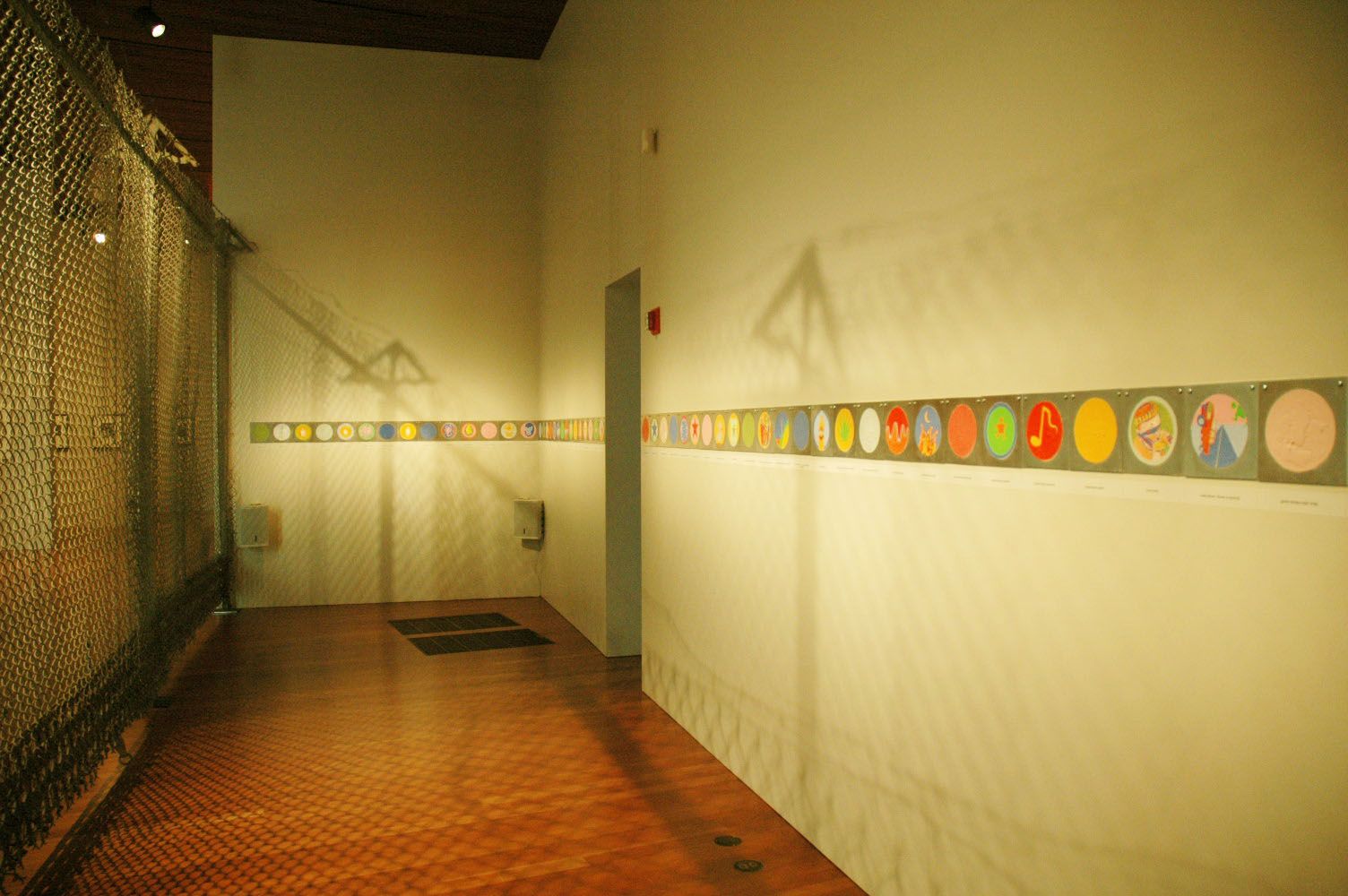
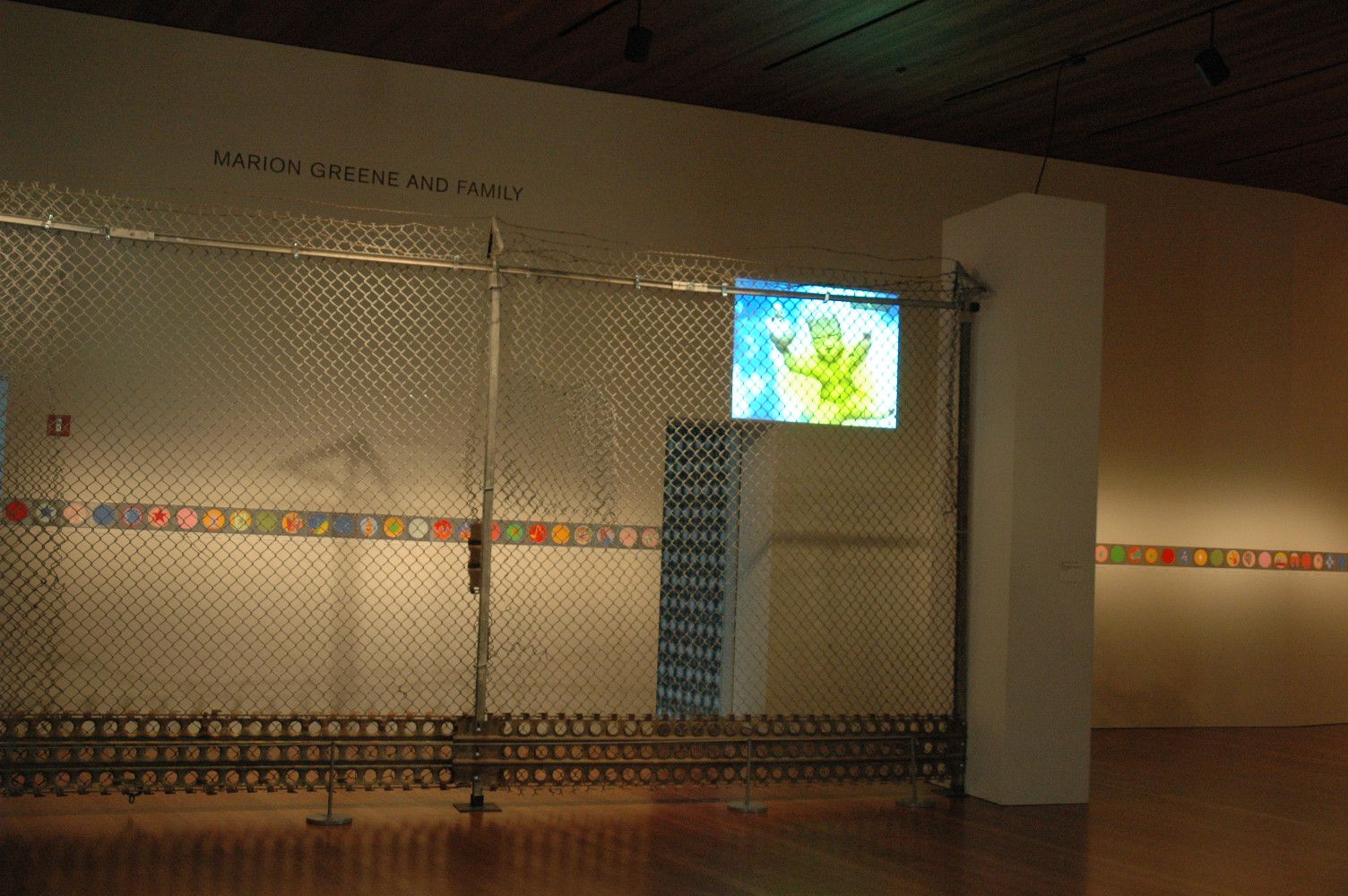
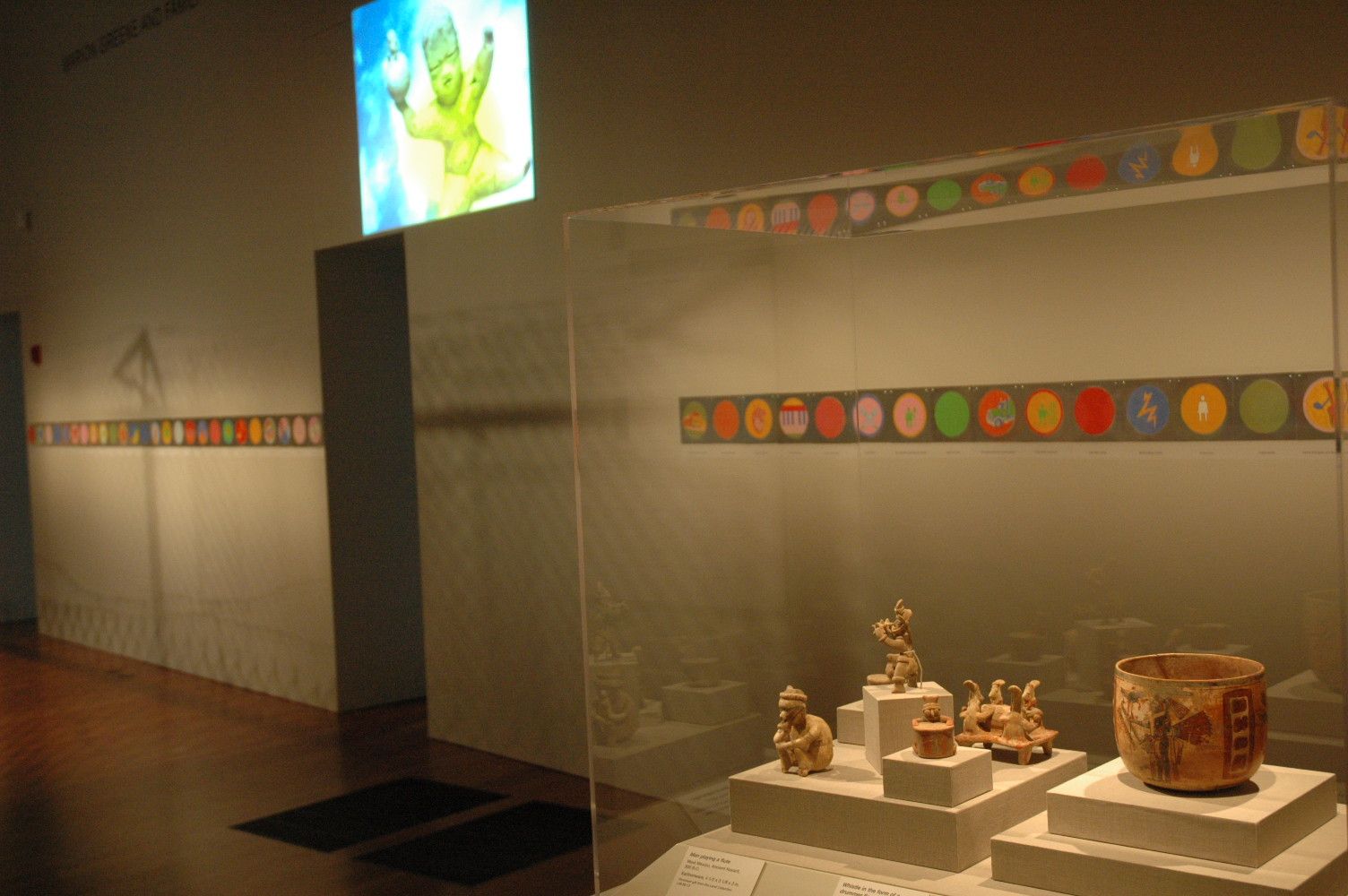
99 paintings: enamel on aluminum panels. The round ground is a combination of maize and resin (tortilla composite substrate). 33 of these paintings are in the Permanent Collection of the Fine Arts Museums, San Francisco.
Naco Nocturnes (video projection) 2006, RT: 5:27, visible as a projection in the installation shots above, and intended to run in an endless loop accompanied by its ambient sound counterpart Naco Nocturnes (audio soundscape). Link to the audiostream is below.
Below:
Detail, View of the US/Mexico border fence as seen through Tía Andreita's kitchen window, East First Street, Calexico, California, Armando Rascón, ©1993
.jpg)
"I had planned to visit my Tía Andreita and cousin Alejandrina in February 1998. My cousins the Herreras had owned their home on East First Street Calexico since 1960 and I grew up about three blocks away on East Fourth Street. Our families were very close, and we spent lots of time back and forth between our respective homes. But it had always fascinated me that they lived directly across from the border fence separating our two countries. En route along East First Street I had encountered the men of the Army Corps of Engineers actively
dismantling the last remaining segments of the border that had separated Calexico from Mexicali since the late Forties. Upon arrival at my Tía's home, I did what I always do and began to capture family photos of my kin seated at their kitchen table with the US/Mexico border fence in view from the kitchen window. As it turned out, my photos were the last to capture what had been the view from the front sliding glass doors and kitchen windowfrom the time the Herreras had built their home in 1960.
Operation Gatekeeper had mandated removal of the fences starting in late 1997. The effort had advanced eastbound during the course of the year and had finally arrived on the block the Herreras lived near Andrade Avenue. It was fortuitous to coincide with the noisy work as I approached. Minutes before my arrival at the Herrera's I had pulled over and approached
Border Patrol to initiate the normal process of acquiring the entire section of fencing that was being taken down near the front of my Tía Andreita's. About a half hour later, exacting
arrangements were being made for transport of the border artifact (after removal, the active fence became an artifact) and it was moved --chain link, posts, landing tarmacs, barbed wire and all-- to my sister's county property for long-term storage out on her land.
I should note, the fences began to be abruptly removed from downtown and west side Calexico in the Fall of 1997 without any prior notice and without any local input whatsoever. A major civic storm erupted from the citizenry which sought some form of resolution. I received a call from City of Calexico Beautification Committee member Mark Esquer in the Fall 0f 1997 requesting my input, both as a professional artist working in the field for over twenty years, and also, in my role as the acting Chair of the Visual Arts Committee of the San Francisco Arts Commission. I traveled from San Francisco to attend the round table discussion with Imperial Valley civic leadership (roughly fifty attendees) and met with everyone as the invited guest for the kick off February 5, 1998 meeting. I presented the idea of a serial imagery running the 2.5-mile length of the wall (yet to be determined), but with the powerful iconography of a woven "friendship bracelet," such as the one that I was wearing (I took it off and passed it around the room.) I suggested that I would deliver a Master Plan for the City of Calexico within two weeks so that the City Council could decide to review the design prior to making a commitment to it. I stressed the need for the design to be accessible, so that all would be inspired to contribute. I presented my verbal proposal for a community-involved public artwork that I named Border Metamorphosis; the name "Binational Mural Project" was already in use by the committee when referring to the proposed mural. My role as Lead Artist for the project was approved and I began to discuss my plans with members of the community via phone, fax or email once I had returned to San Francisco. All to say that I began to serve as project artist from ground level. Our very first Paint Workshops with the Community were scheduled for March and April, 1998. In February-March I wrote and submitted a proposal to the US/Mexico Fund for Culture (later approved in August) with the language that I had provided the City of Calexico in my Master Plan..
It was during my visit in Calexico (from San Francisco in February 1998) that I captured final shots of the Herrera family's longtime kitchen window view of the vintage border fence --before it was replaced by the recycled welded steel landing mats--, and, was able to obtain the historic border fence artifact for posterity. The series of the Herreras at their kitchen table with a view of the vintage border fence from 1998 remain to be published in book form at a future date."
--Armando Rascón
I should note, the fences began to be abruptly removed from downtown and west side Calexico in the Fall of 1997 without any prior notice and without any local input whatsoever. A major civic storm erupted from the citizenry which sought some form of resolution. I received a call from City of Calexico Beautification Committee member Mark Esquer in the Fall 0f 1997 requesting my input, both as a professional artist working in the field for over twenty years, and also, in my role as the acting Chair of the Visual Arts Committee of the San Francisco Arts Commission. I traveled from San Francisco to attend the round table discussion with Imperial Valley civic leadership (roughly fifty attendees) and met with everyone as the invited guest for the kick off February 5, 1998 meeting. I presented the idea of a serial imagery running the 2.5-mile length of the wall (yet to be determined), but with the powerful iconography of a woven "friendship bracelet," such as the one that I was wearing (I took it off and passed it around the room.) I suggested that I would deliver a Master Plan for the City of Calexico within two weeks so that the City Council could decide to review the design prior to making a commitment to it. I stressed the need for the design to be accessible, so that all would be inspired to contribute. I presented my verbal proposal for a community-involved public artwork that I named Border Metamorphosis; the name "Binational Mural Project" was already in use by the committee when referring to the proposed mural. My role as Lead Artist for the project was approved and I began to discuss my plans with members of the community via phone, fax or email once I had returned to San Francisco. All to say that I began to serve as project artist from ground level. Our very first Paint Workshops with the Community were scheduled for March and April, 1998. In February-March I wrote and submitted a proposal to the US/Mexico Fund for Culture (later approved in August) with the language that I had provided the City of Calexico in my Master Plan..
It was during my visit in Calexico (from San Francisco in February 1998) that I captured final shots of the Herrera family's longtime kitchen window view of the vintage border fence --before it was replaced by the recycled welded steel landing mats--, and, was able to obtain the historic border fence artifact for posterity. The series of the Herreras at their kitchen table with a view of the vintage border fence from 1998 remain to be published in book form at a future date."
--Armando Rascón

Views of the border fence artifact on Rascón's Calexico, California studio yard grounds prior to loading and driving the piece to San Francisco's de Young Museum in June 2006. The original artifact was a solid 30-foot wall. Rascón's team endeavored to un-weld the artifact and engineer a series of metal support parts and elements to allow piece to remain upright in the exhibition space at the de Young Museum and later at the Smithsonian's National Museum of American History.
Photos by Armando Rascón.


.jpg)

Armando Rascón supervises the de Young Museum preparator team as they assemble and stand up the border fence artifact in June 2006.
Armando Rascón: Naco Nocturnes closed at the De young Museum in San Francisco in January 2007 and the border fence was shipped back to Rascón's home/studio for outdoor storage in the back yard. In 2008, Rascón made the journey cross-country and relocated to the metro Washington, DC area. Upon his arrival in DC Rascón met up with Magdalena Mieri and Eduardo Diaz of the Smithsonian Latino Center and began a conversation with the Smithsonian's National Museum of American History that set the stage for the border fence artifact to become part of the Smithsonian's permanent collection. It took a few months but the museum's Work and Industry curatorial team completed multiple steps, meetings and paperwork to accession the border artifact as the "first" in their newly minted Border Objects Collection at the MAH. The work is mandated to indicate "Gift of Armando Rascón" whenever displayed in public.
HERE is the link to the National Museum of American History's description of the Border Artifact.

Smithsonian's National Museum of American Art, Washington, DC

Border artifact on loan to National Building Museum for Borderlands exhibition.
.jpeg)
Rascón gift initiates border objects collection at MAH.
Border fence artifact in situ, Armando Rascon: Naco Nocturnes, at the de Young Museum, San Francisco. 2006-07.

Detail of Many Visions/One Nation --border fence artifact at MAH.

Armando Rascón organized El Gato Verde, a public arts project of several interrelated installations by Rascón and his students from the Centro Cultural Cuale. The works ranged in subject and permanence, all centered around the botanical river environs around the Isla Cuale, an arts center in Puerto Vallarta.
Rascón taught a seminar for young Puerto Vallarta artists at the Centro Cultural Cuale in February 2006. The weeklong session resulted in a series of ephemeral to semi-permanent installations in and around the grounds of Isla Cuale. located within the Cuale River. Rascón titled the project El Gato Verde, in memorial to the hundreds of wild cats that had inhabited and roamed the island for many decades and which had been summarily exterminated during the Summer of 2005. Rascón's lectures covered a range of categories from Earth Art sculptures to politically-based group projects such as the exhibitions by Group Material (and others.) The image on the poster above is Rascón's stencil that was spray-painted on city walls at various locations throughout the Zona Romántica section of Puerto Vallarta. Some of the stencil art was still there during Rascón's last visit to PV in 2020.
Rascón taught a seminar for young Puerto Vallarta artists at the Centro Cultural Cuale in February 2006. The weeklong session resulted in a series of ephemeral to semi-permanent installations in and around the grounds of Isla Cuale. located within the Cuale River. Rascón titled the project El Gato Verde, in memorial to the hundreds of wild cats that had inhabited and roamed the island for many decades and which had been summarily exterminated during the Summer of 2005. Rascón's lectures covered a range of categories from Earth Art sculptures to politically-based group projects such as the exhibitions by Group Material (and others.) The image on the poster above is Rascón's stencil that was spray-painted on city walls at various locations throughout the Zona Romántica section of Puerto Vallarta. Some of the stencil art was still there during Rascón's last visit to PV in 2020.
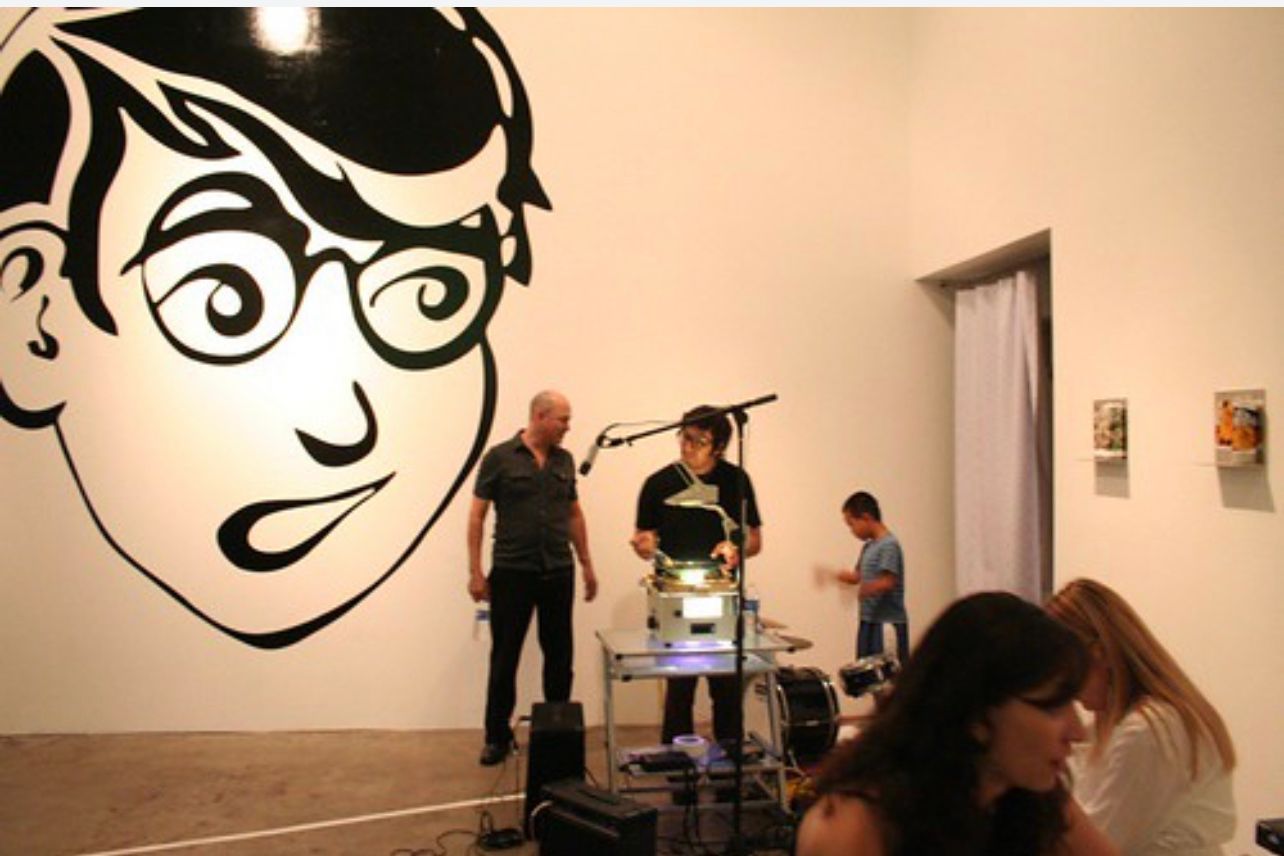
Border Boy, 2007, vinyl mural by Armando Rascón to left. BEZANDO collective members Armando Rascon and Juan Quintero to right of mural.
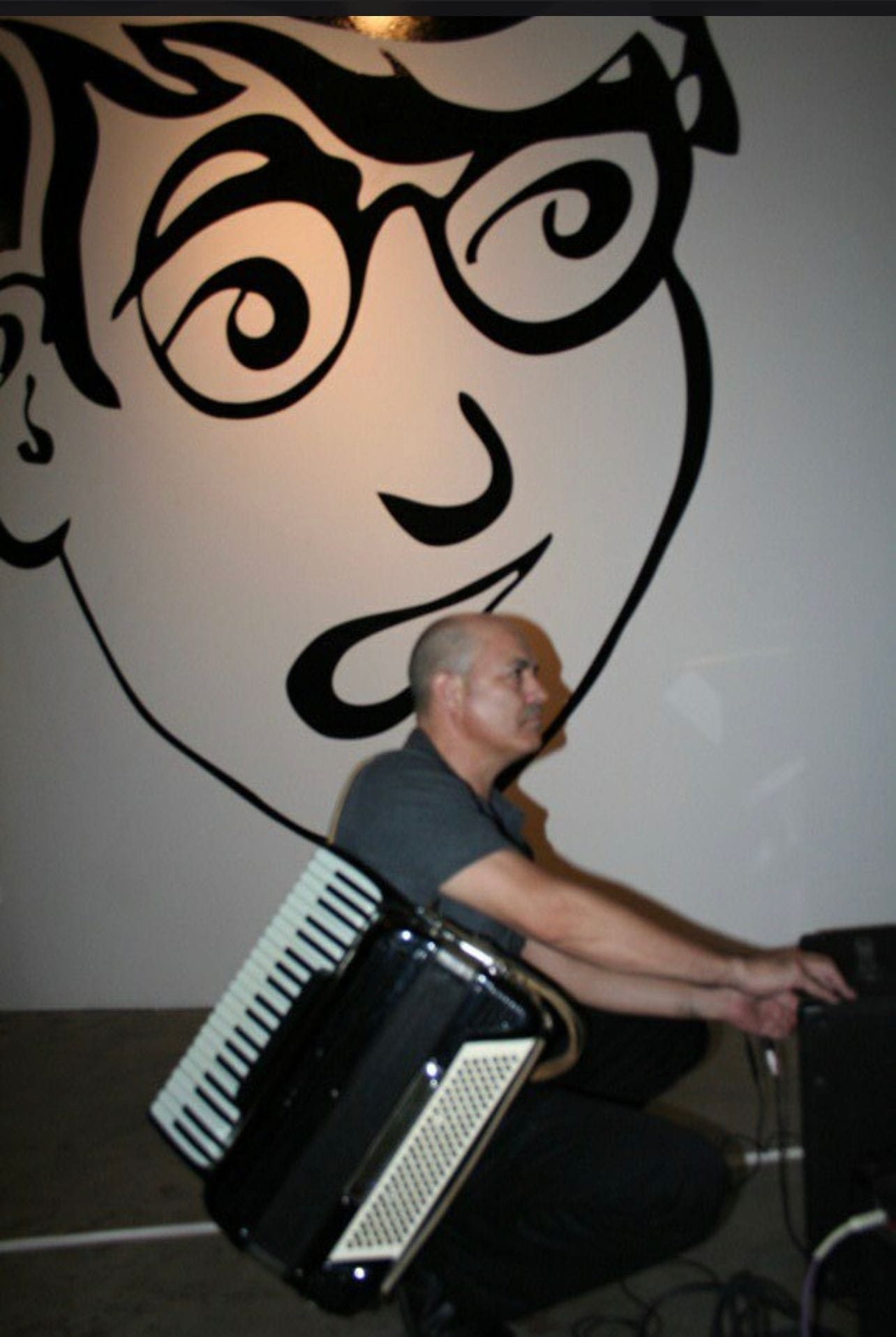
Performance view of Armando Rascón with accordian.

Project flyer for Chinesca<Chinatown>Ricorso project at
Art for Humans, Los Angeles.

BEZANDO members Juan Quintero, Armando Rascón and Ismael Castro.


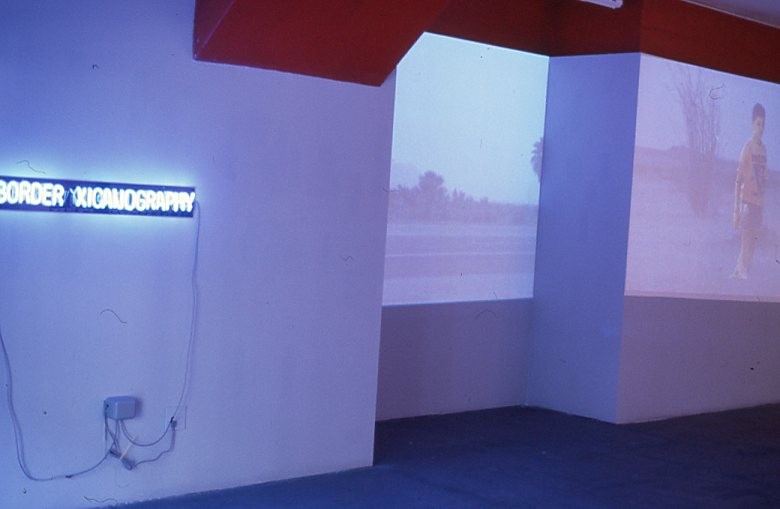
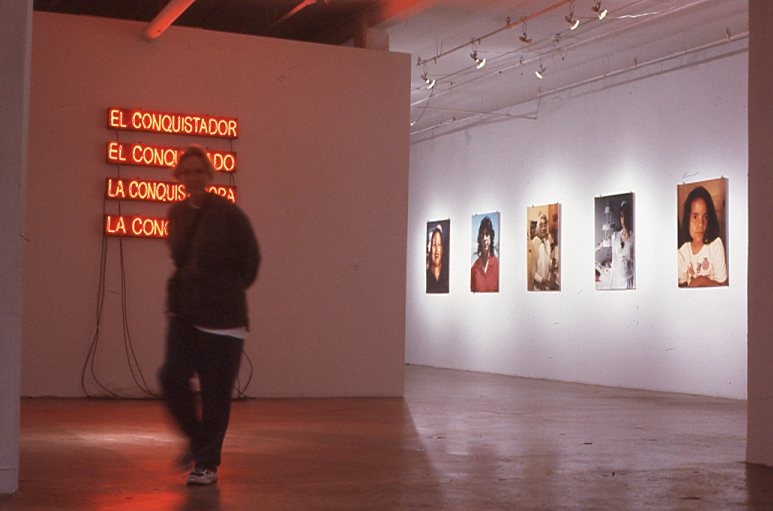
Installation view:
to left
Border Xicanography, 2003. Neon text.
to right
Niño Perdido, 2003, 2-channel DVD projection
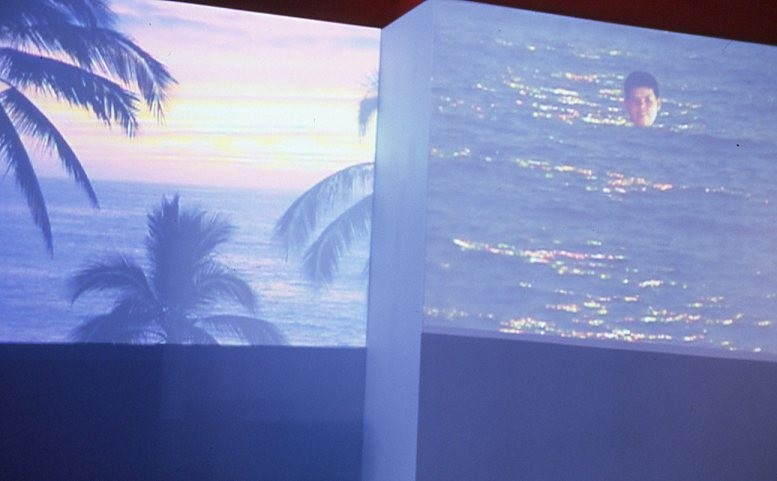
Installation view of dual screens:
Niño Perdido, 2003, 2-channel DVD projection.
TRT: 5:45 minutes.
Video links are in VIDEO selections at top of site.
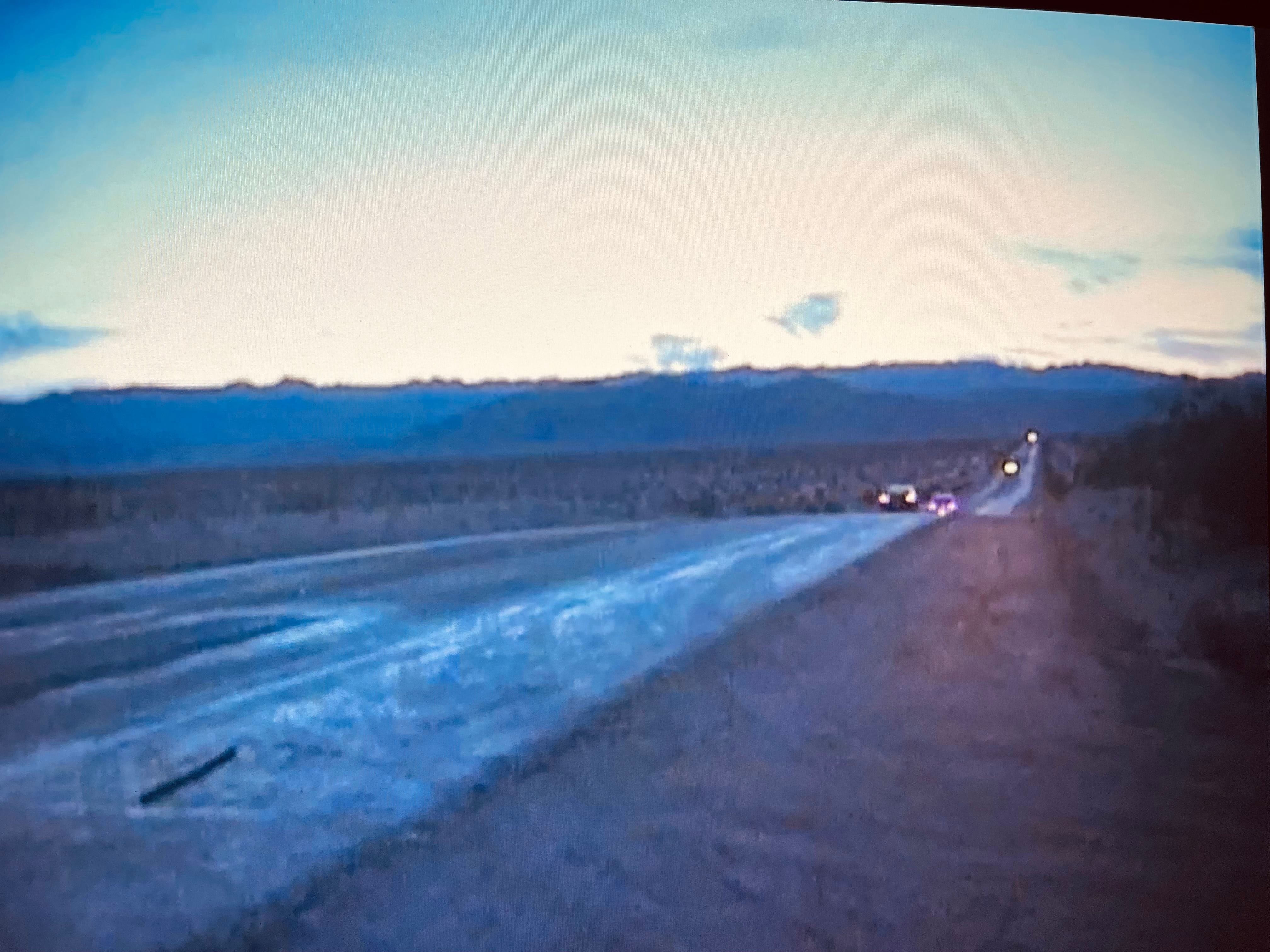
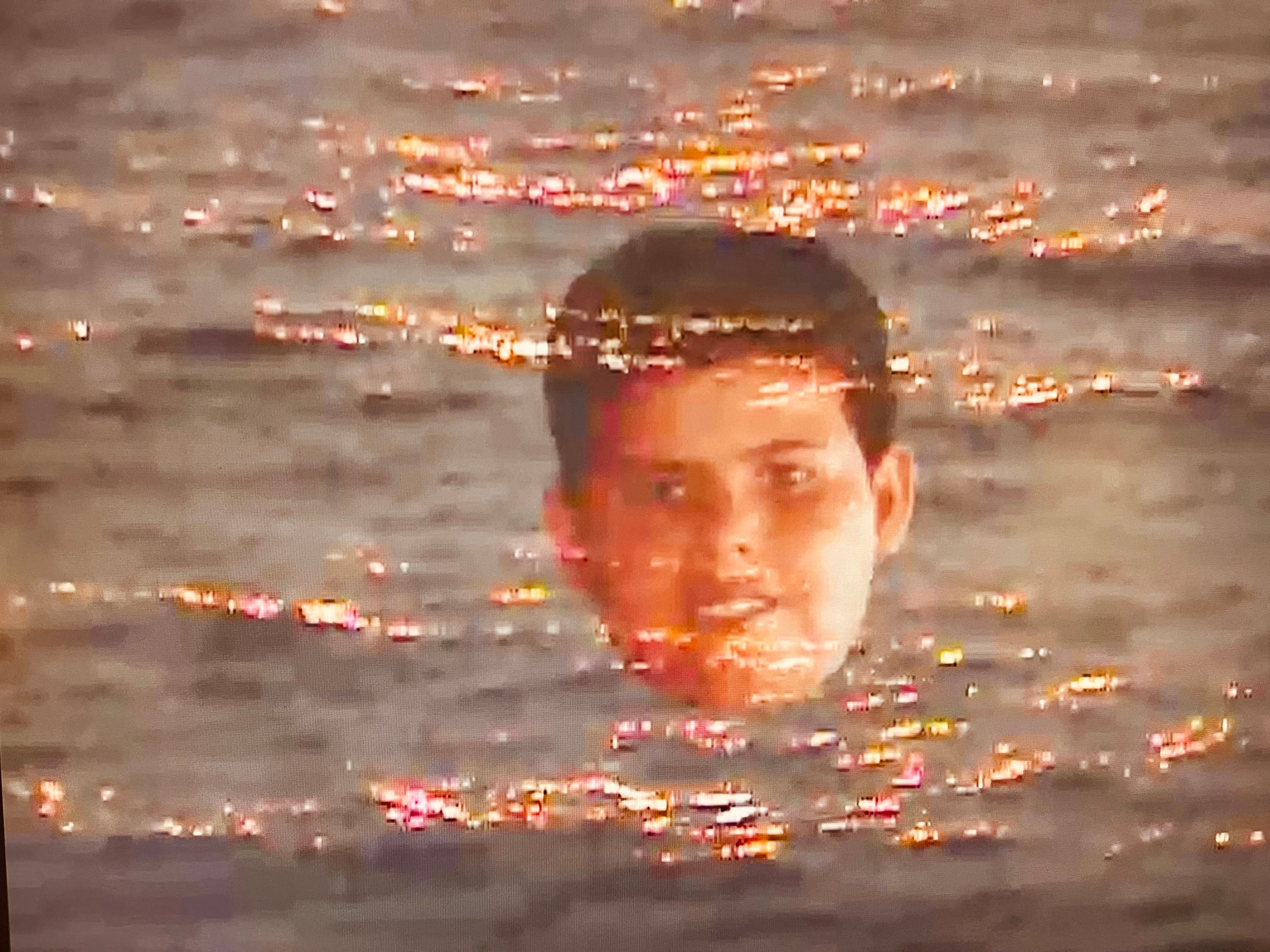
Video stills:
Niño Perdido (Norte)
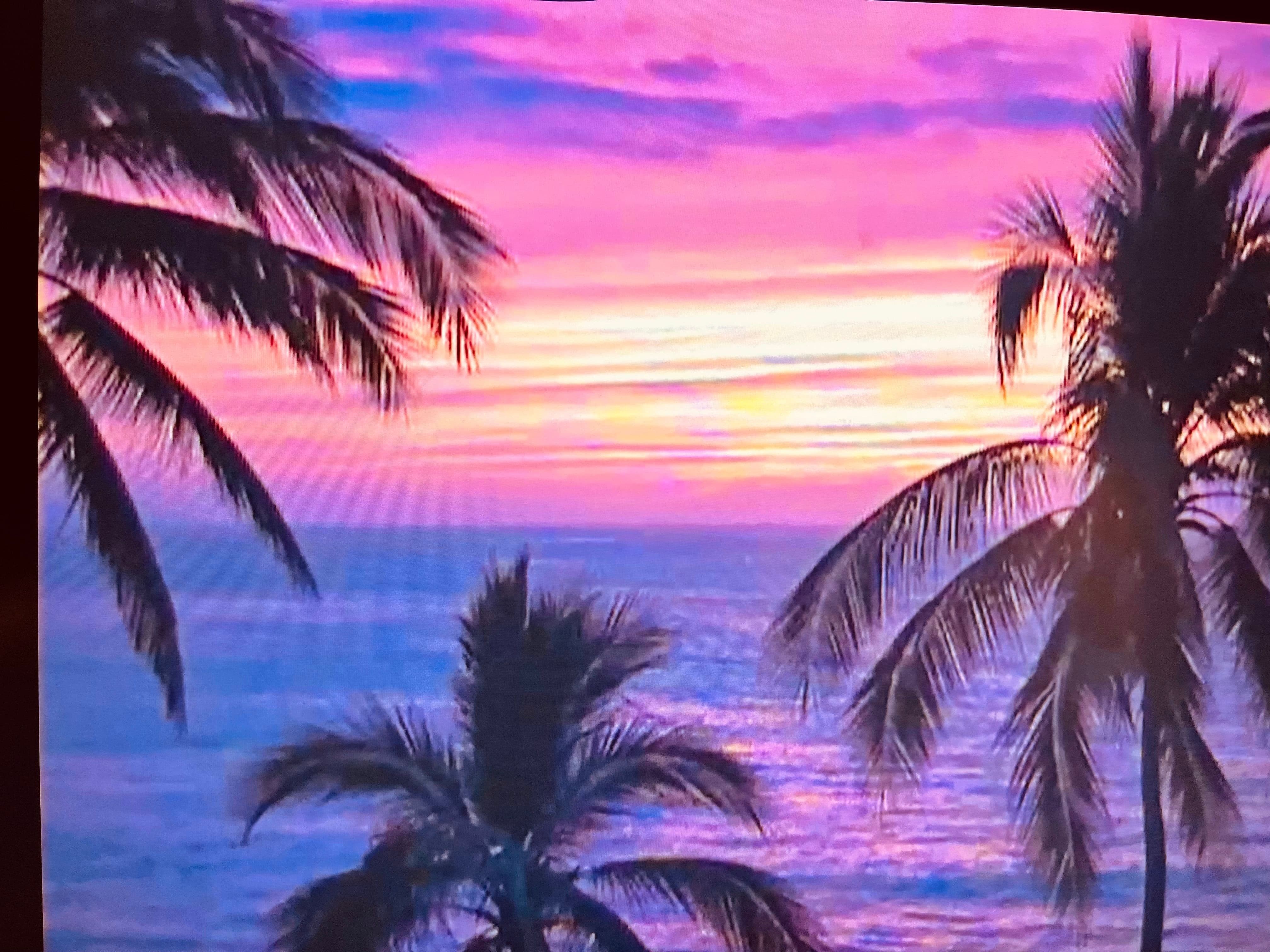
Niño Perdido (norte)
Niño Perdido (Sur)
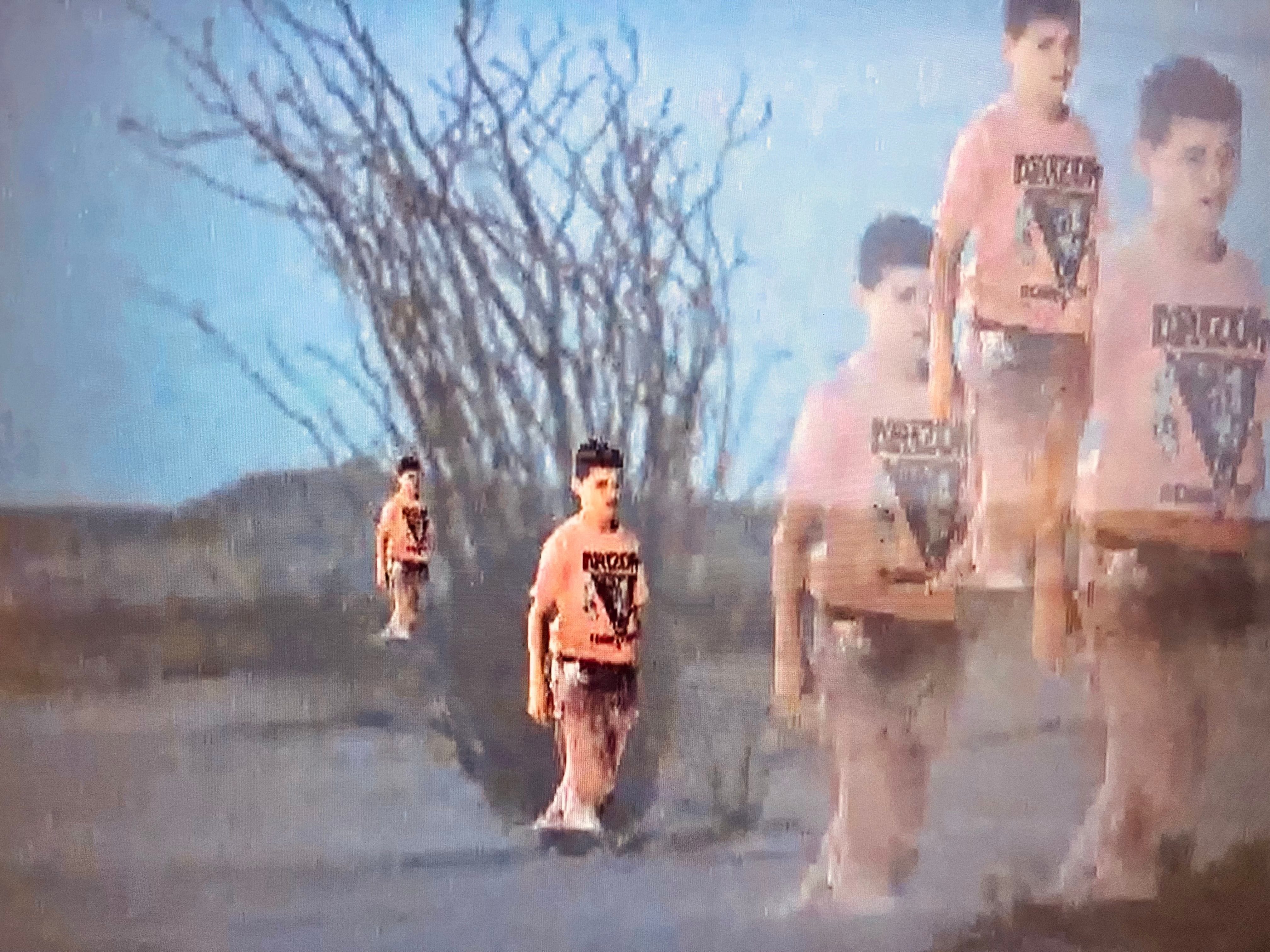
Niño Perdido (Sur)


.jpg)
.jpg)
.jpg)



.JPG)
.jpg)
.jpg)
.jpg)
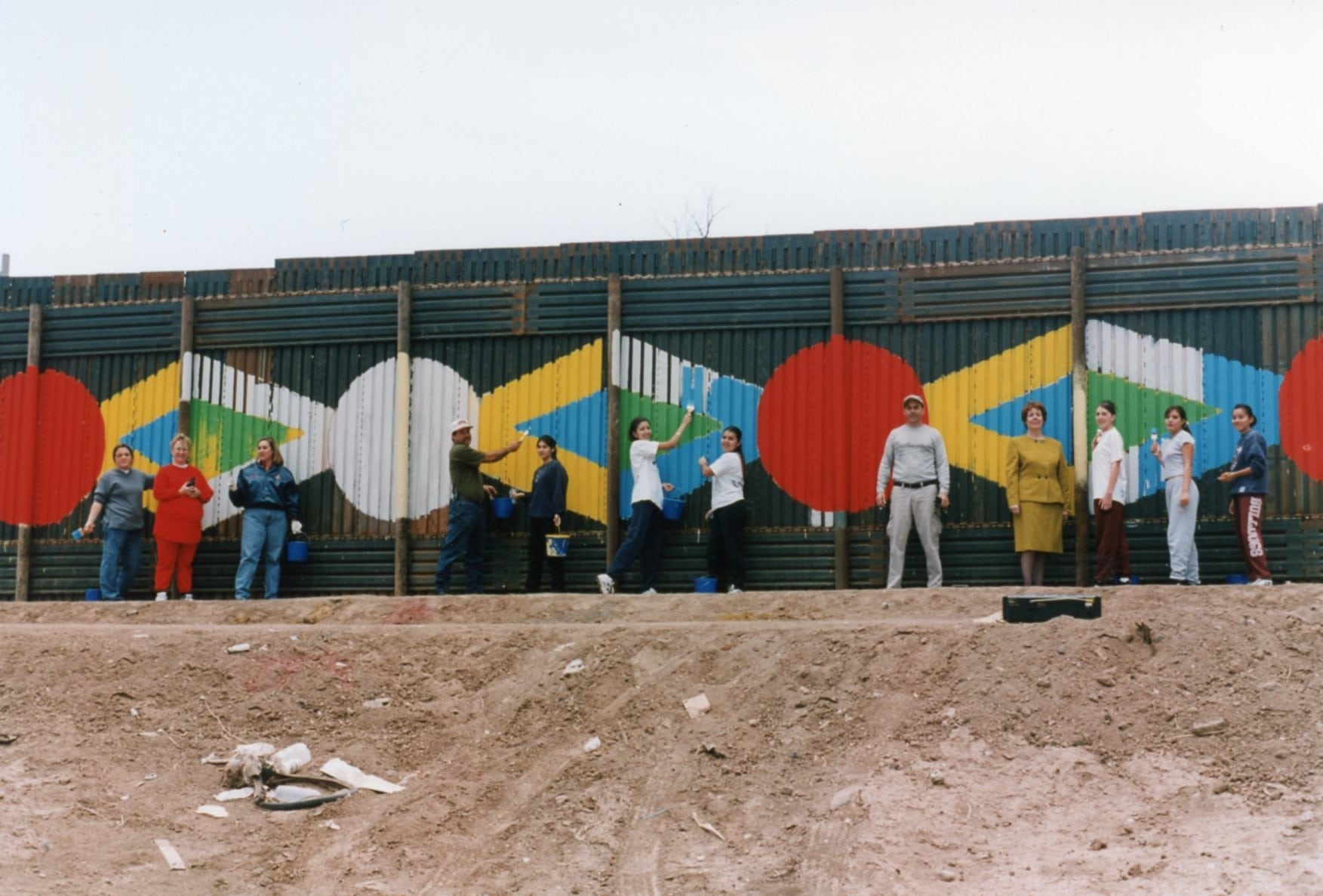
The Binational Mural Project, two-mile community involved public art project at the international site of the US/Mexico border. Over two thousand volunteers participated in once monthly weeklong paint workshops with the artist between 1998 through 2002; Calexico , California and Mexicali, Baja California.
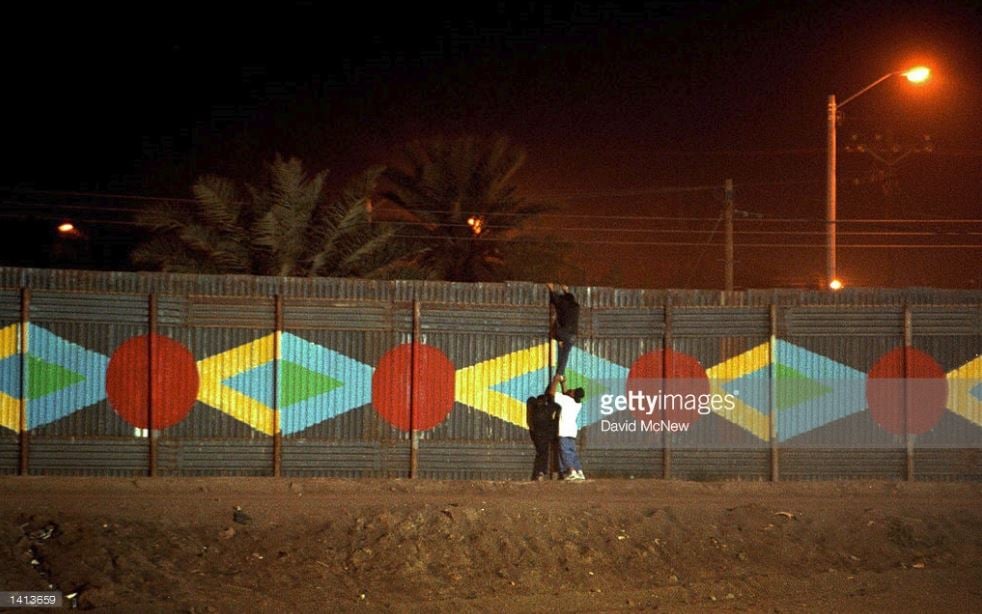
Nocturnal view The Binational Mural Project, 1998-2002, photo courtesy of Getty Images. The work was removed by the Trump Administration in 2017, effectively replaced by 'the Wall."
.JPG)
In response to the mural's destruction, City of Calexico civic and community leaders erected a public monument in 2019. Situated in Rockwood Plaza Park, in central Calexico, California, the monument features a fully restored section of the original salvaged artwork, and, commemorates the historic binational achievement of this major community-involved public art project. Photo courtesy of Palmoc Herrera.


US/Mexico Fund for Culture
First project grant.

Project color palette


.jpg)

.jpg)
.jpg)

.jpg)
Installation view:
Postcolonial Califas, MCASD, 1997
Below are shots of Free Radio Aztlán, an audio media piece comprising 360 minutes of a programed song list interspersed with segments of Spanish radio broadcasts from the Bay Area on the morning of passage of Proposition 187 in California
.jpg)

Free Radio Aztlán (Transmitter), 1997

.jpg)
.jpg)

.jpg)


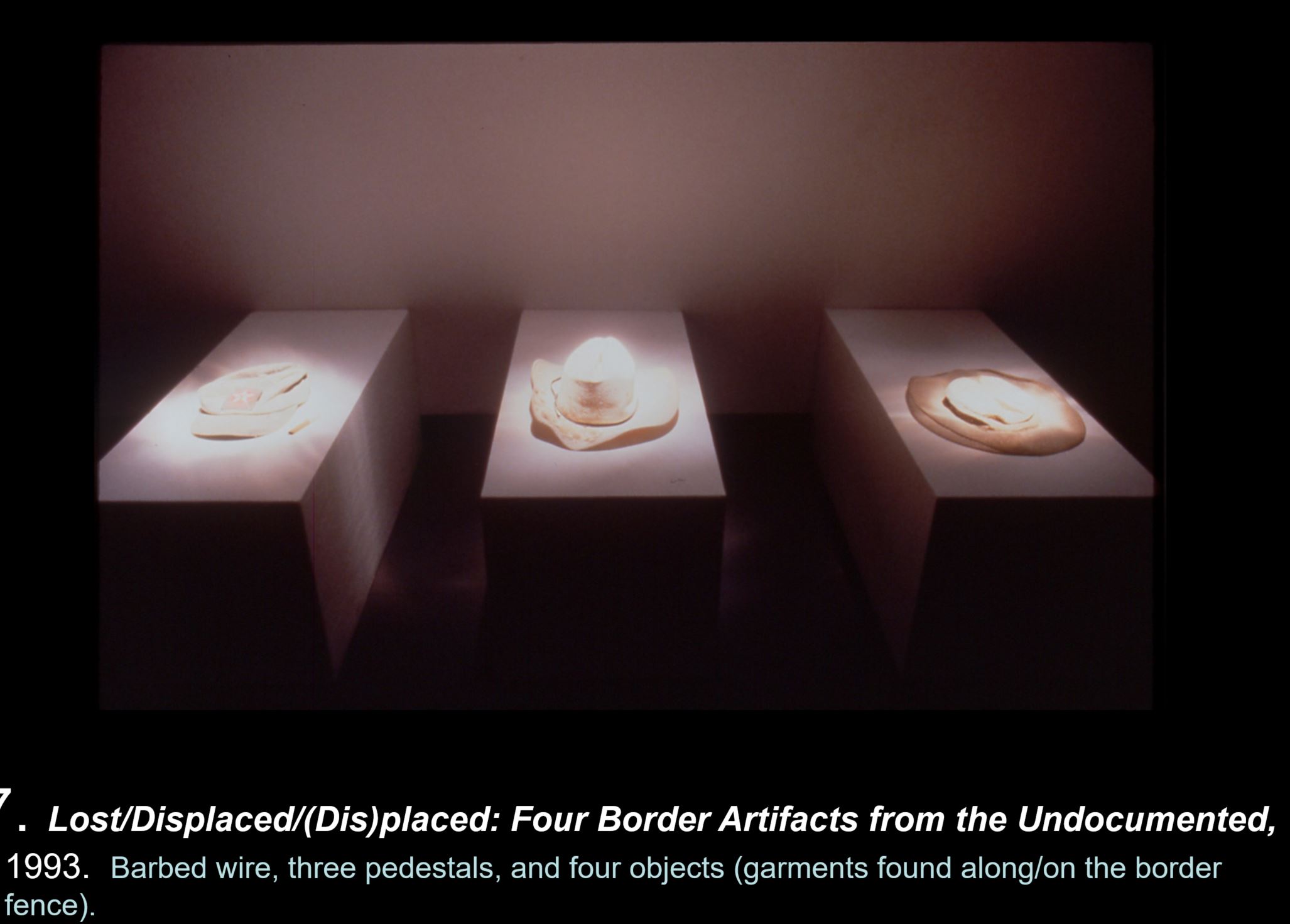

.JPG)


.jpg)

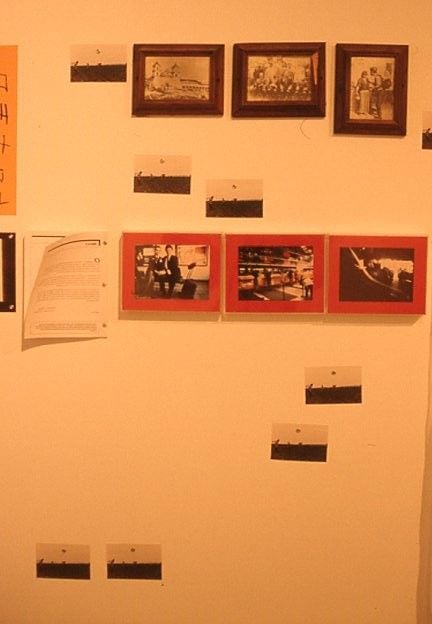
Most images presented in this bottom section formed part of the Border Projections with Caló Interjections Upon the Treaty of Guadalupe Hidalgo, 1993. Captured by the artist with a 35 millimeter format Nikon, using Ektachrome slide film, Photographs in this series were shot in 1993 or in prior years. The artist's paternal uncle Aurelio is seen holding his grandson on the front lawn of his home on East First Street -immediately next door to Tobias and Andrea Herrera (Rascón's maternal aunt and uncle on the Herrera side of the family). Rascón's family lived on East Fourth Street, a mere three blocks away --cause for good filial traffic considering three other uncles and their families had homes in the East Side Calexico neighborhood.
Note, two fences: the border fence with Mexico is visible directly across the front yard fence, alongside the pavement.
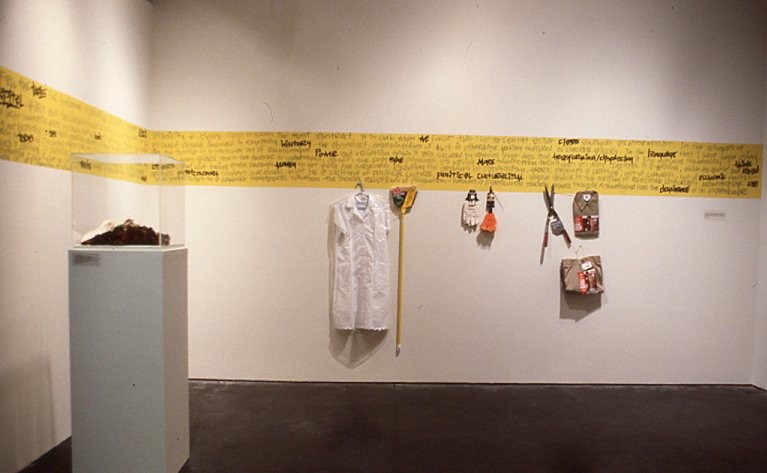
Installation view:
Love letters from the Maid(en) to the Garden(er), 1993. Work included in the exhibition Cultural Identities and Immigration, 1994, the College of Arts and Crafts, Oakland.
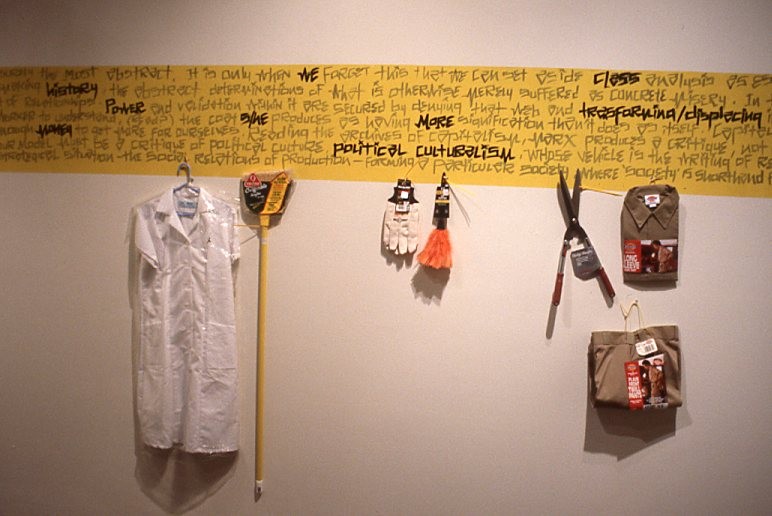
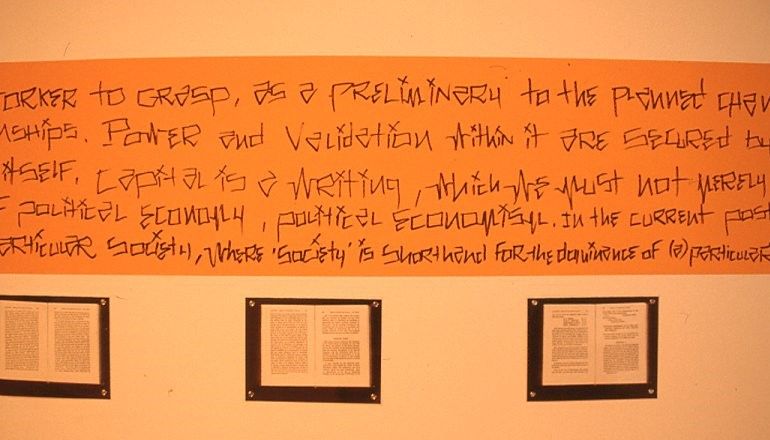
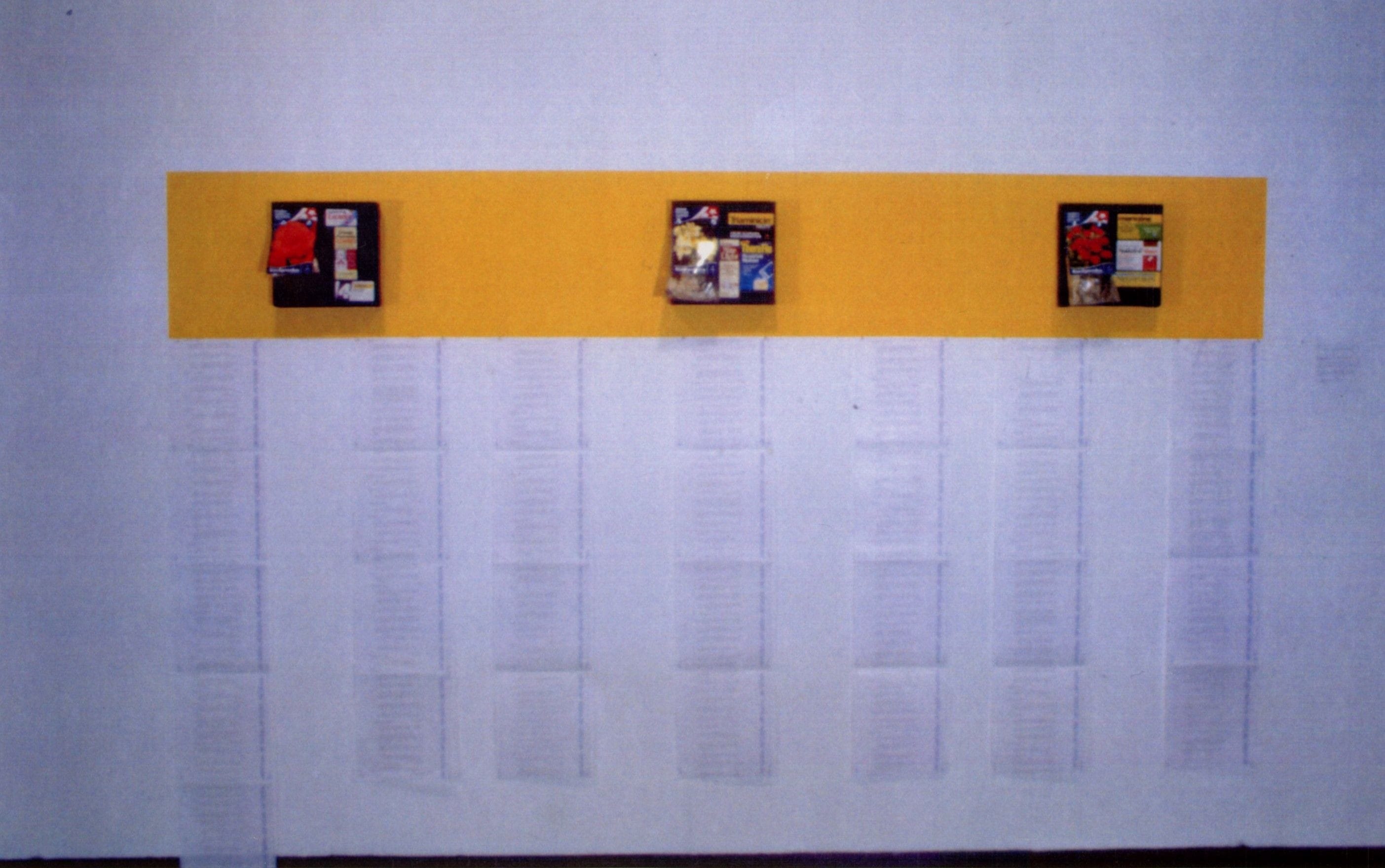
The yellow horizontal panel contains passages from Gayatri Chakravorty Spivak's text Can the Subaltern Speak?, hand painted by Rascon in barrio calligraphy.
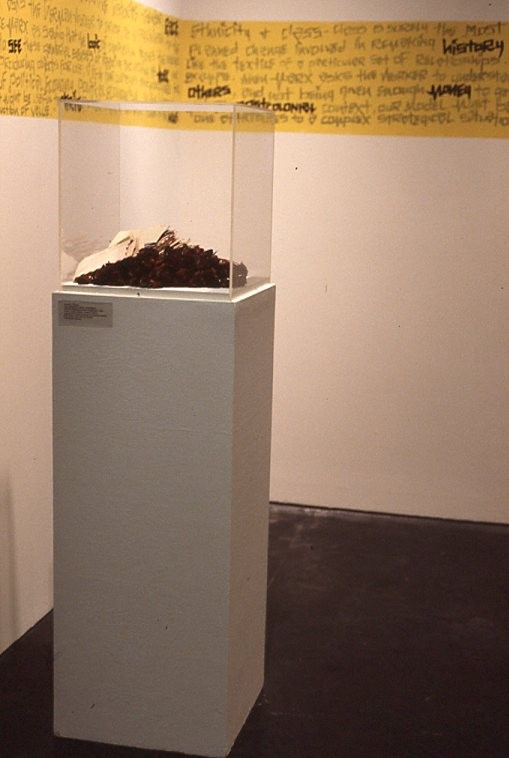
Love letters from the Maid(en) to the Garden(er), 1993


Detail:
Inside the vitrine, atop a dozen roses, are the artist's parent's love letters from the Forties --a gift from his mother.
.jpg)



.jpg)

.jpg)
.jpg)
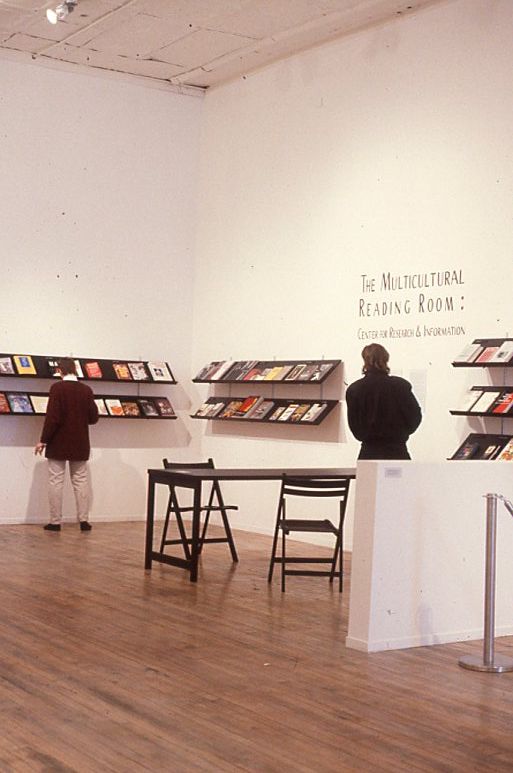
Installation view: Randolph Street Gallery, Chicago, 1991
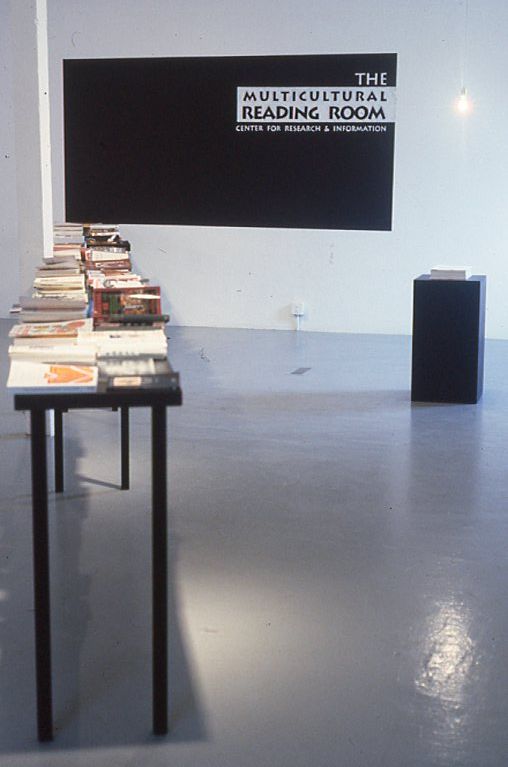
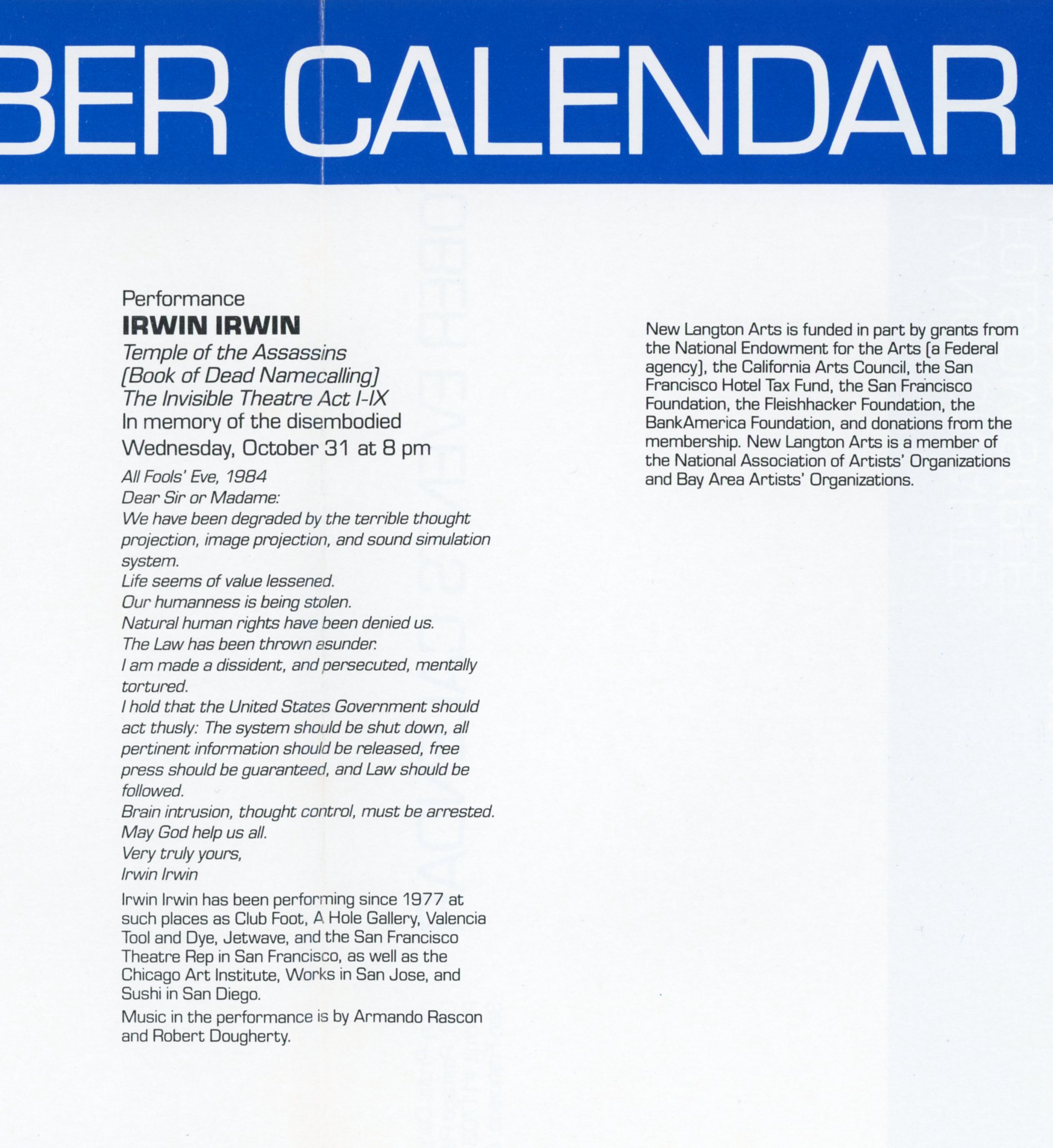
Installation view: New Langton Arts, San Francisco, 1990



.jpg)
.jpg)
.jpg)
.jpg)
.jpg)
.jpg)
.jpeg)
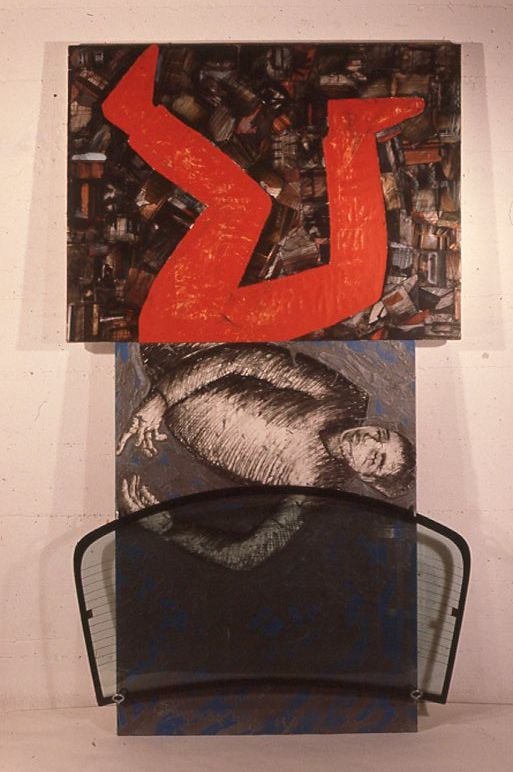
Untitled (Martyr Totem),
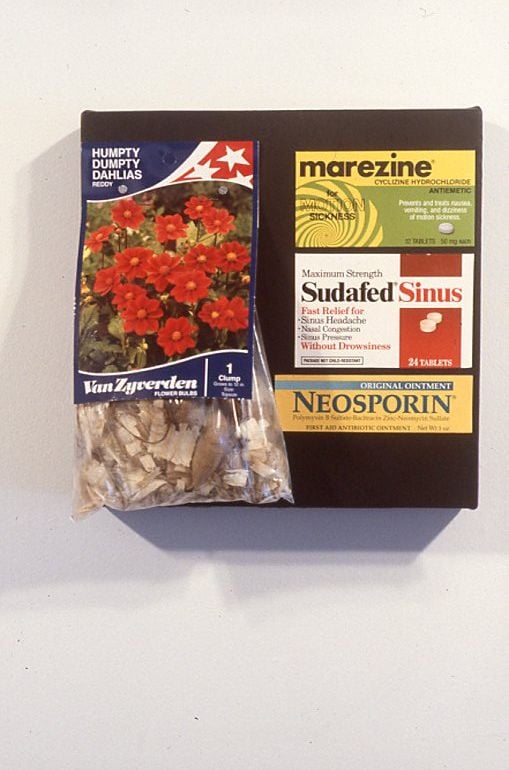
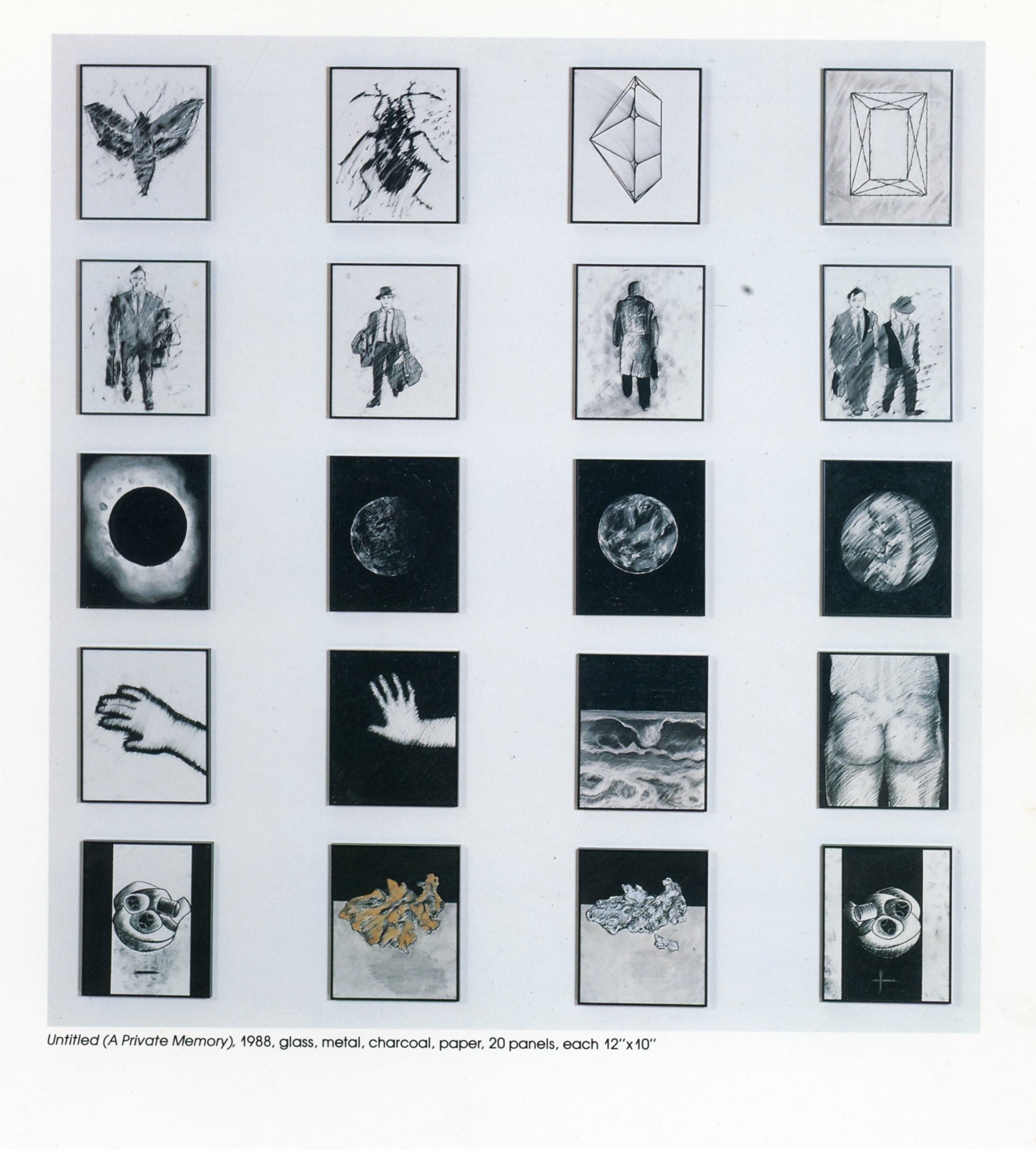
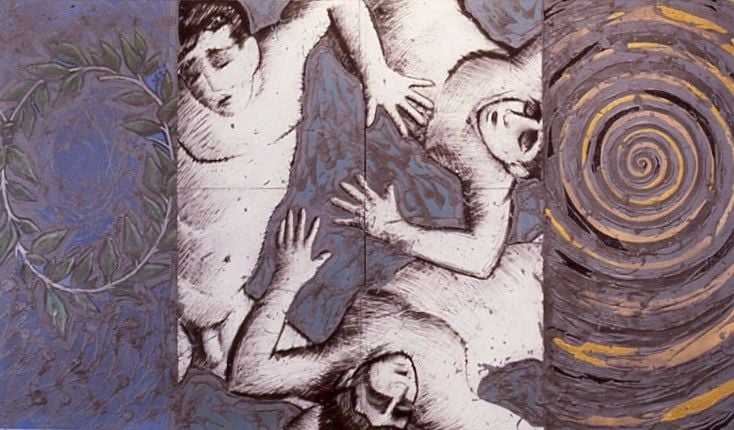
1989. Work featured in The AIDS Timeline organized by Group Material, University Art Museum, UC Berkeley, California, 1989.The piece is composed of the 1984 judicial injunction issued by San Francisco's Board of Health that closed the city's Gay bath houses. Collaged fragments of The Martyrdom of St. Hippolytus (Dirk Bouts, 1475) have been placed on each panel. It is a freestanding work set on the floor.Collection: Dr. Milton Estes, Sausalito, Ca
.jpg)

.jpg)



.jpg)


.JPG)
Armando Rascón AztlanLifeExtensionFoundation 2002.Interactive online site with Mission District digital mural, commissioned by Galeria de la Raza, San Francisco, California. The domain xicano.com was changed to xicanx.net in 2017.Project to re-emerge on www.xicanx.net.

Latina Postcolonial Photobureau, 1990-2026
Mural size chromogenic color prints 60 x 40 inches
©1990-2026 Armando Rascón


TERRAIN, San Francisco, Jessie Street, 1993TERRAIN, San Francisco, Folsom Street, 1987© Armando Rascon 1987-2026
.jpg)
David Cannon Dashiell, 1984, six polaroids.© 1984-2026 Armando Rascón

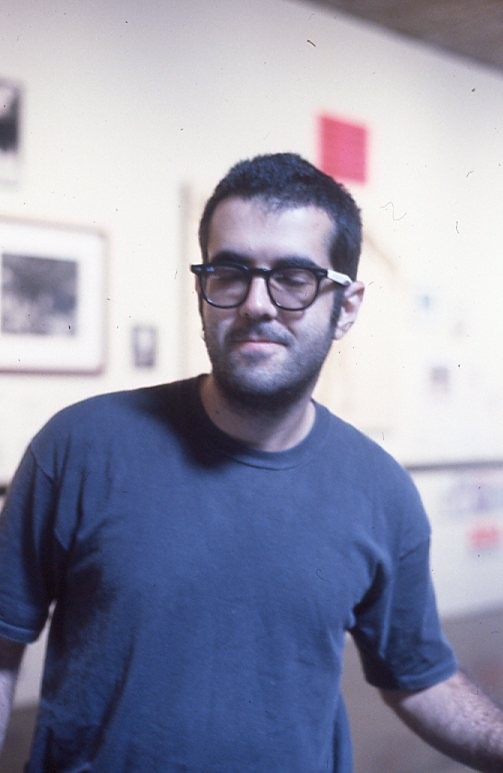
Felix with eyes closed (when we were young), 1989
Portrait of Félix Gonzáles-Torres during setup of The AIDS Timeline with Group Material at the University Art Museum, UC Berkeley. © 1989-2026 Armando Rascón

Félix González-Torres correspondence maps 1987
from the AMAYA PROJECT by Armando Rascón ©1987-2026
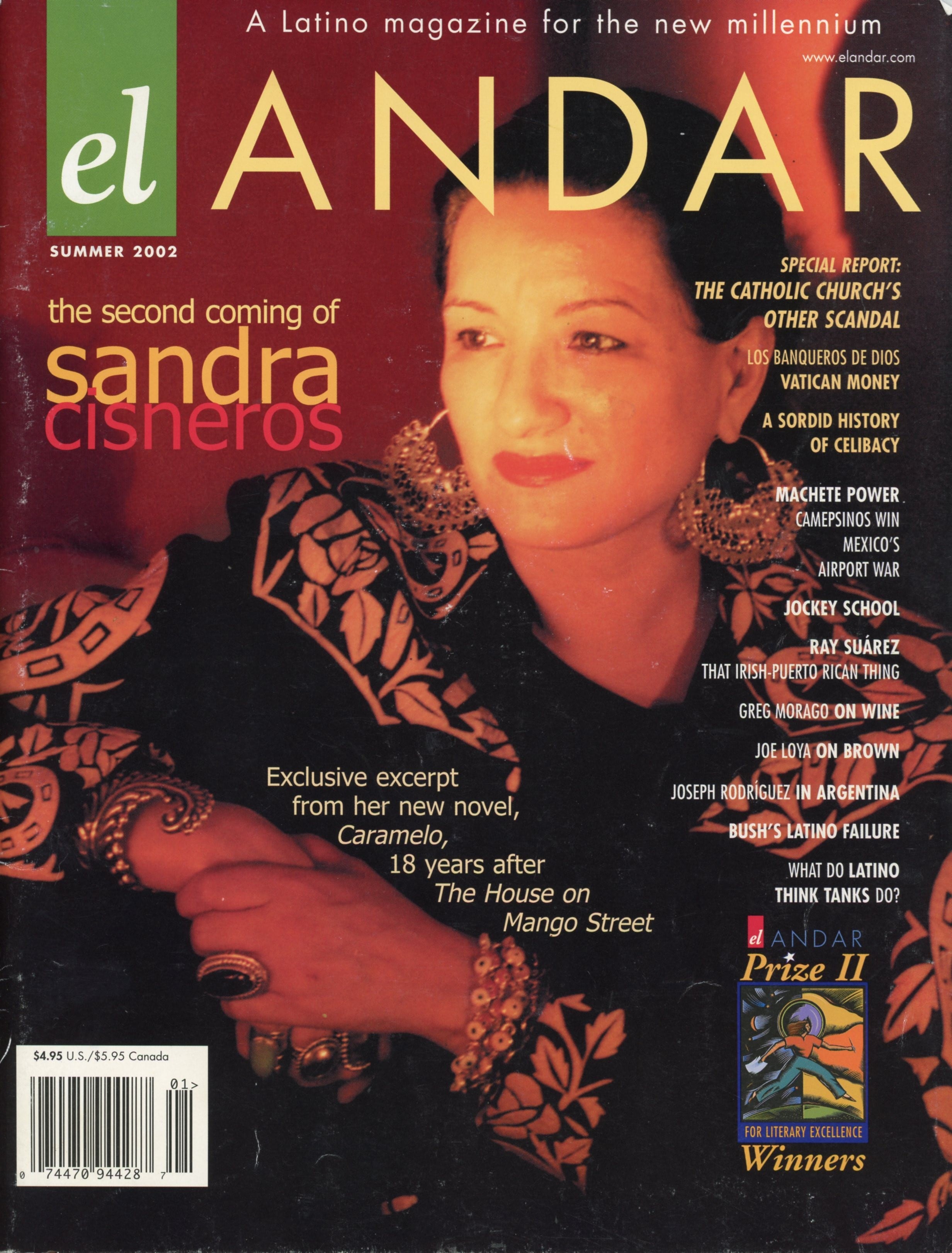
Sandra Cisneros, 2002
© 2002-2026 Armando Rascón


Border Poet Francisca Casillas Herrera, 1989©1989-2026 ArmandoRascón
.JPG)


.jpg)
capitalism
.jpg)
value
.jpg)
limpia

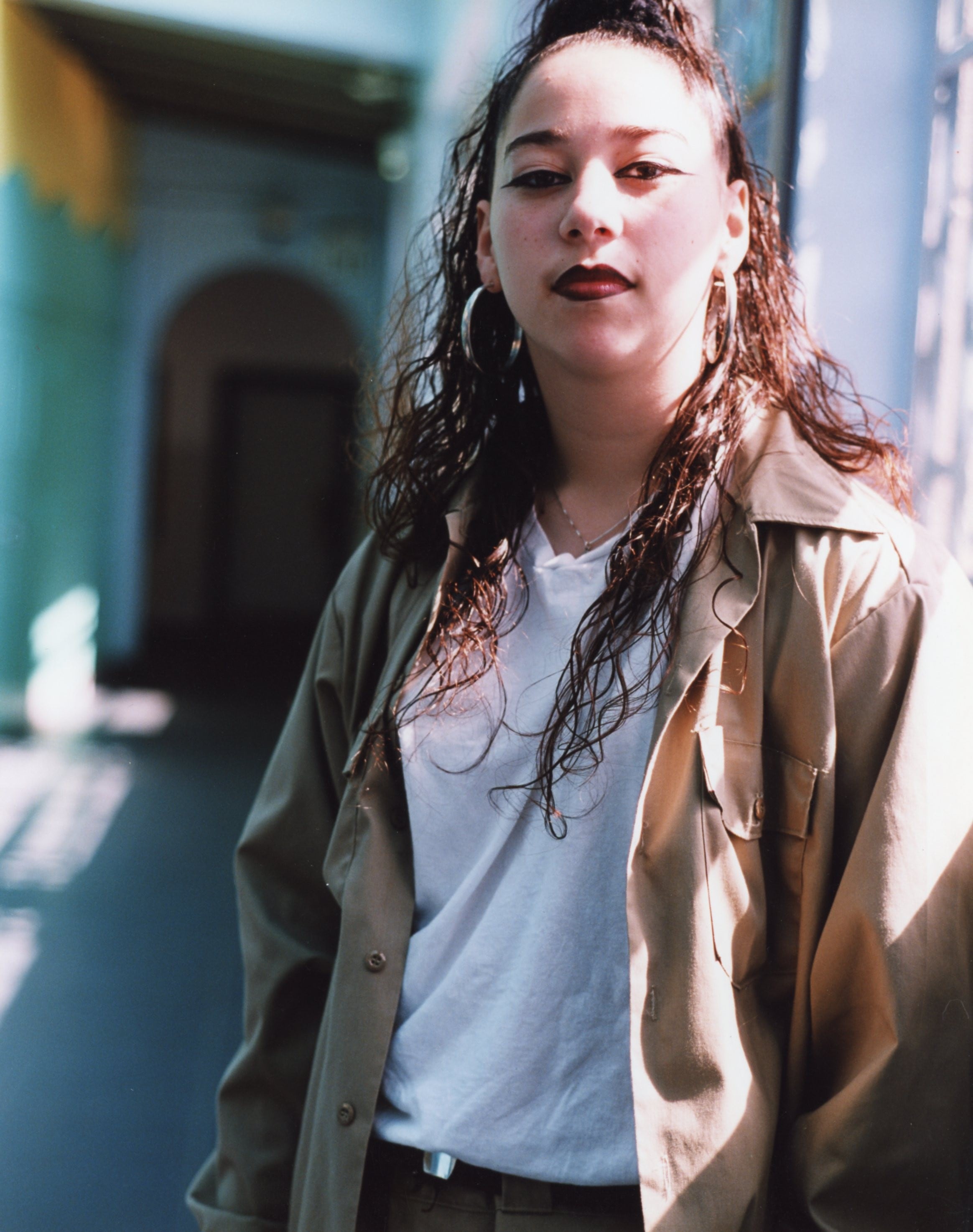
Real Alternatives Program High School Leaders, Mission District, San Francisco, 1994©1994-2026 Armando Rascón


Xicanx Primas P/V, 1997©1997-2026 Armando Rascón

Chicano Family's First-Generation college student in the Freshman Dorm, 1975©1975-2026 Armando Rascón


Student of Michel Foucault, College de France, at the Cafe Flore, San Francisco, 1981©1981-2016 Armando Rascón
.jpg)
Ghosts of the Alta Plaza, Sutter's Mill, Gloria's, Cafe Chapultepec, Regency East, the Caliph, the Gentry, the Briarpatch, the Hideaway and all of the piano bars of good memory, 1981-1891
©1981-2026

Octavio Solis, Playwright, 1990
©1990-2026 Armando Rascón

"Stories from Decoto"
Written by Roberto Bedoya

Film by Rick Tejada-Flores
Art Direction by Armando Rascón


.jpg)